Showing posts with label instruments for classical music. Show all posts

Saturday, 17 February 2024

Conga, Musical Instrument


The Conga, a musical instrument with roots in Afro-Cuban culture, has found its place not only in Latin American music but also in various musical traditions worldwide, including Indian music. Its distinctive sound and versatile nature have made it a valuable addition to Indian musical ensembles, offering rhythmic depth and dynamic expression. This article explores the history, construction, and uses of the Conga in Indian music. 

History:

The Conga's origins can be traced back to the African drumming traditions brought to the Caribbean during the transatlantic slave trade. Its development took place primarily in Cuba, where it evolved from traditional African drums like the Bantu and Congolese drums. Over time, it became an integral part of Afro-Cuban music, particularly in genres like rumba, mambo, and salsa. From Cuba, the Conga spread to other parts of Latin America and eventually to the rest of the world. 

Construction:

The Conga is a tall, narrow drum with a single head, typically made of animal skin or synthetic material such as fiberglass. It features a tapered body, wider at the top and narrower at the bottom, which allows for varying tones depending on where the drum is struck. The drumhead is usually tensioned with metal or rope tuning hardware to produce different pitches. Congas come in various sizes, with the larger drums producing deeper, resonant tones, and the smaller ones producing higher, sharper tones. 

Uses in Indian Music:

In Indian music, the Conga has been embraced for its ability to complement traditional percussion instruments like the tabla, mridangam, and dholak. Its rich, resonant sound adds depth to the rhythmic tapestry of Indian compositions, enhancing both classical and contemporary musical performances. 

In classical Indian music, particularly in genres like Hindustani and Carnatic, the Conga is often employed in fusion ensembles alongside traditional instruments and Western counterparts. Its rhythmic patterns blend seamlessly with the intricate tabla bols (syllables) or the dynamic beats of the mridangam, enhancing the overall rhythmic complexity of the music. 

In contemporary Indian music, including film scores and popular music, the Conga is utilized for its versatility and ability to create catchy rhythms and grooves. It is often featured in compositions where a fusion of Western and Indian musical elements is desired, adding a modern flair to traditional melodies. 

Moreover, the Conga has also found its place in Indian folk music, where its infectious rhythms drive energetic dance performances and festive celebrations. Whether in the vibrant beats of Bhangra or the lively rhythms of Garba, the Conga adds a lively pulse that encourages movement and participation. 

Conga, with its rich history, distinctive construction, and versatile uses, has become an integral part of Indian music, contributing to its rhythmic complexity and expressive potential. From classical compositions to contemporary fusion, the Conga continues to captivate audiences with its vibrant sound and dynamic presence.

Thursday, 8 February 2024

Clarinet, Musical Instrument


The clarinet, a versatile woodwind instrument with a rich history, has found its place in the musical traditions of various cultures around the world. In India, the clarinet has become an integral part of both classical and contemporary music, contributing to the country's diverse musical landscape. 

The history of the clarinet in India can be traced back to the colonial era when European settlers and missionaries introduced Western musical instruments to the Indian subcontinent. Initially, the clarinet was primarily used in military bands and orchestras established by the British East India Company. However, over time, Indian musicians began to adopt the instrument and incorporate it into their own musical traditions. 

One of the most notable figures in popularizing the clarinet in India was A. K. C. Natarajan, also known as "Clarinet Natarajan." Born in the early 20th century, Natarajan was a pioneering clarinetist who played a significant role in introducing the instrument to Indian classical music. He adapted the techniques and repertoire of the clarinet to suit the nuances of Indian ragas and talas, thus creating a unique fusion of Western and Indian musical styles. 

In Indian classical music, the clarinet is often used as a solo instrument or as part of an ensemble accompanying vocalists or other instrumentalists. Its distinctive sound adds depth and texture to traditional compositions, enhancing the overall musical experience. Clarinetists in India undergo rigorous training to master the intricate techniques required to navigate the complex melodies and rhythms of classical ragas. 

In addition to its traditional role as a wind instrument, the clarinet has also gained popularity in contemporary Indian music genres such as film music, fusion, and jazz. Many prominent composers and musicians have incorporated the clarinet into their compositions, experimenting with new sounds and arrangements. Its versatility allows it to seamlessly blend with various musical styles, making it a sought-after instrument in both live performances and studio recordings. 

Today, the clarinet continues to thrive in India's vibrant music scene, with a growing number of talented musicians embracing the instrument and pushing its boundaries. Concerts, festivals, and music schools across the country provide platforms for clarinetists to showcase their skills and connect with audiences from diverse backgrounds. 

However, despite its increasing popularity, the clarinet still faces challenges in India, including limited availability of quality instruments, lack of formal education and training opportunities, and the need for greater recognition and appreciation of the instrument's potential within the broader music community. 

The clarinet holds a special place in the musical heritage of India, bridging cultural divides and enriching artistic expression. From its humble beginnings in colonial times to its present-day prominence in classical and contemporary music, the clarinet continues to captivate audiences with its soulful melodies and timeless appeal. As India's musical landscape continues to evolve, the clarinet remains a symbol of innovation, creativity, and cultural exchange.

Wednesday, 31 January 2024

Manjira, Musical Instrument


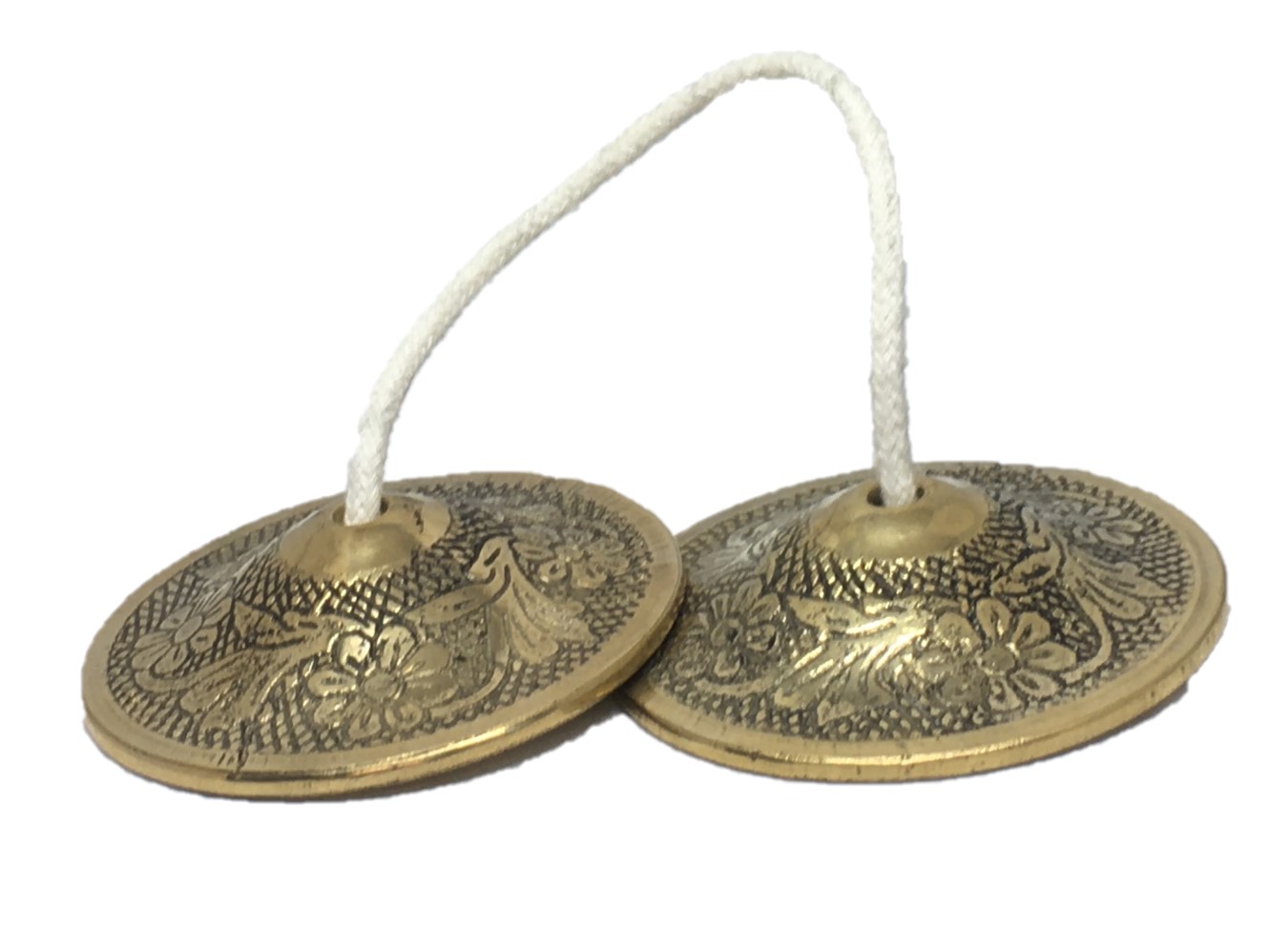
Manjira, also known as the hand cymbals or kartals, is a traditional Indian percussion instrument that holds a significant place in the realm of Indian classical and folk music. Renowned for its distinctive jingling sound, the Manjira plays a vital role in accompanying various musical genres and dance forms. 

Construction of Manjira

The Manjira is constructed with meticulous attention to detail, ensuring a balance between durability and resonant sound production. Typically, a pair of small, circular metal discs, ranging in diameter from 2 to 4 inches, are used in its construction. These discs are made from various metals, such as brass, bronze, or iron, each contributing to the distinct tonal quality of the instrument. 

The discs are attached to a central wooden or metal hub with the help of a sturdy cord, allowing them to move freely. The cord's tension is crucial in determining the pitch and resonance of the manjira. The frame of the instrument may also feature intricate carvings or decorations, adding to its aesthetic appeal while maintaining its structural integrity. 

Types of Manjira

While the basic design of the Manjira remains consistent, there are regional variations in terms of size, materials used, and playing techniques of this percussion instrument. The most common types include the northern and southern varieties. 

Northern Manjira: The northern variant, often referred to as Kartal, typically has smaller metal discs and is played by holding the cord in the hand and striking the discs together. This style is commonly associated with devotional music and classical genres in North India. 

Southern Manjira: In the southern regions of India, the Manjira is larger and known as "taalam." It is played by hanging the instrument on the fingers and striking it with the other hand. Southern Manjira is a prominent accompaniment in various South Indian classical and folk performances. 

Uses in Indian Music

The Manjira finds its application in a multitude of musical contexts, ranging from classical and devotional to folk and contemporary genres. 

Classical Music: In classical music forms such as Bhajan, Kirtan, and Thumri, the Manjira serves as a vital accompaniment. Its crisp, rhythmic sound enhances the overall texture of the musical composition, providing a dynamic and lively element. 

Folk Music and Dance: Across India, the Manjira is a staple in folk music and dance performances. Its lively and festive jingles complement the vibrant energy of traditional dances like Garba, Bihu, and Lavani. 

Devotional Music: In devotional music, especially during religious ceremonies and rituals, the Manjira is often played as an accompaniment to vocal and instrumental performances, creating a divine ambiance. 

The Manjira, with its simple yet elegant design, has embedded itself deeply in the musical fabric of India. Its versatility and adaptability allow it to seamlessly integrate into various genres, making it a cherished instrument in the hands of musicians and performers alike. As the Manjira continues to reverberate through the corridors of Indian musical traditions, its rhythmic resonance echoes the enduring spirit of a rich and diverse cultural heritage.

Wednesday, 22 February 2023

Sarod, Indian Musical Instrument


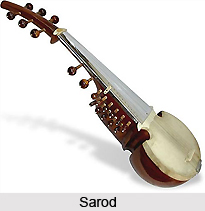
Sarod, Indian Musical InstrumentSarod is one of the leading concert instruments of North Indian Classical Music. This string instrument is most likely non-Indian in origin. The Sarod has four melody strings tuned to Sa, Pa, Sa, Ma and it is played with a triangular plectrum.

Structure of Sarod
It has a hollow circular belly to which is attached a tapering neck whose slim top portion holds the tuning pegs. Therefore it is a lute-type instrument. The shape of the belly of the instrument is distinctive in that it is pinched just below the place where the neck is attached. The use of wood for the belly of the Sarod and the use of parchment to cover the belly were retained from Rebab construction. The Sarod is usually three to three and a half feet long and has a body of teakwood overlaid with a fingerboard of polished metal, which facilitates sliding the finger along the strings. One of the distinctive features of the Sarod is that unlike the other string instruments it does not have a fret. The job of the frets is done by the left hand which is used for stopping the strings along the smooth fingerboard.

History of Sarod
The details of its development in India are quite different to trace. In all likelihood, it originated from the Rebab, an instrument from the Middle East. Its use in Indian Classical Music can be traced back to one of the master musicians of Indian music, Tansen. He was one of the most fantastic singers andBbinkars in the court of the Mughal emperor Akbar. Today, the Rebab has been replaced by the Sarod in the performances of Indian Classical music. It is said that Khan Saheb Asadullah Khan introduced the Sarod in Bengal over a century ago, and since then Bengal has become noted for the manufacture and popularization of this instrument.


For more, visit the link below:

Friday, 16 September 2022

Raagas in Odissi Music


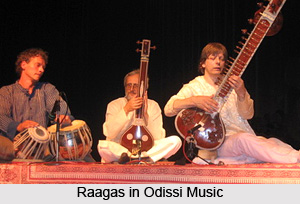
Raagas in Odissi MusicRaagas in Odissi Music can be divided into three major categories. There are some Raagas in Odissi music which are original and unique and are not found in the mainstream classical systems like Hindustani or Carnatic music. There are some other Raagas whose names are not similar but Swaras are similar with those in one or both the mainstream systems. Finally, there are some Raagas whose names are similar with the names of corresponding Raagas in one or both mainstream systems but Swaras are not similar.

Original Odissi Raagas
These Raagas are based on Udra tradition following Grama-Murchana theory but now-a-days these are being composed in Mela Padhati. Among the original Odissi Raagas are Raaga Abhiri, Raaga Karnata Abhirika, Raaga Kaushki, Raaga Nagadhyoni and Raaga Dhanyasika or Dhannasi.

Different Raaga name but same Swara
Raaga Sudha Kaushiki is included in this category. Raaga Malkaunsha of Hindustani music and Raaga Hindol of Carnatic music are very similar to this Odissi Raaga and their Swaras. There is no Sudha Kaushiki Raaga in any of the mainstream traditions. Apart from this, Raaga Kokila used in Odissi music is very similar to Hindustani's Bhupali and Carnatic's Mohana Raagas for its Swaras. However, the Chalana of Swaras and the Bhava of Raaga are very different from each other. There is no such Raaga by the name of' Kokil' in Hindustani music. In Carnatic music, although some forms with some affix like Kokiladhwani, Kokila pancham, Kokila ganclharva etc. are found simply 'Kokila' is not found.

For more, visit the link below:

Tuesday, 12 April 2022

Tarana - Indian Classical Musical Form


Tarana - Indian Classical Musical FormTarana is a classical music form, sung to fast the tempo (generally in the later) by using words and vocals like - ‘ta’, ‘nom’, ‘na’, ‘da’, ‘re’, ‘odani’, ‘tanom’, ‘yalali’ and ‘yalalom’. Rhythmic words used in Pakhawaj, tabla like ‘dha’, ‘tir kit tak’, sitar bols such as ‘dirdir tom’ and ‘sargams’ are used to craft a composition in a raaga. Tarana wholly relies on rhythmically set 'meaningless' bols to develop a raaga. ‘Khayalnuma’ is an alternative of the ‘Tarana’, which is performed with a relaxed hustle.

History of Tarana
There are a few uncertain stories and some possibilities offered to describe the origin of Tarana. According to one story, Tarana is known to have evolved from the enduring and earnest efforts of the legend himself, Amir Khusro. Khusro himself has credited to have initiated several other Hindustani classical musical forms, and tarana is always counted under it. Another version of the same story adds that Khusro added elements of Sufi mystical poetry to the bols.

Ustad Amir Khan sincerely believed in the Persian origins of Tarana and combined the Persian couplets with a mystical aim into the bols. Whether the claim is true or not, his tarana versions have the rare sheen that comes from the distinguishing incorporation of the right bols and apt couplets that further animate the sparkling mood he creates. Tarana relies solely on rhythm, tabla bols and it tries to maintain a balanced pattern. It can thus be understood that the tempo or laya is bound to be fast and not slow like khayal bandishes.

For more, visit the link below;

Tuesday, 15 February 2022

Origin of Gharana


Origin of GharanaHindustani Classical Music or North Indian Classical Music has always undergone steady growth but at times it has also suffered a setback and stagnation over the last few hundred years. Majority of the Muslim rulers were disinclined towards music as it was stated in their religion. However a few of these emperors became great lovers of Indian music and art. Hence they encouraged the development of music and welcomed many great musicians in their courts from their native lands. Among these famous singers was Amir Khusrao. He is considered as the most notable musician and is credited with assimilating the Iranian mquam with Indian Raaga and then creating new raaga from this union.

The import of talented musicians from outside India has had a positive influence on raaga music in the Hinduism music tradition. Emphasis was placed on the aesthetic element of the Raaga structure. Rendering of Raaga became much more submersed with human emotions that were initially designed. The original raaga music still retained the ancient essence and its good old qualities. This made Hindustani music more active, making it an important art in the royal courts. Unfortunately being in a superior position in the courts and enjoying the fruits of the highest patronage from the kings, musicians became confident, idle and somewhat vain. Music faced a setback. From a strange combination of strength of the dynamism and weakness of the setback evolved what came to be known as the Gharana System.

Gharana in the musical terms came to represent a particular tradition or a particular way of presenting Hindustani music. It is interesting to trace the history of the concept of Gharana. Gharaha gained importance after the 16th century. King Akbars court proved to the most supportive to the propagation and flourishing of the Hindustani music, but his successors did not prove to be so. Therefore gifted musicians left their courts one by one and went all over North India looking for patronage from other courts and states. Origin of GharanaOnce taken the rulers were averse to the musicians to go anywhere else. They were isolated from their people completely and forced to live in some kind of musical confinement. Naturally there remained no scope for these musicians to widen their musical knowledge or musical vision. Continued isolation produced rigid adherence to one?s style creating almost an obsession. From these arose strict musical lineages that were zealously guarded and preserved. Master of that lineage assumed the leadership of the followers of that musical lineage. Since the ?father? and the entire lineage was confined to one geographic area, their musical lineage, called ?Gharana? came to be known after the name of that place and their musical style itself as the style of that Gharana. The names of different Gaharana assumed the names of the villages and towns in North India.

For more, visit the link below:

Monday, 3 January 2022

Gajan Song, Indian Folk Music


Gajan Song, Indian Folk MusicIn Bengal, Gajan and Charak set soul in the state of Bengal festivals. Hindus rejoice the festival mostly on the last two days of the month of Chaitra, just by Bengali New Year. Chiefly this falls about mid-April. It is associated with such deities as Shiva, Neel and Dharmathakur. Though it is celebrated mostly in rustic Bengal, the festival is still celebrated in some parts of Kolkata city. It is held that Gajan dance emanated from the system of worship of Dharma Thakur in Radh area, that is, Purulia, Midnapur, Bankura, Burdwan and contiguous areas of Singbhum in Bihar. It ends with Charak Puja.

Gajan, as a form of music, comprises the loud dance rhythm, played on big drums supporting various physical endeavors of dance of the male folk (those who observe the philosophy of Sanyasis for some period before the festival days), is a peculiar folk festival having its sources in various factors which ultimately combine in a common type of frail musical representation. In fact, it has little importance in respect of music.

Origin of Gajan Song
The festival is essentially linked to farming community, straight or not directly. They pray for the rains and improved crop. Lord Shiva is said to be very much related to this community. However, interestingly it’s broadly believed that the source and the nature of these festivals are connected to the alteration of the Buddhist monks to Hinduism. It slowly transformed into a celebration of Lord Shiva but the Tantric rituals of Buddhism got engrossed in the festivities counting acts of self-punishment as well as the thought of monasticism. Rituals like dance with human skulls, body piercing and fire plays are seen in this time.Gajan Song, Indian Folk Music

The fair which is now called "Shiber Gajan", which strongly means "Lord Shiva's worshiping and songs", was at one time called "Dharmer Gajan". This Dharmathakur may have been originated from Dharmaraj of Buddhism. Faith relating to the expression of Sun-God is another well-liked idea. On the last day of the month of Chaitra, Gajan fair is observed all over Rarh region. Body-piercing of Sanyasis, revolving known as Charak, dancing in fire, jumping on nail and thorns, etc., are some of the features of the festival. The worship of Dharma Thakur was originally held in the month of Vaisakh.

Celebration of Gajan
Gajan festivity is performed by the devotees telling marriages of the male forces of Shiva, Nil or Dharmaraj with their individual wife. One way it signifies the combination of the forces of sun and earth. On the other hand the custom of Charak Puja is all regarding worshipping the Charak tree and the several self-punishment acts performed by Charak Sanyasis. In Shiva’s Gajan, Shiva is married to Harakali on this day. The sannyasis form the barjatri (bridegroom’s party). In Dharma’s gajan Dharmathakur is married to Mukti. It is believed that these acts of self-punishment in fact functions as a near-role problem for men attempting to practice the pains of womanhood, as well as childbirth. It is assumed that the farming community, which considers the rural soils as mother, believes they communicate hurt to the earth and thus to their mother, during acts like plowing, harvesting, and thus they experience such acts of self-punishment to feel the same quantity of pain.

For more, visit the link below:
https://www.indianetzone.com/61/gajan_song.htm

Wednesday, 26 May 2021

Nazrul Geeti, Traditional Indian Music


Nazrul Geeti, Traditional Indian MusicNazrul Geeti refers to the songs written and composed by Kazi Nazrul Islam, who is the national poet of Bangladesh and an active revolutionary of Indian Independence Movement. The words ‘Nazrul Geeti’ mean music of Nazrul. Nazrul Islam wrote almost 4000 songs, which are equally popular all around India and Bangladesh. Nazrul Geeti has recently been translated and recorded in Oriya language as a studio album.

Origin of Nazrul Geeti
Nazrul Islam started to show his poetic and musical skills from a very tender age. Finally, he started writing songs when he was the member of a Leto Group (Folk Musical Group). Soon he became an expert in composing songs and setting them on tunes by following his uncle Kazi Bazle Karim and a leader of the Leto Group. This group played a major role in his musical career and helped it in forming in the proper shape. Later, Nazrul met Satish Kanjilal, a teacher of Searsolo School, who was fond of Hindustani Classical Music. He gave Nazrul some lessons on Classical Music, following which Nazrul started to widen his knowledge on music, when he was serving as a Havilder in Karachi Barrack under Bengal Regiment.

Musical Style of Nazrul Geeti
Songs of Nazrul Islam can be divided into four groups- Revolutionary Mass Music, Bhakti Geeti, Ghazal and Ragasrayi Songs (songs based on Ragas). Nazrul learned Arabian and Persian language during his childhood, as a result of which, some of his poems and songs have Urdu, Arabian and Persian words. The themes of the songs are based on revolution, devotion, love, nature, patriotism etc.

Nazrul Geeti, Traditional Indian MusicRevolutionary Mass Music: The songs based on this theme were widely used during the Indian Independence Movement and at Bangladesh Liberation war. The songs are extremely motivational in nature with strong and powerful words which talk about extremities on everything. It also talks against conservatism and helps to observe life in a wider parameter of philosophy and spirituality. Some of the notable patriotic songs of Nazrul are- ‘Mayer Deoya Mota Kapad’, ‘Abonato Bharat Chahe Tomare’, ‘Dhanya Amar Desh’, ‘Mago Tomar Bhabna Keno’, ‘Urdho Gogone Baje Madol’ etc.

Bhakti Geeti: Nazrul Islam composed several devotional songs, which are based on Lord Krishna, Goddess Shyama Kali etc. The songs are typically known as Bhajans and Shyama Sangeet. Some of the notable songs of this type are- ‘He Gobindo Rakho Chorone’, ‘Gangane Krishna Megh Dole’, ‘Jago Jogmaya Jago Mrinmoyee’, ‘Amar Kalo Meyer Payer Tolaye’ etc.


To know more, check the link below:

Tuesday, 17 November 2020

Musical Instrument of Kutch

 The Happy go lucky attitude of the Kuchi have facilitated them to come up with various means for leisure activities. Some of them include drama, games, and story telling, as well as music. Them all these, music plays an integral parts of the entertainment process.


Bhorr & Bhorrinbo
In Kutch, it is known as Bhorrindo, while in other part of Sindh, it is also known as Borrindo or Borendo. Bhorrindo is known in the western world as Ochirina or Ocarina. It is very ancient folk instrument of music. Bhorrindo is a simple hollow clay ball or like an egg shaped with three to four holes, one somewhat larger than others. The holes are arranged in an isosceles triangular form. The Bhorrindo is made out of soft alluvial clay.

The sound notes are produced by blowing somewhat horizontally into the larger hole. Finger tips are placed on the smaller holes to regulate the notes. It is easy to play and hence its popularity among children and young who sound sweet notes on it while grazing the cattle.

Dak or Dakul
Dak or Dakul belongs to the Damru Family. The shape of the Dak or Dakul is similar to the shape of the Damru, but bigger in size sometimes. It is played to create a horrifying atmosphere.

The body of the Dacca or Dakar is made of an hour-glass frame with vellum drum heads. The heads are usually of calf skin, tied to hoops on both sides and braced and tightened with ropes. It is struck only one side either by hand or by stick. The cords are pressed and released in quick succession to give varying degrees to tension to the skinheads effecting changes in tonal sound. The Dak or Dakul is mainly used by the medicants and jugglers of the Bhuva community. These Bhuvas play the Dak or Dakul at the time of elimination of the elements like ghost etc. Dak is also played while Observing tantrik-cult.

Musical Instrument of KutchDholak
Dholak is one of the most important folk instruments of membraphonic class. It is used for accompaniment for singing and dancing. As such it is accepted as a percussion instrument for varied kinds of music, from modern film music to simple folk songs and dan. The shell or the main body of the Dholak is hollowed out of a solid block of wood, over the two usually equal size open ends of the hollowed cylinder; parchment is stretched by tightening cords of braces, through leather hoops on both sides. To achieve tonal variation between the two heads, generally a past of flour and iron filing is fixed on the parchment of the left side to permanently lower the tension of the left side head. Moreover small circular metal rings, loop or wooden pieces are passed through the braces which can be pulled on either side, to increase or decrease the tension of the heads. The right head is kept in high pitch and the left head is kept in low pitch. It is struck on both sides by the hands, fingers, knuckles and part of the palm. A metal ring is sometime tapped on the shell of the instrument.

Duff
Duff is an important folk instrument of rim-variety. It is an outdoor instrument and is used mainly for accompaniment with folk dance. Duff consists of an open circular frame of wood which is covered with skin on one side. The diameter of the Duff varies from three inches to three feet. Duff can be played either with the hand or with sticks. The Duff is played on many festive occasions like Holi, Muharram procession etc.

Musical Instrument of KutchDamaru
The origin of the Damru has been attributed to great antiquity and its significance in Indian mythology has been cemented upon by scholars. Damru is associated with Lord Shiva in Hindu mythology. It is said that Lord Shiva played Damru at the time of tandem-nritya. The Damru is also represented as an attribute of Shiva Natraja in ancient sculptures.

Tuesday, 3 November 2020

Traditional Indian Music

 Traditional Indian music is a reflection of the country's extreme cultural diversity. There is a very rich legacy of cultural music in India which has been developed over several eras and spans centuries. Most often, the traditional music genre primarily includes devotional music, ghazal, qawwali and patriotic songs among others. Since music can now be easily recorded, there has been seen a revival of the traditional style and its popularity remains intact. The several dozen ethnic groups in the state have contributed to a great variety and consequently we find a number of different types of traditional music which have developed over the centuries. The most well known forms and types of traditional music prevalent in India are mentioned below.


Qawwali - Traditional Indian MusicQawwali: Qawwali is a vibrant musical tradition of India, which stretches back more than 700 years. It is a kind of devotional music performed mainly at Sufi shrines throughout what is now India and Pakistan, and has also gained mainstream popularity. The Qawwali songs are mostly heard in Urdu language and the Punjabi language, but they are also available in Persian, Brajbhasha and Siraiki. Qawwali can also be enjoyed in some regional languages but the sound of it is quite different from the conventional counterpart. The central themes of qawwali are love, devotion and longing (of man for the Divine). Songs in Qawwali are usually between 15 to 30 minutes long. It is performed with one or two lead singers, several chorus singers, harmonium, tabla, and dholak. The principles of Qawali music are based on Hindustani Classical music.

Ghazal: A Ghazal is a poetic form consisting of couplets, which share a rhyme and a refrain. The word means 'the mortal cry of a Kastori doe'. A Ghazal, thus, is a collection of couplets (called sher), which follow the rules of Matla, Maqta, Beher, Qafiya, Radif, Khayaal and Wazan. The traditional complete ghazal has a matla, a maqta, and three other shers in between. The first two shers of a ghazal have the form of a qatha. Strictly speaking, it is not a musical form, but a poetic recitation. Today, however, it is commonly conceived of as an Urdu song, with prime importance given to the lyrics. In some modernized ghazals the poet's name is hidden somewhere in the last verse, usually between the front and end of a word. The ghazal is a common song form in India and Pakistan today.

Bhajan and Kirtan - Traditional Indian MusicBhajan and Kirtan: A bhajan or kirtan is a Hindu devotional song, often of ancient origin. A lot of importance is attached to the singing of Bhajans with Bhakti, i.e., with loving devotion. Kirtans are deeply rooted in the tradition of the Veda. Bhajans are often simple songs in lyrical language expressing emotions of love for the Divine, either for a single God/Goddess, or any number of divinities. Many bhajans feature several names and aspects of the chosen deity, especially in the case of Hindu sahasranamas, which list a divinity's 1008 names. Traditionally, the music is based on Indian classical music, which is based on ragas and tala (rhythmic beat patterns) played on the Veena, Sarangi, Venu (flute), Mridanga (or Tabla) (traditional Indian instruments). The Scripture of the Sikhs contains 31 ragas and 17 talas, which form the basis for kirtan music compositions. Various traditions of bhajan-singing, such as Nirguni, Gorakhanathi, Vallabhapanthi, Ashtachhap and Madhura-bhakti, have been formed over the ages. Each sect has their own sets of bhajans and methods of singing. The traditional form of bhajan in South India is known as Sampradya Bhajans. In the past few decades, this has seen a great upsurge in popularity.

For more check the link below:

Wednesday, 28 October 2020

Indian Folk Music


Indian Folk MusicIndian Folk Music encompasses a wide variety of musical styles which defy any definition. It is a rather popular genre of music which has captivated music lovers since the remote past with its rhythm, tune, lyrics and pulse. Essentially, folk music of India is a community-based style of music dealing with some kind of social discourse or feelings of the singer and situation. The great diversity that prevails in India culture and civilisation has greatly facilitated the origins and establishment of the folk style of music. Every region of India has its own distinctive style of music. These folk songs are full of rustic charm and appeal. They have simple and touching lyrics which have an immense appeal for the rural masses.

Most of the folk music of India is dance-oriented. This means that the songs that are sung are usually accompanied by some dance form, typical to the region in which it is being performed. There is no definite system of education that is imparted in the genre of folk music. It is a style that is picked up and followed and thus the tradition of folk music has mainly been aural. 'Desi folk', as it has been termed, is viewed as a classical art form where in the midst of dance, mime, lasya and natya the symbolic attributes of traditional Indian culture finds a definite diction.

Themes of Folk Music in India
Folk music is an indispensable part of functions such as childbirth, wedding, engagement etc. There are a number of songs for such occasions. Due to the nature of their lifestyle, and the priority of agriculture in the lives of the rural people, there are a number of songs associated with agricultural activities like planting and harvesting. The villagers give vent to their hopes, fears and aspirations by means of these songs. Folk music is also sometimes employed for educational purposes, such as instructing a girl about womanhood.

Instruments used in Folk Music in India
The kind of musical instruments used in folk music are quite different from the type used in Indian Classical Music. They are not as refined as the ones used in classical music. The most distinct feature of these instruments is that they are usually crafted by the singers themselves. They use commonly available materials such as bamboos, coconut shells and pots to make these instruments. Usually, cruder forms of instruments like dholak, dhaf, nal etc are used. In the places of classical string instruments like the sitar and sarod, much simpler versions such as the ektara, dotar, saringda etc are used. Apart from these, there are also a number of instruments which are used only in particular styles of folk music. Most of these instruments have their own name in the local dialect.

For more visit the link below: