Showing posts with label indian musical. Show all posts

Saturday, 18 January 2025

Dadra: A Genre of Classical Music


Dadra is a traditional genre of Hindustani classical music that holds a unique place in India’s rich cultural and musical heritage. This genre originated in northern India, particularly in regions like Uttar Pradesh and Rajasthan, during the 19th century. Its name is derived from a town called Dadra, near Ghaziabad, where this form of music gained popularity. The development of Dadra coincided with the rise of semi-classical music, as it bridged the gap between classical and light music, making it more accessible to a broader audience.


Structure and Style

Dadra is characterized by its rhythmic cycle of six beats, known as "Dadra Tala," which provides a distinctive and pleasant tempo. The compositions are often lyrical and romantic, with a focus on themes like love, longing, and devotion. Traditionally performed in a lighter style compared to pure classical forms like Khayal or Dhrupad, Dadra blends technical intricacy with melodic simplicity. 

The genre allows for greater flexibility, making it a favorite choice for expressing nuanced emotions. Its lighter nature often made it suitable for informal gatherings and social occasions. Dadra compositions are usually sung in regional dialects such as Awadhi, Brij, and Bhojpuri, further adding to their cultural resonance. 

Cultural Significance

Dadra occupies an essential place in the repertoire of Indian semi-classical music. It served as a medium of artistic expression for courtesans during the Mughal and later colonial periods, who brought it to prominence through their performances. These renditions were often presented in intimate settings, such as salons and courts, contributing to the preservation of this art form. 

The genre’s appeal extends beyond its technical merits; it captures the essence of India’s regional diversity. By incorporating folk elements and relatable themes, Dadra resonates with audiences across linguistic and cultural divides. This quality has also made it a popular choice in Indian cinema and modern music. Several iconic playback singers, including Lata Mangeshkar and Kishore Kumar, have performed Dadra-inspired songs, blending its traditional charm with contemporary appeal. 

Decline and Revival Efforts

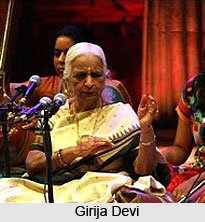
Like many traditional art forms, Dadra has faced challenges in recent decades. The rapid modernization of India’s music industry and the growing influence of Western genres have contributed to its decline. However, efforts to revive Dadra continue through the dedication of classical musicians and institutions. Renowned artists such as Girija Devi and Shobha Gurtu have played pivotal roles in preserving and promoting this genre on global stages. 

Cultural organizations and music festivals across India have also incorporated Dadra into their programs, ensuring its relevance to younger audiences. By presenting Dadra in innovative formats while retaining its core essence, these initiatives aim to keep the genre alive and thriving. 

Dadra reflects India’s rich and diverse heritage in Hindustani Classical Music. Its fusion of classical and folk elements, coupled with its emotive appeal, makes it an enduring and cherished art form. Through continued efforts in preservation and promotion, Dadra remains a symbol of India’s cultural vibrancy, connecting generations through the universal language of music.

Tuesday, 12 September 2023

Manjira: A Timeless Musical Instrument


Manjira, also known as "jhanj" or "taal," is a traditional percussion instrument that holds a special place in the rich tapestry of Indian music. With its origins dating back centuries, the manjira has played an integral role in various Indian musical traditions, adding a unique and melodious dimension to both classical and folk music.


Origin and History

The manjira, believed to have originated in India, boasts a history as rich and diverse as the country itself. Its earliest mentions can be traced back to ancient texts like the Natya Shastra, a foundational treatise on the performing arts written by Bharata Muni. These texts provide evidence of manjira's presence in the Indian musical landscape as early as 200 BCE. 

The instrument consists of two small, circular metal discs, often made of brass or bronze, which are held together by a string or cord. Each disc is around two to three inches in diameter and has a unique design etched onto its surface. The enchanting sound produced by the manjira arises from the gentle striking of these discs against one another. 

Use in Indian Music

Manjira's primary role in Indian music is to provide rhythm and enhance the overall texture of a musical composition. This instrument is a crucial element in classical music genres such as Hindustani and Carnatic, where it is used in both solo and ensemble performances.

In classical Indian music, manjira is often played in conjunction with other percussion instruments like the tabla, pakhawaj, or mridangam, contributing to the intricate rhythmic patterns that form the backbone of these musical styles. The subtle, tinkling sound of the manjira adds a layer of complexity and charm to the compositions, making it an indispensable part of the ensemble. 

Apart from classical music, manjira is an integral component of various folk and devotional music traditions across India. It is commonly used in Bhajans (devotional songs) and Kirtans (devotional chants) as well. The instrument's simplicity and versatility make it accessible to a wide range of musicians and performers, regardless of their skill level. 

Playing Technique

Playing the manjira requires skill and precision. The musician holds the two discs, one in each hand, by gripping the string that connects them. The discs are then struck against each other in a rhythmic manner, creating a crisp and melodious sound. The intensity and speed of the striking can be adjusted to produce different tones and rhythms, allowing for a wide range of expressive possibilities.

In classical music, manjira players often follow a specific repertoire of patterns and compositions, known as "tala," to maintain the correct rhythm and timing. These talas can be quite complex, requiring years of practice to master fully. Percussion Instruments 

The manjira, with its timeless origin, historical significance, and versatile use in Indian music, stands as a testament to the enduring cultural heritage of India. Its delicate, melodious chime has the power to transport listeners to a realm where rhythm and melody intertwine, creating a harmonious tapestry of sound. As Indian music continues to evolve and adapt, the manjira remains a steadfast and cherished component, preserving the musical traditions of the past while enriching the compositions of the future. Its unique and melodious presence ensures that it will always have a special place in the hearts of musicians and music enthusiasts alike, both in India and around the world. 

Monday, 28 November 2022

Carnatic Musical Instruments


Carnatic Musical InstrumentsCarnatic Musical Instruments accompany the traditional Carnatic music, which is usually prevalent in the southern part of India. It is popular in the states of Karnataka, Andhra Pradesh, Tamil Nadu and Kerala. Carnatic music is one of the two sub genres of Indian classical music.

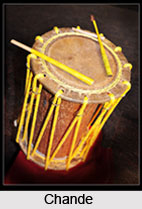
Chande
Chande is a percussion instrument used along with the traditional Carnatic music, especially in the state of Karnataka. It is a drum that provides rhythms in dance dramas like Yakshagana. It is played with the help of two sticks by placing it vertically on the floor. Chande rhythms are based on folk music and pre classical forms, and bear a close resemblance to Karnataka Sangeta. Different varieties of this instrument are found namely Badagu Thittu Chande and Thenku Thittu Chande.

Chenda
Chenda is another percussion instrument comprising of cylindrical wooden drum. It is played by hanging it vertically to the neck and beating the upper parchment. The instrument produces loud and rigid sound. Chenda is popular in temple festivals of Hindus and accompanies religious art forms and rituals Kerala. It also accompanies various dance forms like Koodiyattam, Theyyam, Kannyar Kali and Kathakali.

Electronic Tanpura
An Electronic Tanpura mimics the sound of Tanpura, a traditional string instrument of India. It is an essential commodity of Carnatic music and is a great substitute of real Tanpura. Electronic Tanpura is easier to use and is less expensive. G Raj Narayan was the inventor of this electronic instrument who demonstrated it for the first time at the annual conference of the Music Academy Chennai in December 1979. Electronic Tanpura serve greatly in the concerts as well as private practices.

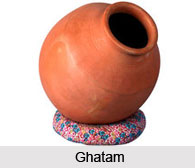
Carnatic Musical InstrumentsGhatam
Another popular percussion instrument used in Carnatic music is Ghatam. Ghatam is basically a clay pot having a narrow mouth. The walls of this pot must have even thickness for producing even tones. It is one of the oldest instruments of south India. Manamadurai, near Madurai, is the place where most of the Ghatams are manufactured. The technique of playing this instrument involves placing the pot over the lap with its mouth facing towards the belly. Rhythms having a fast tempo are played greatly with Ghatam.

Tuesday, 12 April 2022

Tarana - Indian Classical Musical Form


Tarana - Indian Classical Musical FormTarana is a classical music form, sung to fast the tempo (generally in the later) by using words and vocals like - ‘ta’, ‘nom’, ‘na’, ‘da’, ‘re’, ‘odani’, ‘tanom’, ‘yalali’ and ‘yalalom’. Rhythmic words used in Pakhawaj, tabla like ‘dha’, ‘tir kit tak’, sitar bols such as ‘dirdir tom’ and ‘sargams’ are used to craft a composition in a raaga. Tarana wholly relies on rhythmically set 'meaningless' bols to develop a raaga. ‘Khayalnuma’ is an alternative of the ‘Tarana’, which is performed with a relaxed hustle.

History of Tarana
There are a few uncertain stories and some possibilities offered to describe the origin of Tarana. According to one story, Tarana is known to have evolved from the enduring and earnest efforts of the legend himself, Amir Khusro. Khusro himself has credited to have initiated several other Hindustani classical musical forms, and tarana is always counted under it. Another version of the same story adds that Khusro added elements of Sufi mystical poetry to the bols.

Ustad Amir Khan sincerely believed in the Persian origins of Tarana and combined the Persian couplets with a mystical aim into the bols. Whether the claim is true or not, his tarana versions have the rare sheen that comes from the distinguishing incorporation of the right bols and apt couplets that further animate the sparkling mood he creates. Tarana relies solely on rhythm, tabla bols and it tries to maintain a balanced pattern. It can thus be understood that the tempo or laya is bound to be fast and not slow like khayal bandishes.

For more, visit the link below;

Tuesday, 1 February 2022

Tappa, Indian music


Tappa, Indian musicTappa, understood to have been the staple diction of the erstwhile camel drivers, has since come to a ripened age, by being nurtured in the hands of some of the legendary masters in this genre. The word Tappa stands for jumping, bouncing and skipping, implying the extraordinary rule of unremitting attempts made by a singer on the musical notes, not stopping or taking a pause for once. This outstanding formation is unique to tappa only, absent in the other Hindustani classical forms. It is thus composed of rhythmic and rapid notes, and such a style calls for immense and extreme hold over the singing diction. A contrary to which can damage the whole recital. Tappa is very unlike khayal rendition, crisp and highly volatile in its nature. And the few exponents like Ghulam Nabi, Pt. Bholanath Bhatt or Girija Devi have thus become legends in their own right.

It is usually held that tappa is derived from the songs and tunes sung by the camel drivers of North West Punjab. These songs were composed in Punjabi and Pusthu and, like thumri, were amatory in spirit. The word tappa is derived from the root word tap, which means to 'jump', 'bounce', or 'rebound' in the manner of a bouncing ball.

History of Tappa
History of Tappa outlines the biographical sketches included in the epic work of Indian Music, by Dr. Thakur Jaydev Singh. According to him, Shorie Miya had four significant disciples: Prasiddhu Maharaj, Miya Gammu or Gammu Khan, Tarachand, and Mir Ali Saheb, Gammu Khan's son, Sadi Khan and Babti Ramsahay. He is considered as a member of the kathaka community who together with his brother Manohar Maharaj founded the Prasiddhu-Manohar lineage. Like the other lineages of Tappa singers, this lineage asserted significant musicianship in the mainstream genres of vocal music. Prasiddhu's great-grandson, Ramkrishna Mishra taught and performed in Kolkata till 1955.

For more, visit the link below:

Monday, 20 December 2021

Jaipur-Atrauli Gharana, Khayal, Indian Music


Jaipur-Atrauli Gharana, Khayal, Indian MusicThe Jaipur-Atrauli tradition as a Khayal gharana came into existence during the latter part of the 19th century and developed into a full-fledged style during the first half of the 20th century through the arduous efforts of its founder, Ustad Alladiya Khan (1855-1943). His family of singers originally hailed from the village of Atrauli, located near Aligarh. They migrated to a village near Jaipur and attached themselves to the royal court. This gayaki is regarded as one of the most cerebral and scholastic of existing gharanas, given their intricate method of raaga rhythm and the knotty patterning of their musical phrases.

Alladiya Khan's predecessors were originally dhrupad singers of the Dagar-bani. They took to khayal soon after the popularity of dhrupad began to wane during the later part of the 18th century. His uncle and guru, Jahangir Khan, was reputed to know no less than 25,000 compositions in several ragas. It is reported that Alladiya Khan had a sweet voice until the age of 40. Owing to the severe strain he subjected it to, in order to please his royal patrons of the Jaipur court, he lost it. However, he was able to renovate this setback into an advantage by shifting his mode of voice production and also evolving, through intense practice, a style that gave equal importance to swara and laya. In his later years, he migrated to Kolhapur and trained his brother Haider Khan and his gifted sons, Manji and Bhurji Khan, who carried on his extraordinary legacy. Though he jealously guarded his newly found musical wealth, he slackened his own rules when he came across the outstandingly gifted Kesarbai Kerkar (1892-1977) and Mogubai Kurdikar (1904-2003). They were personally trained by Khansahib and also by his sons. Both Kesarbai and Mogubai went on to circulate his legacy in many parts of the country through the concert platform and also through selective tutelage. Later, Nivruttibua Sarnaik (1912-1994) and Vamanrao Sadoliakr (1907-1991) were included within the charmed circle. The legendary Bhaskarbua Bhakle also learnt from Alladiya Khan. The two masters had the deepest regard for each other. Bhakle's unexpected and early demise devastated Khansahib to a profound extent. As with the Kirana and the Gwalior style, Maharashtra became the hub of the Jaipur-Atrauli gharana. Some of its finest exponents in the 20th century hail from Maharashtra, the Konkan coast and north Karnataka.

Mallikarjun Mansoor (1910-1992) trained under Khansahib's son Manji Khan, and later under Bhurji Khan, assimilated many fine points of the style. No blind follower, Mansoor ever maintained his identity all through his singing career by depending upon his immense powers for improvisation. Kishori Amonkar (b.1932), daughter of Mogubai Kurdikar, is one of the stunningly original singers of this gayaki and easily one of the most imaginative women singers in the Hindustani tradition. Though trained in the classic Jaipur idiom by her mother, she ahs not hesitated to take up from other styles. Her music reveals many of the strengths of the Jaipur-Atrauli style and demonstrates none of the limitations. Dhondutai Kulkarni, Ashwini Bhide Deshpande, Padma Talwalkar and Shruti Sadolikar are some of the extraordinary singers on the contemporary scenario.

For more, visit the link below:

Wednesday, 3 November 2021

Musical Instruments of Northern India

  Musical Instruments of Northern India have contributed greatly in enhancing the essence of different forms of Indian music. Music has been an inseparable part of Indian culture since time immemorial and numerous musical instruments have evolved over time to accompany them. People have crafted a number of instruments to accompany diverse forms of Indian music. Many of these instruments are exclusively played with specific genre of songs. Musical Instruments of Northern India have also undergone various changes and modifications to augment their rhythm, melody and durability. Early musical instruments were mainly manufactured with bones, animal skins and wood while present forms of instruments, in addition to these, have adopted various synthetic durable materials.


Musical Instruments of Northern IndiaMusical Instruments of Punjab
A number of musical instruments have evolved in Punjab which accompanies the Indian music beautifully. Algoze is a woodwind instrument resembling a couple of wooden flutes. It is played with the help of fingers and breathing into it. It is popular along with the folk songs of the state. Bugchu is another traditional instrument of the state used along with folk music and dances of Punjab. Its shape is similar to an hourglass with stretched skin covering its head. Chimta is a famous percussion instrument of Punjab which accompanies Punjabi folk songs and Sikh religious music. Beautiful chiming sound is produced by it. Dhol is a double headed drum and is a prominent percussion instrument. Gagar is another popular musical instrument of the state. It is a metal pitcher. Kato is widely used in cultural activities and is played along with Malwai Giddha and Bhangra. Other popular musical instruments of Punjab include Dilruba, Dhadd, Gharha, Ektara, Khartal, Sapp, Sarangi and Tumbi.

Musical Instruments of Northern IndiaMusical Instruments of Haryana
Musical instruments of Haryana also play important roles in enhancing the essence of regional music. Ektara is a one stringed instrument played with the help of fingers. Dotara is similar to Ektara having two strings. Sarangi is played with a bow. It is highly popular among the folk music of Haryana. Another significant musical instrument of the state is Been. It is mainly used by snake charmers and is made of two bamboo pipes. Bansuri is a wind instrument made of a hollow bamboo stick. In mythology, Bansuri has been depicted as the favourite musical instrument of Lord Krishna. Shehnai is another common instrument widely used in marriage ceremonies. Shankha is on of the oldest wind instrument of the country and is considered as one of the attributes of Lord Vishnu. It is believed to be very sacred and is used in temples and religious ceremonies.

Musical Instruments of Northern IndiaMusical Instruments of Uttarakhand
The state of Uttarakhand also enlists a number of musical instruments. Dhol is a percussion instrument, a double headed drum. It accompanies regional music of the state. Ransingha is another instrument which is actually the primitive trumpet. Two metal curves are joined together in an 'S' shape in Ransingha. Dholak is also a double headed drum played with hands. It comes in varying sizes and accompanies folk music of Uttarakhand. Bhankora is a long horn composed of copper and is generally played in religious ceremonies. Other musical instruments of the state are damoun, turri, daur, thali, masakbhaja, harmonium and tabla.

Monday, 13 September 2021

History of Indian Music


History of Indian MusicHistory of Indian music has its origins in divine tradition. The rich history of Indian music unveils the fact that the divine sage Narada introduced the art of music to the Earth from heaven. This is how music is said to have commenced on earth. According to Hindu mythology, the first ever sound to have been heard in the universe is the Naadbrahma or Om mantra. This sound pervades the entire universe. Since it is a manifestation of the divine power (Brahma), it is the purest sound to be heard. It is believed that the musician attempts to achieve this very purity in his 'sadhana' or dedicated pursuit. History of Indian music unfolds the verity that music gradually changed in shape and form. In the beginning the music was devotional in content and was restricted to religious and ritualistic purposes and was purely used in temples only. Indian music developed from the ritualistic music in association with folk music and other musical forms of India and gradually derived its own musical characteristics.

Music in Ancient India
The earliest history of music in India can be traced back to the Vedic ages, over two thousand years back. The concept of Naadbrahma is seen being manifest in the Vedic ages. All organised music traces its origins back to the Sama veda which contains the earliest known form of organised music. The earliest raga owes its origin to the Sama veda. The first reference to music was made by Panini in 500 BC and the first reference to musical theory was found in 'Rikpratisakhya' in 400 BC. Bharata Natyashastra, which was written on 4th century AD, contains several chapters on music, which was probably the first clear written work on music that has divided music into octaves and twenty-two keys. The next important work on music was 'Dathilan' that also mentions the existence of twenty-two srutis per octave. According to ancient notion, these twenty-two srutis are the only keys that can be made by the human being. Other works written during this period include 'Brihaddesi' written by Matanga on 9th AD, which attempts to define Raga; 'Sangeeta Makaranda; written by Narada on eleventh century AD, which enumerates ninety-three Raagas and classifies them into masculine and feminine species; 'Swaramela Kalanidhi' written by Ramamatya in the sixteenth century AD and 'Chaturdandi Prakssika' written by Venkata Makhhi in the seventeenth century AD.

During the late Vedic Period i.e. from three thousand to twelve hundred B.C., music prevailed in the form called Samgana, which was purely a chanting of the verses in musical patterns. After that music changed its course a little bit. The epics were narrated in musical tones called 'Jatigan.' Between the second to the seventh century AD, a form of music called 'Prabandh Sangeet', written in Sanskrit language became very popular. This form gave rise to a simpler form called Dhruvapad, which used Hindi language as the medium. The Gupta period is considered as the golden era in the development of Indian Music.

Music in Medieval India
In the medieval period, the nature of Indian music underwent a change due as a result of the impact of the Muslim invasion. At this time, Indian music slowly started branching off into the two distinct forms of Hindustani and Carnatic music. This two traditions of music started to diverge only around 14th century AD. The Persian influence brought a substantial change in the Northern style of Indian music. In the fifteenth century AD, the devotional Dhruvapad transformed into the Dhrupad or classical form of singing. The Khayal developed as a new form of singing in the eighteenth century AD. Carnatic classical or kriti is mainly based on the Saahitya or lyric oriented, while Hindustani music emphasizes on the musical structure. Hindustani music adopted a scale of Shudha Swara Saptaka or Octave of natural notes while Carnatic music retains the style of traditional octave. Both Hindustani and Carnatic music express great assimilative power, also absorbing folk tunes and regional characteristics as well as elevating many of these tunes to the status of ragas. Thus, these two systems of music have mutually influenced each other.

For more, visit the link below:

Monday, 30 August 2021

Types of Odissi Music


Types of Odissi MusicTypes of Odissi Music cover a rather large spectrum. The various forms of this classical music style include Champu, Chhanda, Chautisa, Geeta Gobinda, Janan and Bhajan. These different types of Odissi Music are briefly discussed below.

Champu
Kavya with admixture of both prose and poem are known as Champu. In a Champu composition every stanza starts with the same alphabet. This is sung in Raaga and Tala. Instead of Anibadha Alapa there is Rupak Alapa. There is Pada Vinayas, short Swara Uinyas and no Taan.

Chhanda
The main characteristic of these verses is the stress on rhythm. It is set to a definite melody and Raaga. No steps of Raaganga are followed but the traditional technique and colourful Gamaka used here make it a special and very popular style. It is sung in a particular Brutta or Vani. Every Pada of a Chhanda is sung in the same Swara. Singers sing from the Oriya language epics of Mahabharata, Ramayana and from the Indian Puranas.

Chautisa
There are 34 (Chautrisha) Padas in such a composition. Hence it is called Chautisha. Like Chhanda this is based on Brutta or Vani and all the Padas are sung in the same swara. But unlike Chhanda it is always composed with 34 Padas. Every Pada begins with one alphabet of Oriya language and in the 34 Padas 34 alphabets are used in Proper sequence. Among all the Chautisa songs written in Oriya 'Manabodha Chautisa' is most popular.

Chaupadi
It consists of four stanzas. This variety of songs is songs of love. The language of the songs is lyrical, simple and direct.

Chaturang
This type of singing is not in popular practice but it comes under the traditional singing style. This type of song is not very old in origin. It consists of four parts, namely, Khayal, Tarana, Saraagam and Tirvat. In the first part, the words of the song are there, the second consists of syllables of Tarana, in the third part a small piece of Sargam is sung in the same Raaga in which Chaturang is sung, and in the last part, the Bols of Mridang or Pakhavaj are recited.

Geeta Gobinda
The Geeta Gobinda is one of the most beautiful works of the performing arts. It is an admixture of song and drama. Through millions of devotees who visited the Jagannath temple from various parts of India, Gitagovindams popularity spread all over India. There are a total of 24 Astapadas and these songs describe the various moods, shades and various episodes of love between Radha and Lord Krishna. They were written in 12th century in Sanskrit language. These verses exude at once spiritualism and eroticism. Oriya music as well as literature bears distinct marks of Jayadeva's style.

For more, visit the link below:

Saturday, 3 July 2021

Khayal Gharanas


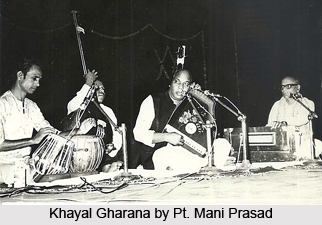
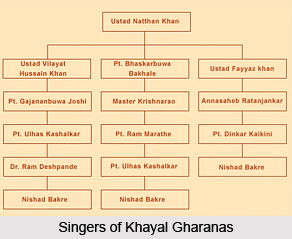
Khayal Gharanas, Indian MusicKhayal, the classical Indian music is represented by a number of stylistically different schools called the Gharanas. Every Khayal Gharana has a few distinct features, a novel facet of their own which allows one to discriminate between the different schools while enabling one to identify the varied approach. The élan of the presentation, the dash in the approach and the stylistic features of the employing of the tans, bandish and alaap makes each of the khayal gharanas matchless and aesthetic. Gwalior Gharana, Agra Gharana, Kirana Gharana, Jaipur-Atrauli Gharana, Bhendi Bazaar Gharana, Patiala Gharana and Rampur-Sahaswan Gharana are some of the important gharanas of Khayal music.

Gwalior Gharana : Gwalior gharana began its journey somewhere in the 19th century, due to the earnest endurance of two devoted individuals. Their illustrious successors, after moving to the darbar of the Lucknow maharajas, were primarily responsible for evolving the style khayal as it is heard today. Gwalior gharana is universally acknowledged as the parent of all the gharanas, due to their obvious reasons for being the oldest, the largest, and one of the most permanent of all the surviving gharanas. Their distinguishable facets make them even more celebrated in this genre. Though some of them had clung to their ancient clan of thought for the gayaki style, some of the more recent singers had made a brilliant foray by letting in non-family members, thereby creating a musical revolution.

Agra Gharana: Agra gharana is always noted as the second wonder of Agra, only after the magnificient Taj Mahal. The founders of this gharana owe much to the dhrupad-dhammar singers, as it was from them that the Agra gharana members loaned the major piriton of their skillfulness. However, borrowing ingenuity from the dhrupadi singers, the Agra gharana was hugely successful in establishing a permanent position in the musical history. And they do not undermine their teachers - Agra is the only gharana, who boldly exhibit their dhrupadic roots. The most important member of this gharana, Ghagge Khuda Naksh, has a highly curious story behind his evolving of the melodious voice. Agra gharana is still holding its place steadfastly, with a stellar line-up of singers to choose from.

Khayal Gharanas, Indian MusicKirana Gharana: Kirana gharana can be called unusual motley of contemporaneity and ancientness, carefully and ingenuously amalgamated to suit the audience of today. It is the only gharana that flourished entirely during the evolvement of the 20th century. Some although claim to possess roots in the dhrupadi gharana. The founding members of Kirana gharana were essentially sarangi players, which laid huge influence in their style of performance. However, it is Ustad Abdul Karim Khan, who can be called the most substantial member to have contributed whole-heartedly to make Kirana gharana stand, where it is today. He has an illustrious line-up of students and followers, who perform still today, with absolute élan and glory. Ustad Abdul Waheed Khan can be named the proponent to reintroduce the slow tempo (vilambit laya) in khayal once more, a fact that enormously attracted common man towards khayal form of classical music.

Jaipur-Atrauli Gharana: The Jaipur-Atrauli gharana is the only intellectual and pedantic school of music, that has stood its grounds with this unusual style of rendition, and quite successfully in that. They are also hewn with intricate and rhythmic patterns in khayal singing. By the sole effort of Ustad Alladiya Khan, the Jaipur-Atrauli gharana has also incorporated further facets to their style. It is known that the Ustad had lost his extremely beautiful voice after the age of 40. However, without being drowned by the setback, he additionally concentrated on the other features of singing, like swara and laya. Known to have rigorously guarded his secret of tutoring, he also had to loosen his rules to let in other exceptionally gifted young men and women to carry on his rich legacy. This school of music however, strictly goes by the book, with implementation of laya and rhythm, with elaboration, intricateness and complexity being stressed on all the three octaves.

Bhendi Bazaar Gharana: The Bhendi Bazaar gharana can be called the underdog amongst all the resplendent gharanas, with their glorious lineage and historical wonder. Although, this school did not just find things smoothly; one had to toil for it. And the man behind all the credits is Ustad Aman Ali Khan. Otherwise a man of humble and taciturn disposition, Aman Ali was possessed with an extraordinary voice quality that he tried to put to full use. He was also a talented composer with several excellent compositions, still in today's usage. He was clever enough to pick up the nuances of khayal singing, thus popularising the diction of rhythm and tempo during the rendition of sargam-raaga elaboration.

To learn about more khayal gharanas, visit the link below: