Showing posts with label movie. Show all posts

Tuesday, 17 January 2023

Indian Film Awards


Indian Film AwardsIndian Film awards have a gala show as it appreciates and graces some of the best talents in Bollywood. The entire fraternity is awarded by a variety of Production and Television Channels in admiration of their laborious efforts of entertaining the nation with the copious number of films produced in the world each year. The Indian film Industry is appreciated not only in India but also in the western countries. There is no dearth of film awards in India. In fact first there were only the Filmfare Awards, which were considered to be the highest level of film awards. The Government of India instituted awards like Dadasaheb Phalke Award to promote Indian cinema.

After some years, there were other awards that came into being through the hands of the Screen Awardsthe Zee Cine Awards and many more of them. With the immense popularity of these awards among the people, the customs of award ceremony in India became immensely significant. However, there are a few categories of work from other part of the country that need to be appreciated as well, but unfortunately are not done in some of the awards. Example the Filmfare awardees are only the ones that have their contribution in the Hindi films, thus the contribution of the people in the other regional films are neglected. This explains the need for the more new awards in the coming generations.

The IIFA Awards is one such example, where the Indian film industry is awarded on the international front. Though the presence of the Oscar awards has always been prominent, the most striking feature of this award is the excellence contributed by the luminaries of only the Hindi film industry.

Indians films still have a long way to go to achieve the standards of Oscar Awards. Even though India has been a leading player in international cinema, making almost the maximum number of movies annually, Bollywood's track record in the Oscar Awards fame is rather disappointing, even downright dismal. There have been the stray achievements in this direction, but reaching a balance between the commercial and award-oriented cinema seems a far cry yet. "Shwas" becomes the fourth Indian entry to the coveted annual academy awards and the first film in the Marathi language from Indian state of Maharashtra being sent for the Oscar. This was a poignant theme that has made an impression enough be nominated for the top shot.

For more, visit the link below:

Monday, 12 December 2022

History of Indian Cinema


History of Indian CinemaHistory of Indian cinema dated back to the year 1896. The Lumiere Brothers first demonstrated the art of cinema to the sub continent. Bombay was the first Indian city that screened Cinematography, six short films by the Lumiere Brothers. The success of these films led to the screening of more foreign films, for instance, ‘Vitagraph’ by James B. Stewart and ‘Moto-Photoscope’ by Ted Hughes. In other words introduction of cinema in India took place with the aid of the colonisers. The Indian film industry is the oldest and the largest in the world with over 1200 movies released annually.

Transformation from Silent Films to Talkies
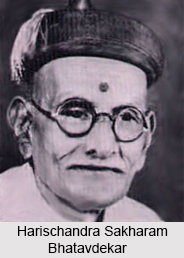
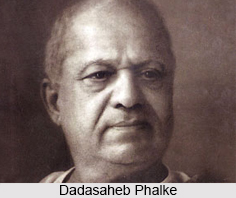
A kaleidoscopic view of History of Indian Cinema includes the pioneering efforts of Save Dada (Harischandra Sakharam Bhatavdekar). He made two short films as early as in 1897. Initial short films in India were directed by Hiralal Sen, starting with ‘Flower of Persia’ (1898). In 1900 the entire Indian entertainment sector underwent huge changes and the emergence of Dadasaheb Phalke took Indian cinema to new heights. Thus, breaking the path of the silent era in films, ‘Raja Harishchandra’, was released in 1913. During this time the main sources for Indian films were the mythological texts. The rapid growth of the Indian cinema led to the end of the silent era and ushered in the era of the talkies. The latter introduced the Indian cinema in a completely new way to the audiences. Now, one could hear the actors and actresses talking, laughing, singing and crying. Initially films were made in HindiTamil, Bengali and Telugu and these films proved to be phenomenal successes.

History of Indian CinemaRevolution of Indian Cinema
1930s and 1940s witnessed the rise of film personalities, such as, Debaki BoseChetan Anand, S.S. Vasan, Nitin Bose and others. Their contributions helped the Indian cinema to grow further. By this time apart from Bombay (Mumbai), the film industry shaped up well in down south too. The Tamil, Telugu and Kannada film industries were making indigenous films as well. By late 1940s films in India were made in various languages but the religious influence was predominant. With struggle for independence the entire scenario altered. Indian cinema then saw films based on the erstwhile contemporary social issues. Movies no longer were limited to the periphery of entertainment; they were now potent instruments to educate the masses as well.
For more, visit the link below:
Monday, 31 October 2022

Indian Movie Production Houses


Indian Movie Production Houses, Indian CinemaThe Indian Production Houses cater to the requirements of production management and crew services for the interested filmmakers. The Indian Movie Production Houses are responsible to provide every technical requirement for Video Production, Live Action Event, Commercial, Corporate Communication, Satellite Uplink, Music Video, Concert, NTSC or PAL Edit, Lights, Cranes, Camera, Permissions, Legalities and so on.

There are several Indian Production Houses, which have their long-term roots in the Bollywood and supply with the best creative, production, and technical personnel in all of the above mentioned countries. The legal team of the production houses takes care of all the production needs starting from studio to legal permissions. The Indian Production Houses also looks after the transportation needs and accommodation. They offer all the services within the mention budget of the filmmaker. Some of the primary services offered by the Indian Production Houses are as follows -

Producer ServiceUnderwater riggingGrip EquipmentPermits and Customs
Production ManagementCamera and DP Services above and underwaterCastingLocations
Professional CrewsMarine CoordinationCateringArt Developments & Props
BudgetsWardrobe and makeupProduction Skills 


The internationally acclaimed Indian actor Aamir Khan owns Aamir Khan Productions Pvt. Ltd. Aamir Khan Productions is a motion picture production and distribution company, based in Mumbai. Actor Aamir Khan established the company in 2001. This production has produced some of the best contemporary films that have indiscriminately earned rave reviews from all sections of the society.

Indian Movie Production Houses, Indian CinemaNarasimha Enterprises have come up with several great films since decades. The first film of this production house was a blockbuster hit, namely Mr. India, released in 1987. The Press Information Bureau is an essential agency of the Government of India to circulate information to the print and electronic media on government policies, programme initiatives and achievements. Guru Dutt Movies Pvt. Ltd. is also known as GDMPL in short. This organization is an Indian movie production company, started by legendary actor-director, Guru Dutt. His son 'Arun Dutt' runs guru Dutt Movies Pvt. Ltd. presently.

For more, visit the link below:
Thursday, 29 September 2022

Indian Regional Films


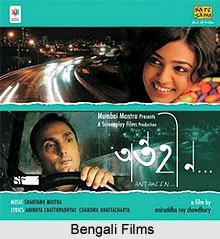
Bengali FilmsIndia is a land of diversity. There lies a huge blend of diverse cultures, regions and languages. This diversity has thus given rise to various regional Indian films apart from the largely known Hindi film industry or Bollywood. Regional Indian films are the keys to the Indian cinema. India is unique in its kaleidoscope of diverse languages and cultures. There are at least 15 languages and over 2000 dialects and films are produced in most of the official languages. In 1993, for example, 183 films were made in Hindi, 168 in Tamil and 148 in Telugu. The largest numbers of regional films are produced in these three languages. However, 78 films were made in Kannada, 71 in Malayalam, 57 in Bengali, 35 in Marathi and almost 10 in Assamese.

Although one can talk of regional films, there is an incessant crossover of talents - Bengali film directors direct Hindi or Oriya films; Tamil directors direct Telugu films. Actors and actresses from the South play leading roles in films made in the North. Furthermore, some of the well known figures in Indian cinema, particularly in the artistic tradition, come from the regional cinemas. The diverse regional cinemas in India strive to maintain their distinctive identities and provide an important dimension of the cultural wealth and diversity of India's regional films.

Marathi cinema has been graced by the presence of seasoned actors who have been instrumental in shaping the industry's identity. Artists like Dilip Prabhavalkar, Sachin Khedekar, and Nana Patekar have not only garnered praise for their acting prowess but have also played pivotal roles in the progression of Marathi cinema on the national stage. Marathi Actors


For more, visit the link below:

Thursday, 15 September 2022

The Bombay Talkies Studio


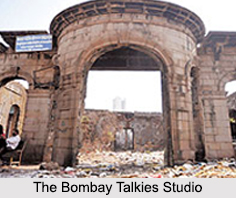
The Bombay Talkies Studio, Indian Movie Production HouseThe Bombay Talkies Studio was the first Movie Production House of India. Fondly it was known as ‘Bombay Talkies’ which was a public limited company and was recorded as a company under the Indian Companies Act. It played a leading role in establishing Bollywood as an industry. The Bombay Talkies Studio was the stepping stones to the success of superstars such as Devika Rani, Ashok KumarMadhubalaDilip KumarRaj KapoorMehmoodKishore KumarLata Mangeshkar and many others. The Bombay Talkies Studio gradually surfaced as a well ordered, self-sufficient and gainful company. It made public issues, affirmed dividends and bonus, and commanded a good reputation on the Bombay Stock Exchange.

Foundation of The Bombay Talkies Studio
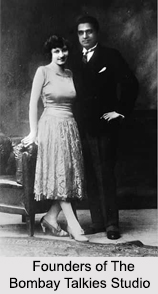
The Bombay Talkies Studio was established in 1934 in Malad, Mumbai in India by Himansu Rai and Devika Rani. Franz Osten and Niranjan Pal were the first full-time filmmakers related to this company. The Bombay Talkies Studio set a towering technological standard for filmmaking in India. It was a highly specialised movie studio (compared to its time), with sound and echo-proof stages, laboratories and editing rooms as well as a preview theatre.

The Bombay Talkies Studio, Indian Movie Production HouseProductions at The Bombay Talkies Studio
The Bombay Talkies Studio imparted a new facet to themes of films, and produced films on contentious topics such as the story of love ‘Achhut Kanya’ (1936) between an Untouchable girl and a high class Hindu Brahmin boy. Other distinguished movies produced by the Bombay Talkies Studio incorporated famed movies of the time like ‘Jawani ki Hawa’ (1935), starring Devika Rani, and ‘Jeevan Naiya’ (1936), a romantic film starring Devika Rani and Ashok Kumar. The 1942 movie ‘Basant’ saw Madhubala for the first time as a child artist.

Decline of The Bombay Talkies Studio
With the subsequent demise of Himansu Rai, the founder and stalwart of the studio, the Bombay Talkies Studio had an abrupt breakdown. His wife Devika Rani, took charge of the company, and was also made the controller of production of the Bombay Talkies Studio. Devika Rani sustained the high tradition of the Bombay Talkies Studio.

The Bombay Talkies Studio, Indian Movie Production HouseAfter Devika Rani left the company, Ashok Kumar with his brother-in- law Sashadhar purchased and tried to restore it, making the hit film ‘Mahal’ in 1949, but ultimately the company closed down. Presently, the Bombay Talkies Studio is in a decrepit state, and has lost the unspoiled glory, which it once commanded.

For more, visit the link below:
Thursday, 1 September 2022

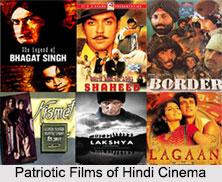
Patriotic Films, Indian Cinema


Patriotic Films, Indian CinemaPatriotic films on Indian celluloid have inspired people about the sacrifice and hardships that the freedom fighters went through in order to free India from the BritishFreedom struggle, as a result, gave birth to a large number of films in the patriotic mode including a couple of offshoots that seemed pro-British. Popular in the years from 1940s to 1960s, this genre resurfaced during the 1980s-90s. It was particularly owing to the fact that India was celebrating her 50th year of independence in 1997.

One of the most famous patriotic films was Gyan Mukherjee's ‘Kismet’ (1943), which became the first blockbuster in the history of Indian Cinema and whose anti-German and anti-Japanese songs became hysterical all over India. In 1952, it was Hemen Gupta, a Bengali director who made ‘Anand Math’, based on a novel by Bankim Chandra Chatterjee. It dealt with the 18th century revolt against the British led by a "sanyasi" (ascetic). In 1953, ‘Jhansi Ki Rani’ released, directed by Sohrab Modi and set in the backdrop of the Sepoy Mutiny of 1857, dealing with the bravery of queen Lakshmibai, Rani of Jhansi, who took up arms and led her army against the British, one of the first Indians to do so.

In 1959, Padmini Pictures of Chennai released ‘Veerapandia Kattabomman’, a Tamil spectacular epic fairytale, directed by B. R. Panthulu on the legendary heroic warrior Veerapandiya Kattabomman. Sivaji Ganesan enacted the titular role of this 18th century South Indian chieftain who rose to rebellion against the East India Company. The film won the National Film Award for Best Feature Film in Tamil. The same director also made another epic film ‘Kittur Chennamma’, in Kannada released in 1961. The film showcased the Indian freedom fighter Kittur Rani Chennamma, portrayed by B. Saroja Devi who led an armed rebellion against the British East India Company in 1824 and died in captivity in 1829.

In 1964, Chetan Anand and Navketan Films made ‘Haqeeqat’, featuring a host of recognised actors like Balraj SahniVijay Anand, Sulochana, Dharmendra and others. Dealing with an incident during the Indo-China war of 1962, it went on to win the National Film Award for Second Best Feature Film in 1965. Another significant patriotic film was ‘Shaheed’ (1965) by S. Ram Sharma, with all popular patriotic songs. The film showcased the contribution of the revolutionaries Bhagat SinghJai Rajguru and Sukhdev during the struggle for independence.

For more, visit the link below:

Thursday, 21 July 2022

Doordarshan, Indian Television Broadcaster


Doordarshan, Indian Television BroadcasterDoordarshan, operated by the Prasar Bharati, is a television broadcaster in India and is an undertaking of the Government of India. Due to the transmitters and infrastructural facilities of Doordarshan, it is considered amongst the leading broadcasting organisations throughout the world. Doordarshan successfully completed its 50th year on September 2009.

History of Doordarshan
Doordarshan started with a tentative telecast on September 1959 from Delhi. The infrastructure at that time was small supported by a temporary studio. Regular transmission commenced on 1965, and formed a part of All India Radio. By 1972, the telecast was expanded to Amritsar and Mumbai. Doordarshan was the only channel available at time and by 1975, it was available in seven cities around the nation. In 1976, it was detached from All India Radio and was fully managed from New Delhi, by two different Director Generals. In 1982, colour television sets became available in country and the speech given by the Prime Minister of that time, Indira Gandhi, was telecast live through out the nation. After this, the 1982 Asian games, Delhi, was also broadcasted by the channel.

Early Programmes of Doordarshan
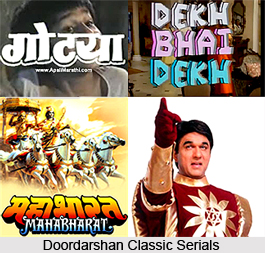
Doordarshan gained exceeding popularity during the 1980s with its new and groundbreaking shows that could easily connect with the urban and rural audiences alike. Shows like Hum Log, Yeh Jo Hai Zindagi, Buniyaad, Nukkad, along with the epics like Ramayana and Mahabharata were watched by viewers throughout the country. Later programmes like Bharat Ek Khoj, Chitrahaar, Sword of Tipu Sultan, Rangoli, The Great Maratha, Ek Se Badkar Ek, Shaktimaan and Superhit Muqabla also were watched widely.

Other popular programmes included thrillers like Byomkesh Bakshi, Karamchand, Barrister Roy, Tehkikaat, Reporter and Suraag. Family oriented shows like Wagle ki Duniya, Fauji, Mr. Yogi, Talaash, Kashish, Srimaan Srimati, Dekh Bhai Dekh, Zabaan Sambhal Ke, Swabhimaan, Shanti, Saagar, Lifeline, Udaan, Circus, Sansaar, Jaspal Bhatti's Flop Show, Meri Awaaz Suno, Sangharsh, Gul Gulshan Gulfam, Sea Hawks, Tu tu mein mein and Junoon were also widely accepted. Mythological programmes like Dastan-E-Hatim Tai, Chandrakanta, Alif Laila were also very popular among the viewers.
Doordarshan, Indian Television Broadcaster
Shows targeted at kids were also much appreciated. Programmes like Captain Vyom, a Desi version of Star Wars, Potli Baba Ki, Malgudi Days, Stone Boy, Tenali Raman, Sigma, Vikram Betaal, Kile ka Rahasya and Dada Dadi ki Kahaniyan are worth mentioning. Many popular international programmes were also aired, after being dubbed in Hindi, such as Johnny Soko and his flying robot, Street Hawk, Knight Rider, Superhuman Samurai Cyber Squad, and animated shows like the jungle book, He-Man and the masters of universe, Spiderman, Disney adventures were also admired by the young audience.

Thursday, 7 July 2022

Stages in Filmmaking


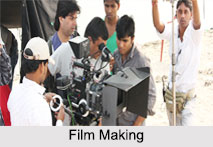
Stages in FilmmakingFilm is a term that encompasses motion pictures as individual projects, as well as the field in general. The origin of the name pertains to the fact that photographic films, also called Film Stock, have historically been the primary medium for recording and displaying motion pictures. They are a strip or sheet of transparent plastic film base coated on one side with a gelatin emulsion, containing microscopically small light-sensitive silver halide crystals. Films are produced by recording actual people and objects with cameras, or by creating them using animation techniques and/or special effects. They comprise a series of individual frames, but when these images are shown rapidly in succession, the illusion of motion is given to the viewer. Flickering between the frames is not visible due to an effect known as persistence of vision - whereby the eye retains a visual image for a fraction of a second after its source has been removed and replaced with that of the next image in sequence.

Film and filmmaking is considered by many to be an important art form; films entertain, educate, enlighten and inspire audiences. The visual elements of cinema need no translation whatsoever, giving the motion picture a universal power of communication. Any film can become a worldwide attraction, especially with the addition of dubbing or subtitles that translate the dialogue in different languages. Films are also artefacts created by specific cultures, reflecting those cultures and, in turn, affecting them as well. Films have an infallible characteristic of connecting with their audience.

The art of filmmaking production cycle consists of 5 main stages:

1. Development: The Development stage of filmmaking lays the very base of a prospective motion picture, wherein an idea is fleshed out into a viable script. The producer/director of the movie will establish a story, which may be inspired from books, other films, true stories, original fictional/non-fictional ideas, etc. and express it in a detailed script encompassing complete scenes, together known as Screenplay.

2. Pre-production: The pre-production is a crucial stage wherein the film is prepared to be shot in camera, involving multiple steps pertaining to different aspects such as film budget, logistics, locations and sets, sound design and music, etc. The entire production is also storyboarded and visualized with the help of illustrators and concept artists.

For more, visit the link below: