Showing posts with label indian state. Show all posts

Saturday, 2 May 2026

Tajpuri: A Historical Study of a Minor Princely State

 The Princely State of Tajpuri was a small yet historically significant political entity located in western India, within the present-day Sabarkantha district of Gujarat. Though modest in size and influence compared to larger princely states, Tajpuri offers valuable insight into the administrative, social, and economic structures that characterized many minor states during the colonial period. Its history reflects the layered hierarchy of princely governance under British paramountcy.


Geographical Setting

Princely State of Tajpuri was situated near the Sabarmati River and formed part of the Bijapur sub-division pargana. The region was marked by a combination of hilly terrain and dense woodland, particularly across its northern stretches. Another defining geographical feature was the Hathmati River, which flowed through and intersected the state. Covering an area of approximately seven square miles, Tajpuri comprised six villages located in a semi-arid zone, where environmental conditions played a significant role in shaping local livelihoods. 

Political Structure and Ruling Lineage

The state was ruled by the Parmar Kolis, a community that traced its lineage to a Rajput chief. The ruling family established itself in Tajpuri in 1474 and maintained control over the territory for 15 generations. The head of the state bore the title of Thakor, a designation commonly used among princely rulers in Gujarat. 

Despite its long lineage, Tajpuri was classified as a 6th Class state within the Mahi Kantha Agency, indicating its relatively limited political standing. This classification system, which ranked princely states based on size, revenue, and influence, was abolished in 1928. The Thakor exercised restricted civil and criminal authority, as ultimate jurisdiction remained under the control of the British administration. 

Administrative Status and Tribute Obligations

Tajpuri functioned under indirect British rule and maintained tributary relationships with larger princely states, notably Idar and Baroda. It paid annual tribute to these states, reflecting its subordinate position within the regional political hierarchy. In 1943, under the Attachment Scheme, Tajpuri was formally attached to the Baroda State, further consolidating administrative control. 

Unlike prominent salute states such as Idar or Danta, Tajpuri did not enjoy the privilege of a gun salute—a ceremonial honor reserved for states of greater importance. Its rulers were received with minimal protocol, underscoring its modest standing within the princely order. 

Social Composition and Economy

The social fabric of Tajpuri was predominantly shaped by the Koli community, who formed the principal ruling and landholding class. These groups reinforced their social status through matrimonial alliances with established Rajput families, including the Makwanas. Alongside them, agrarian communities such as the Kunbis played a crucial role in sustaining the agricultural economy. 

Economically, Tajpuri was largely dependent on agriculture. The semi-arid climate and low annual rainfall limited cultivation to dryland farming practices. Revenue generation was primarily based on land taxes, reflecting a typical agrarian economic structure found in many smaller princely states. 

Integration into Independent India

With the end of British rule in 1947, princely states were given the option to accede to either India or Pakistan. The last Thakor of Tajpuri chose to merge with the newly independent Union of India following the British withdrawal on 15 August 1947. This marked the end of Tajpuri’s status as a princely state and its integration into the modern Indian nation-state. 

Although small in scale, the Princely State of Tajpuri represents an important example of the lesser-known political entities that once formed the mosaic of pre-independence India. Its history highlights the complexities of regional governance, social hierarchy, and colonial influence, offering a deeper understanding of India’s princely past.

Friday, 17 January 2025

East Indian States


The eastern region of India, comprising states like West Bengal, Odisha, Bihar, Jharkhand, and the union territory of Andaman and Nicobar Islands, is a land of rich history, vibrant culture, and significant tourism potential. These East Indian states, each unique in its offerings, collectively form a region that showcases India's diverse heritage. 

Historical Significance

The East Indian states have played a crucial role in shaping India's history. Bihar, often referred to as the "Cradle of Indian Civilization," is home to ancient sites such as Nalanda and Bodh Gaya, associated with Buddhism and the teachings of Gautama Buddha. Odisha, known for its ancient Kalinga kingdom, witnessed pivotal events like the Kalinga War, which led to Emperor Ashoka's conversion to Buddhism. 

West Bengal's history is deeply intertwined with India's colonial past. Kolkata, the state’s capital, was once the center of British administration and a hub for India’s freedom movement. Jharkhand, though formed in 2000, has a history rooted in tribal resistance against British colonial rule, exemplified by leaders like Birsa Munda. 

Cultural Diversity

East India boasts an unparalleled cultural richness. The region's languages include Bengali, Odia, Maithili, and Santhali, each reflecting the area's unique traditions. Festivals like Durga Puja in West Bengal, Rath Yatra in Odisha, and Chhath Puja in Bihar bring communities together in celebration. 

Art and architecture are also hallmarks of this region. The Sun Temple at Konark and the terracotta temples of Bishnupur are prime examples of architectural excellence. The region is known for its performing arts, including Odissi dance from Odisha and Baul music from Bengal, which have gained international recognition. 

The tribal communities in Jharkhand and the Andaman Islands add another layer of cultural depth. Their traditional art forms, dances, and rituals offer a glimpse into an ancient way of life that is still preserved. 

Tourism Attractions

Tourism in East India is a blend of natural beauty, heritage sites, and cultural experiences. West Bengal offers everything from the serene Darjeeling hills to the historic Victoria Memorial in Kolkata. Sunderbans, a UNESCO World Heritage Site, is a major attraction for wildlife enthusiasts. 

Odisha's golden beaches, such as Puri and Chandipur, draw visitors alongside pilgrimage sites like the Jagannath Temple. Chilika Lake, Asia's largest brackish water lagoon, is a haven for migratory birds and nature lovers. 

Bihar invites tourists to explore Buddhist circuits, including Bodh Gaya and Rajgir, while Jharkhand's dense forests and waterfalls, such as Hundru and Dassam, provide an escape into nature. The Andaman and Nicobar Islands, with their pristine beaches and coral reefs, are a paradise for adventure seekers and marine enthusiasts. 

East Indian states offer a unique blend of historical landmarks, cultural vibrancy, and natural beauty. Together, they provide a comprehensive experience for history buffs, cultural enthusiasts, and tourists seeking tranquil retreats. Exploring this region not only reveals the depth of India's heritage but also showcases its diverse and inclusive character.

Thursday, 21 December 2023

Chief Ministers of Jharkhand


Jharkhand, the mineral-rich state carved out of Bihar on November 15, 2000, has witnessed dynamic leadership over the years. The role of Chief Ministers in shaping the destiny of this young state has been pivotal. Each leader brought unique strengths, faced diverse challenges, and contributed significantly to the progress and development of Jharkhand.

Babulal Marandi (2000-2003): The first Chief Minister ofJharkhand, Babulal Marandi, laid the foundation for the nascent state's governance. His tenure marked the initial steps in building institutions and infrastructure. Marandi's administration focused on addressing the socio-economic disparities and promoting the interests of tribal communities, who form a significant portion of the state's population.

Arjun Munda (2003-2006, 2006-2008, and 2010-2013): Arjun Munda, a three-time Chief Minister, is remembered for his efforts to boost economic development and improve governance. His tenure saw increased attention on industrial growth and the empowerment of marginalized communities. Munda played a vital role in streamlining administrative processes, making governance more efficient.

Shibu Soren (2008, 2009-2010, and 2006-2009): Known as the 'Guruji' of Jharkhand politics, Shibu Soren, despite multiple short stints as Chief Minister, left an indelible mark on the state's political landscape. His leadership was characterized by a commitment to the welfare of the tribal population and efforts to bridge the urban-rural divide. Soren's emphasis on inclusive development resonated with the ethos of Jharkhand.

Madhu Koda (2006): Madhu Koda, though serving a brief term, was the first Chief Minister from the tribal community. His tenure faced scrutiny due to allegations of corruption, but it also saw initiatives aimed at rural development and poverty alleviation. Koda's time in office brought attention to the need for transparent governance in the state.

Raghubar Das (2014-2019): Raghubar Das, the first non-tribal Chief Minister, concentrated on infrastructure development and industrialization. His leadership was marked by initiatives to improve education and healthcare, creating a more conducive environment for business. Das aimed to position Jharkhand as an investment-friendly state, attracting industries and fostering economic growth.

Hemant Soren (2013-2014 and 2019-present): Hemant Soren, the current Chief Minister who assumed office in December 2019, has been at the forefront of steering Jharkhand towards holistic development. His tenure witnessed a renewed focus on social welfare programs, with an emphasis on healthcare, education, and sustainable agriculture. Soren's administration prioritized the empowerment of tribal communities and marginalized groups, ensuring that the benefits of development reach the grassroots.

Chief Ministers of Jharkhand, through their diverse tenures, have played pivotal roles in shaping the destiny of the state. From addressing socio-economic disparities to fostering industrial growth, each leader has left an indelible mark. As Jharkhand continues its journey towards progress, the present Chief Minister, Hemant Soren, carries the torch, guiding the state towards inclusive and sustainable development.

Tuesday, 7 July 2020

Forts in India

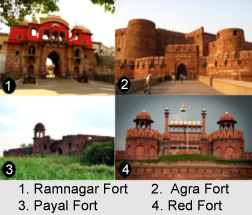
Forts in India have been constructed to protect the settlements against hostile attack and marauding wild animals. Due to successive waves of invasion, there was an ancient tradition in India to erect massive and strong forts to obstruct the invaders. The origins of some of the Indian forts are lost in the mists of time while some have been transformed or reconstructed after the invasion of the Muslims in the twelfth century.


Early History of Forts in India
The ancient treatises on Indian architecture and fortification can be retrieved from the 'Shilpa Shastras' and in some of the ancient Indian literature like the Indian Puranas and epics. This vast pool of knowledge gives a significant account of the development of the forts in India. 'Pur', a word which is mentioned repeatedly in the Vedas, means a rampart, fort or stronghold. Kautilya, in the forth century BC, wrote extensively regarding the protective fortifications. He differentiated forts as per the preferred types of site. The Nara Durg, a fort which was protected by men, gives an account of the Aryans correlation of a fort with a town.

Forts in IndiaMedieval History of Forts in India
After the invasion of the Muslims, construction of forts in India reflects many of the developments which took place in Europe. The central citadel was kept isolated and secure from the expansive outwork of curtain walls. Usually the citadel was sited on a naturally defensible outcrop of rock. The forts of the great Maratha Emperors of western India like the Purandhar, Raigarh and Sinhagarh have manipulated natural terrain to their strategic advantage. At Gulbarga, in Deccan, the central stronghold followed the practice of the Crusader castles of the Near East, with a robust donjon or inner redoubt at the heart of the defence.


Saturday, 8 February 2020

Indian State Museums

West-BengalIndian State Museums mainly represent and preserve the rich cultural heritage of their 
the-indian-museum_51673aba-4359-11e5-a8da-005056b4648erespective states. India is well known as a culturally rich country all over the world and is also renowned for large number of museums that it houses.
Purana-Qila
 There are various kinds of museums in India like the Archaeological Museums, Science Museums, Technological Museums, Art Museums and History Museums.
1610
Museums of East and North East India
Odisha is a small state in India, holding a rich past and cultural heritage. The state has been patronized for its glorious art and culture from ancient age and the museums of Orissa are quite popular among the Indian State Museums.
museum1Museums in West Bengal uphold national heritage and promote international understanding.
gandhi-museum-maduraimahabalipuram-tourist-place1sMuseums of South India
The museums in Tamil Nadu are also considered as popular ones among the Indian State Museums for preserving the interesting archaeological and anthropological objects of the state.

Om Namah ShivayaunnamedMuseums of North India
Jammu and Kashmir has always been the centre of cultural heritage since time immemorial. The museums of Jammu and Kashmir nicely hold the glory of the state's past events and affairs and hence, they attract more visitors than most of the other Indian State Museums.

unnamedMuseums of West India
The museums of Gujarat will provide it’s visitors with glimpses of the earlier emperors, incidents from their lives and portraits of the royal families.

Read More :- Indian State Museums

Wednesday, 11 September 2019

Kerala, Indian state

Kerala is one of the most beautiful states of South India. It is also known as God’s own country.
Kerala is located in the south-west region of India on the Malabar Coast. Its capital is Thiruvananthapuram, which is also its largest city. The commercial capital of the state is Kochi.

History of Kerala
The ancient Keralite legend claims that Kerala originated when Parasurama, Incarnation of Vishnu, threw his battle-axe into the sea.


1477384304_kerala-district-wise-map
Geography of Kerala:
Kerala is situated between 8 degree 18 minutes and 12 degree 48 minutes north latitude and between degrees 52 minutes and 72 degrees 22 minutes east longitude. Kerala is bounded by Arabian Sea on the West, Karnataka on the North, and Tamil Nadu on the East.

Demography of Kerala
The population growth of Kerala is far lower than the national average. The people of Kerala are called Malayali. The official language of the people is Malayalam language.

22kerala.jpg

Culture of Kerala 
Culture of Kerala is diversified. The major dances of Kerala are KathakaliThullal and Mohiniattam. The folk art forms include TheyyamMudiyettu dance Parichamuttukali, Bhadrakali Pattu, Pulluvanpattu and Thiruvathirakali etc.
kerala art.jpgKalaripayattu is the comprehensive system of the marital arts of Kerala. Several festivals are also celebrated in Kerala. Onam, Vishu Festival, Thrissur Pooram Festival, Payippad Jelotsavam festival, Attukal Pongala festival are some of the major festivals of the state.
a.jpg  

Economy of Kerala
The economy of Kerala is mainly dominated by agriculture. However, Kerala lags behind other Indian states in terms of per capita income and economic productivity.
place

Tourism in Kerala
There are several attractive tourist spots in Kerala. Backwaters, temples, hills and wildlife sanctuaries are some of the main tourist attractions offered by Kerala.

Read More :- Kerala, Indian state

Saturday, 8 June 2019

Folk Dances of Punjab

school-chalao-malwai-giddha-dance-punjab.jpgThe exuberance and vitality of the people of Punjab are vigorously displayed in their
school-chalao-bhangra-dance-punjab.jpglohri_2019010819060233folk dances. With the drum beat or to the tune of some other instrument of folk music, the energetic feet of the people of Punjab are spontaneously set in motion to deliver a folk dance.These folk dances of Punjab are typically performed at times of celebration, such as harvest, weddings and festivals like Lohri  or the Spring Festival.hist

 Bhangra Dance: Bhangra is one of most popular dances of India performed during Baisakhi only by themen in Punjab. This is one of the most important folk dances of Punjab.
Giddha-Dance.jpg
Jhummar Dance: Jhummar dance is a dance of ecstasy and a living testimony of the happiness of men, so performed only by men.
school-chalao-jhumar-dance.jpg
Giddha Dance
The dance form of Giddha originated from West Punjab.

school-chalao-teeyan-dance-punjab.jpgTeeyan DanceTeeyan is the women's dance festival celebrated in Punjab. Teeyan is performed to welcome the rains and usually takes place in the banks of any water body under big shady trees, where the swings are thrown over the branches and the dancing starts.

Saturday, 1 June 2019

Temples of Chhattisgarh

bhoramdeo-temple.jpg
The state of Chhattisgarh is located in central India.  This state is beautified by mountains, rivers, waterfalls, forests etc. The natural beauty of this state along with museums, historical sites, national parks, monuments and statues draw tourists to this state.
10


Gandheswar Temple
Gandheswar Temple is located in the town of Sirpur. This temple is dedicated to Lord Shiva.
21img60Shivani Temple 
Shivani Temple is located in the city of Kanker. This temple is dedicated to Shivani Maa.
DSC_5545-copy-744x472.jpg
Vishnu Mandir
chandi mandir.jpgVishnu Mandir adorns the district of Janjgir- Champa. This temple is dedicated to Lord Vishnu.temple.jpg
Other Temples of Chhattisgarh
Some of the other temples of Chhattisgarh are Bambleshwari Temple, Chandi Temples, Laxman Temple, Shivarinarayan Laxminarayan Temple and Shankar Temple.

Read more : Temples of Chhattisgarh

Tuesday, 28 May 2019

Traditional Dresses of Assam

Assamese-bride-Groom.jpg
gamocha-assamese-handwoven-towel-1467622.jpg1-3.jpgAssam Silk saris dresses of Assam consist of the Muga or the golden silk fibre which has a huge demand in the global market.The 'Muga' is the most important and the most preferred wild silk all over India and is the main cause behind the exquisiteness and elegance of the Assam Silk saris. Embroideries also incorporate, acquainted and culture-related things, such as architecture and stone sculptures on the Madan Kamdev Temple in Assam.
c165d7aaff5763c7cea787bec298a27eHub of Traditional Dresses of Assam
Sualkuchi is the place where the world famous Assam silk is grown. It is situated at a distance of 32 km from Guwahati. The golden silk of Assam is exceptional to this state.

Bodo Tribe 
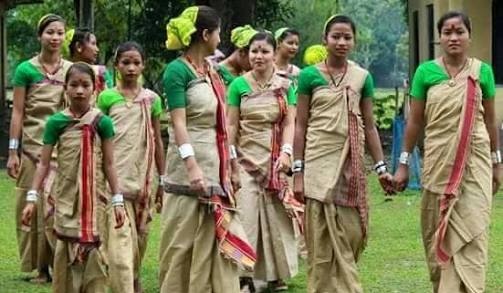
The Bodo Tribe of Assam resides amidst the lush greenery of the region.  The men of the Bodo tribe, dresses themselves in Dhoti and Chador, which is made from Endi.
bodo-tribe.jpg
assam
Dimasa Tribe
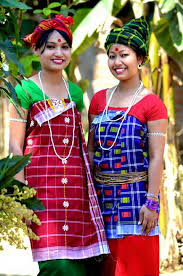
The dressing style of Dimasa Tribe in Assam is very similar to the Bodo tribe.
assa.jpgMech Kachcharis Tribe
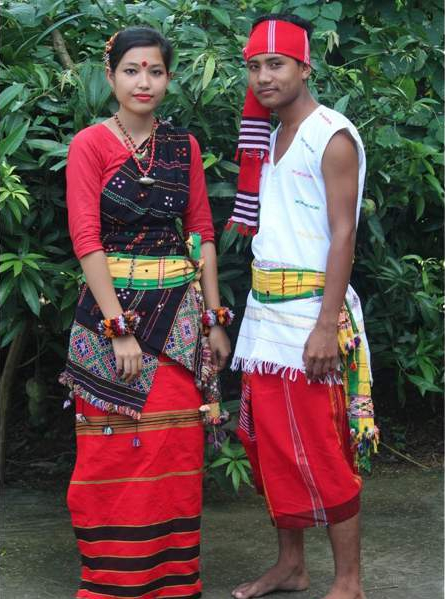
Mech Kachcharis wear ordinary dresses that are hand spun and hand woven. The men wear dhoti, turban and endi shawl or chaddar
images (2)
Rabha tribe
The people belonging to Rabha tribe in Assam wear typical costumes known as koum kontong that are woven by women on the back-strap loom.

Mishing Community Mishing tribe The women of the Mishing tribe wear simplistic traditional dresses.

Read more : Traditional Dresses of Assam

Friday, 24 May 2019

Lakes in Assam


Assam-Land-Valuation-Certificate.jpg
The state of Assam is located in the north eastern part of India. Tea and silk produced by this state have also made it popular in India. The lakes of Assam further add to the beauty of the state, attracting tourists from all over the country.


4017-25-Haflong-Assam-10-Lesser-Known-Hill-Station-in-India.jpgChandubi Lake
Chandubi Lake is located in Kamrup District. when the forest went down giving birth to Chandubi Lake. This lake is the natural lagoon and is open to fishing.

Haflong Lake
Haflong Lake is situated at the heart of Haflong Town. This lake is open to several leisure water sporting activities. Boating is a fun filled possibility on this lake, along with angling.
Son Beel.jpg1549461489_1549461458452
Son Beel
Son Beel is located in the district of Karimganj. The largest wetland in the state of Assam. It converted into a farm land suitable for the cultivation of rice.
42723340092_95f92c6c98_b.jpg

Dipor Bil: Dipor Bil is located to the south-west of the city of Guwahati in Kamrup district.This lake is valuable in terms of fishing, collection of fodder for domestic cattle and aquatic seeds such as waterlily . 

Read more : Lakes in Assam

Monday, 20 May 2019

Bharatiya Janata Party (BJP), Indian Political Party


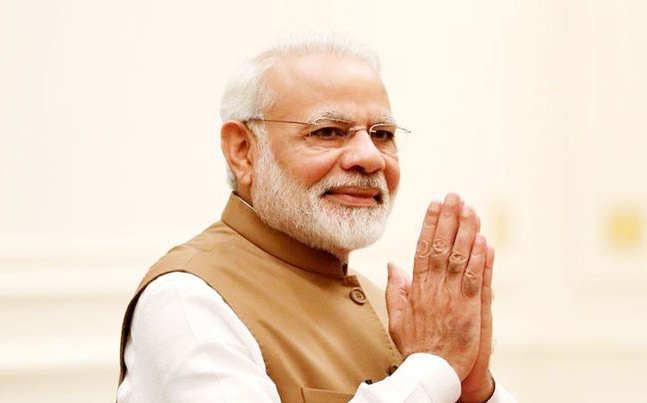
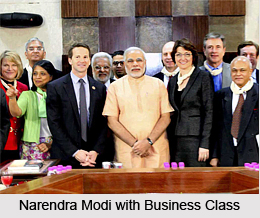
Narender-ModiNarendra Damodardas Modi better known as Narendra Modi, is the 15th Prime Minister of India and he was the 14th Chief Minister of Gujarat. Later he resigned from the position as a Chief Minister of Gujarat, as he was elected as a Prime Minister of India, after the huge victory in Indian General Election 2014. 

Narendra Modi is a member of the political party named Bharatiya Janata Party
61S21UozyvL._SX355_
(BJP). He was the successful candidate for the designation of Prime Minister of the National Democratic Alliance led by the Bharatiya Janata Party (BJP), for the Indian general elections of 2014.

Early Life of Narendra Modi
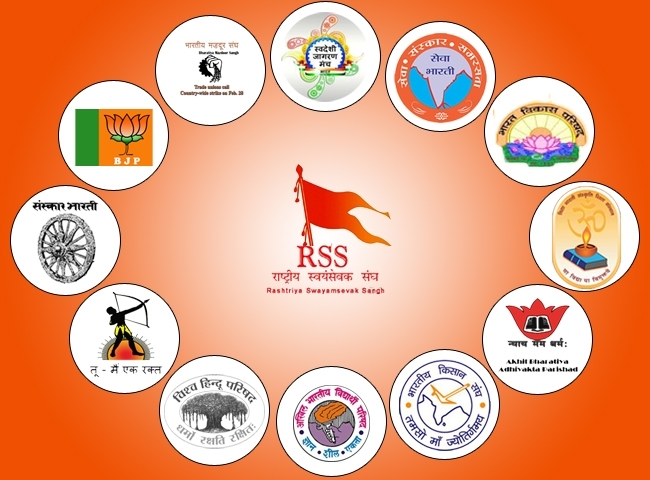
Narendra Modi was born on 17th September 1950, to a middle class family of grocers in Vadnagar in the Mehsana district of Gujarat. Narendra Modi worked in his family tea stall along with his brother, which was located near a bus terminus.  He commenced working in Gujarat State Transport Corporation's canteen, wherein he was a propagandist or 'Pracharak' of the Rashtriya Swayamsevak Sangha
38_03_52_39_rss_meeting.jpg 
(RSS) during 1974. After he received TSS training inNagpur.
He successfully set up a new chapter of
ABVP.jpgAkhil Bharatiya Vidyarthi Parishad which was a powerful national student body.

After post-graduating in political science, he entered social life right at the beginning of his career, in the early 1970s. After that he became a full-time worker and organiser for it. During his engagement with Rashtriya Swayamsevak Sangha, Narendra Modi, 15th Prime Minister of India He had completed his master's degree from Gujarat University in the field of Political Science.
Political Career of Narendra Modi
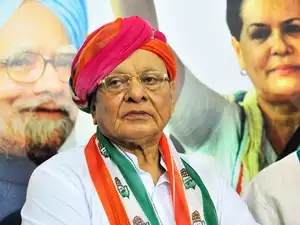
Modi was absorbed into BJP in the year 1987, thanks to the efforts of the RSS. Narendra Modi's organization of the 'Journey Of Unity' or 'Ekta Yatra' earned him higher recognition in the Indian political arena, as compared to Keshubhai Patel and

cbi-registers-fir-against-former-union-textile-minister-shankarsinh-vaghela-in-ntc-land-scam.jpg
Narendra Modi, 15th Prime Minister of IndiaShankarsingh Vaghela. During this time, he was appointed as the General Secretary of the BJP and he was shifted to Delhi, as he was entrusted the responsibility of managing the actions of the party in Himachal Pradesh and Haryana. He has often been appreciated for his economic policies which have proved their dexterity in enhancing the economic growth in the western Indian state of Gujarat.

Career of Narendra Modi as Gujarat Chief Minister
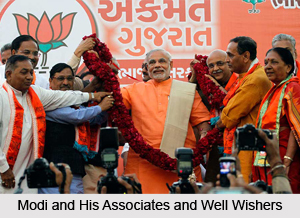
Narendra Modi was made the Chief Minister of Gujarat on 7th October, 2001 and his duty was to organise the BJP for the purpose of the elections which were to take place in December, 2002. During his tenure as Gujarat's Chief Minister, his concepts included the idea of small government and privatisation. A Pakistani Jihadist who was accused of terrorism in the Parliament attack, 2001. 

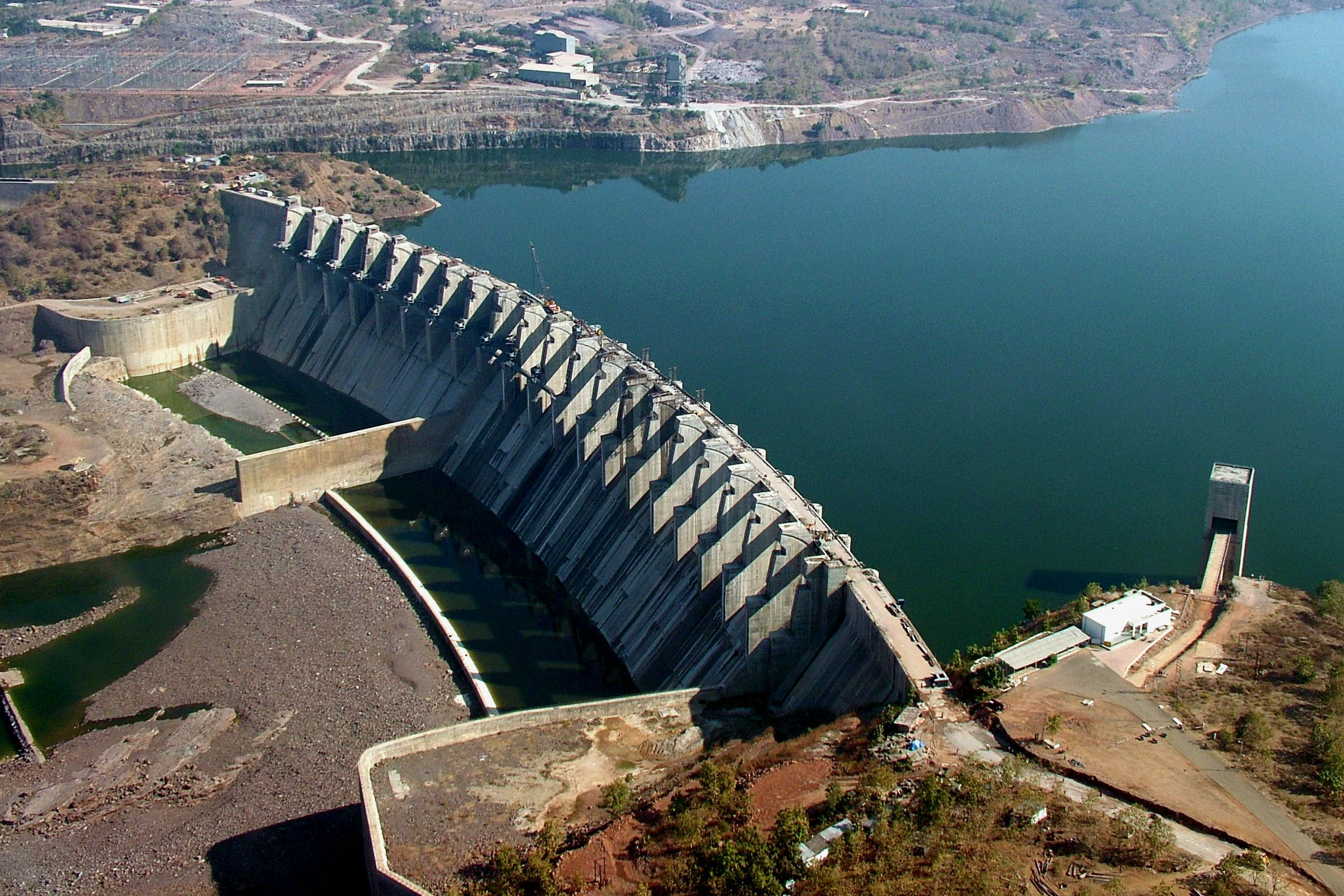
Successful rising of the height of theNarmada Dam from 95 to 110.64 metres is one of the most substantial accomplishments of his government that has been resulted in increased irrigationwater1-2.jpg

modiforstorypage_660_122612035858.jpg
supplies and hydroelectric power generations.After being elected as Prime Minister Candidate, Narendra Modi resigned from the post of Chief Minister of Gujarat on 21st May 2014 and placed Anandiben Patel as the next Chief Minister of Gujarat.

Read more : Bharatiya Janata Party (BJP), Indian Political Party