Showing posts with label parliment. Show all posts

Thursday, 30 January 2025

Governors of Goa


The Governor of Goa serves as the constitutional head of the state, representing the President of India. The position carries significant responsibilities, including maintaining law and order, ensuring governance in accordance with the Constitution, and facilitating the smooth functioning of the state administration. Appointed by the President, the Governor plays a crucial role in upholding democratic principles while overseeing the state's governance. 

Powers and Responsibilities

The Governor of Goa holds both executive and legislative powers, primarily acting as a bridge between the central and state governments. The key powers and responsibilities include: 

  1. Executive Powers: The Governor exercises executive authority on behalf of the President, overseeing the state's administration. The Chief Minister and the Council of Ministers function under the Governor's supervision, ensuring that policies and governance align with constitutional provisions.
  2. Legislative Powers: The Governor summons, prorogues, and dissolves the Goa Legislative Assembly. Additionally, they hold the authority to address the assembly, highlight policy matters, and approve or withhold assent to bills passed by the legislature.
  3. Judicial Powers: The Governor has the authority to grant pardons, reprieves, respites, or remissions of punishment for offenses against laws under the state’s jurisdiction.
  4. Emergency Powers: In case of constitutional crises, the Governor can recommend President’s Rule in the state, taking over administrative functions and ensuring governance in alignment with constitutional mandates. 

Tenure and Appointment

The Governor of Goa is appointed by the President of India for a five-year term. However, the tenure is not fixed and can be shortened or extended at the President’s discretion. The Governor serves at the pleasure of the President, and in certain situations, their term may be terminated before completion. Upon appointment, the Governor takes an oath administered by the Chief Justice of the Bombay High Court or a senior judge designated for the purpose. 

Notable Governors and Their Contributions

Several Governors have played pivotal roles in Goa’s development and governance. Some notable figures include: 

  1. Lt. Gen. J.F.R. Jacob: A distinguished military officer, Jacob played a key role in streamlining governance and enhancing security measures in Goa.
  2. S.C. Jamir: His tenure focused on infrastructural improvements, with significant contributions towards education and connectivity.
  3. Satya Pal Malik: Advocated for transparency and accountability in governance, emphasizing issues related to public welfare and development.
  4. P.S. Sreedharan Pillai (Present): Focuses on socio-economic development, with initiatives aimed at improving healthcare and education.

The Governor of Goa holds a vital position in ensuring constitutional governance while supporting the state’s development. Through their executive, legislative, and judicial functions, Governors contribute to policy implementation and administrative stability. Over the years, they have played crucial roles in fostering progress, maintaining law and order, and facilitating governance that aligns with constitutional principles. Their influence extends across various sectors, ensuring that Goa continues to develop within the framework of democratic governance.

Wednesday, 20 December 2023

Chief Ministers in India


In the democratic framework of India, the position of Chief Minister holds paramount significance at the state level. The Chief Minister serves as the head of the state government and is a pivotal figure in the political landscape. Understanding the election process, roles, responsibilities, and the tenure of a Chief Minister is essential to grasp the functioning of the state administration.


Election Process

The Chief Minister in India is not directly elected by the people but is appointed by the Governor of the state. The Governor, in turn, usually invites the leader of the political party with a majority in the state legislative assembly to form the government. This leader is typically the one elected as the legislative party leader by the members of the party after a successful electoral performance. 

In the case of a hung assembly, where no single party secures a clear majority, post-election alliances and negotiations become crucial. The Governor has discretionary powers in such situations, often calling upon the party or coalition that is most likely to command a majority in the assembly. 

Roles and Responsibilities

The Chief Minister is entrusted with multifaceted roles and responsibilities, shaping the state's policies, governance, and development. The primary duty lies in heading the Council of Ministers and coordinating their activities to ensure effective administration. The Chief Minister plays a pivotal role in formulating and implementing policies, representing the state in various forums, and managing the state's finances. 

The Chief Minister is the chief spokesperson of the state government and is responsible for presenting the government's stance on various issues. As the head of the executive, the Chief Minister also oversees the functioning of government departments, ensuring their smooth operation and adherence to policies. In matters of law and order, the Chief Minister collaborates with the state police and other law enforcement agencies to maintain peace and security. 

Furthermore, the Chief Minister is actively involved in the planning and execution of development projects, addressing the needs of the state and its citizens. Collaboration with the central government, neighboring states, and international entities is also a crucial aspect of the Chief Minister's role in fostering cooperation and ensuring the overall well-being of the state. 

Term in Office

The term of office for a Chief Minister in India is not fixed and is contingent on the political dynamics within the state. Generally, a Chief Minister serves a term of five years, coinciding with the term of the legislative assembly. However, the Chief Minister's tenure may be cut short due to factors such as a vote of no confidence, resignation, or dissolution of the assembly. 

In the event of a premature end to the Chief Minister's term, the Governor has the authority to appoint an interim Chief Minister until the formation of a new government or until fresh elections are conducted. This flexibility in the tenure ensures that the Chief Minister remains accountable to the legislative assembly and the electorate. 

Chief Ministers in India play a pivotal role in the governance structure of the country. The election process, roles, responsibilities, and term in office collectively shape the dynamics of state administration. The Chief Minister serves as the linchpin in steering the state towards progress and development, making informed decisions that impact the lives of millions. Understanding the nuances of the Chief Minister's position is crucial for a comprehensive comprehension of the democratic fabric of the nation.

Monday, 20 May 2019

Bharatiya Janata Party (BJP), Indian Political Party


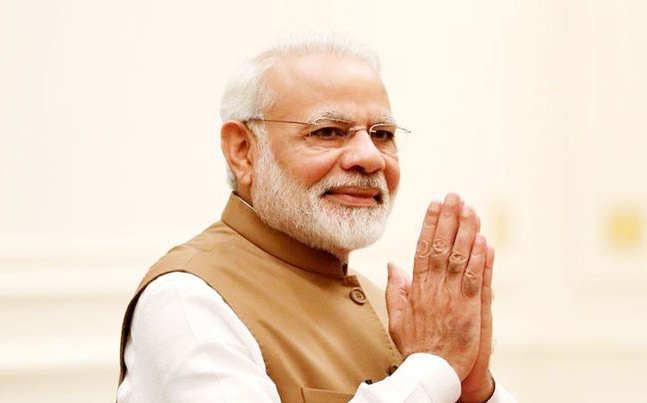
Narender-ModiNarendra Damodardas Modi better known as Narendra Modi, is the 15th Prime Minister of India and he was the 14th Chief Minister of Gujarat. Later he resigned from the position as a Chief Minister of Gujarat, as he was elected as a Prime Minister of India, after the huge victory in Indian General Election 2014. 

Narendra Modi is a member of the political party named Bharatiya Janata Party
61S21UozyvL._SX355_
(BJP). He was the successful candidate for the designation of Prime Minister of the National Democratic Alliance led by the Bharatiya Janata Party (BJP), for the Indian general elections of 2014.

Early Life of Narendra Modi
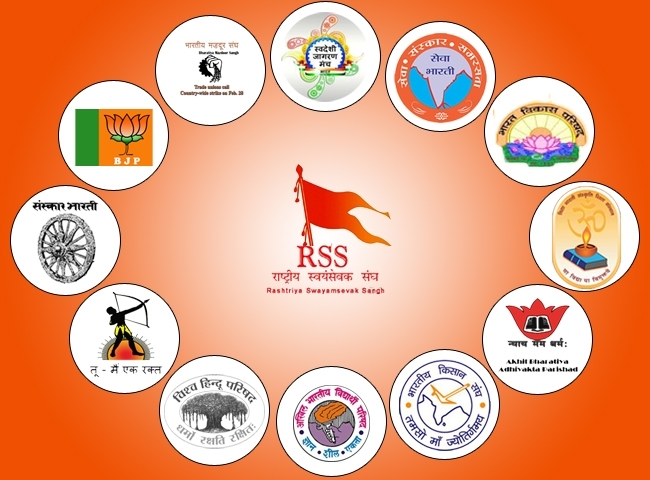
Narendra Modi was born on 17th September 1950, to a middle class family of grocers in Vadnagar in the Mehsana district of Gujarat. Narendra Modi worked in his family tea stall along with his brother, which was located near a bus terminus.  He commenced working in Gujarat State Transport Corporation's canteen, wherein he was a propagandist or 'Pracharak' of the Rashtriya Swayamsevak Sangha
38_03_52_39_rss_meeting.jpg 
(RSS) during 1974. After he received TSS training inNagpur.
He successfully set up a new chapter of
ABVP.jpgAkhil Bharatiya Vidyarthi Parishad which was a powerful national student body.

After post-graduating in political science, he entered social life right at the beginning of his career, in the early 1970s. After that he became a full-time worker and organiser for it. During his engagement with Rashtriya Swayamsevak Sangha, Narendra Modi, 15th Prime Minister of India He had completed his master's degree from Gujarat University in the field of Political Science.
Political Career of Narendra Modi
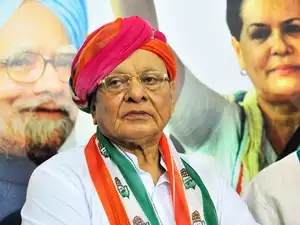
Modi was absorbed into BJP in the year 1987, thanks to the efforts of the RSS. Narendra Modi's organization of the 'Journey Of Unity' or 'Ekta Yatra' earned him higher recognition in the Indian political arena, as compared to Keshubhai Patel and

cbi-registers-fir-against-former-union-textile-minister-shankarsinh-vaghela-in-ntc-land-scam.jpg
Narendra Modi, 15th Prime Minister of IndiaShankarsingh Vaghela. During this time, he was appointed as the General Secretary of the BJP and he was shifted to Delhi, as he was entrusted the responsibility of managing the actions of the party in Himachal Pradesh and Haryana. He has often been appreciated for his economic policies which have proved their dexterity in enhancing the economic growth in the western Indian state of Gujarat.

Career of Narendra Modi as Gujarat Chief Minister
Narendra Modi was made the Chief Minister of Gujarat on 7th October, 2001 and his duty was to organise the BJP for the purpose of the elections which were to take place in December, 2002. During his tenure as Gujarat's Chief Minister, his concepts included the idea of small government and privatisation. A Pakistani Jihadist who was accused of terrorism in the Parliament attack, 2001. 

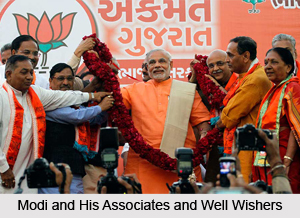
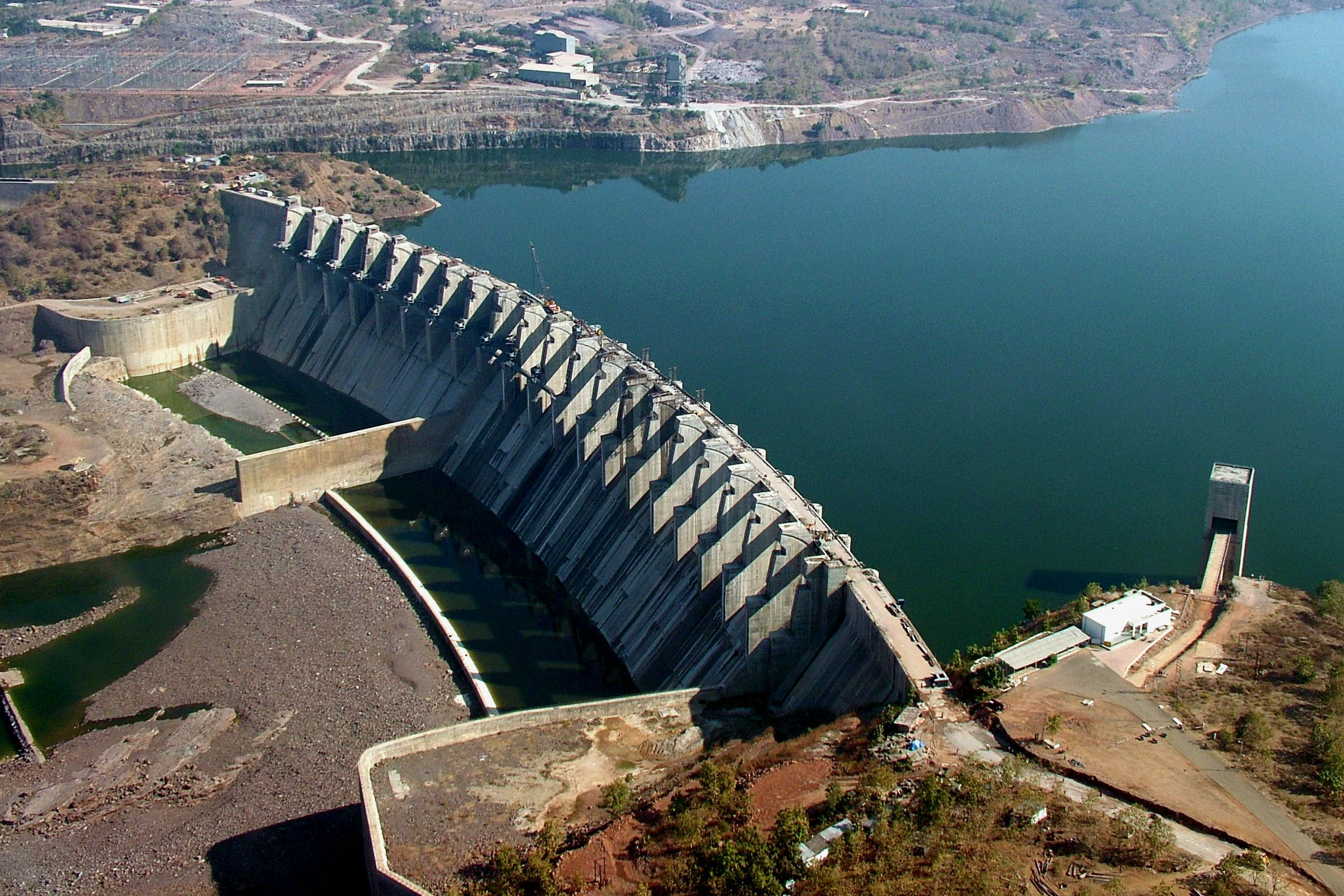
Successful rising of the height of theNarmada Dam from 95 to 110.64 metres is one of the most substantial accomplishments of his government that has been resulted in increased irrigationwater1-2.jpg

modiforstorypage_660_122612035858.jpg
supplies and hydroelectric power generations.After being elected as Prime Minister Candidate, Narendra Modi resigned from the post of Chief Minister of Gujarat on 21st May 2014 and placed Anandiben Patel as the next Chief Minister of Gujarat.

Read more : Bharatiya Janata Party (BJP), Indian Political Party