Showing posts with label concentration. Show all posts

Saturday, 5 September 2020

Palaces of India


Palaces of India are innumerable, scattered throughout the length and breadth of the country and belonging to numerous kings and rulers who ruled India for many centuries. The royal residences of these kings, the palaces are excellent works of architecture, which speak of the creative abilities, and artistic sensibilities of these rulers. These palaces are the assets of India and enhance the tourist quotient of the state where they are located. Some of these palaces have now been converted in to luxurious hotels and also open for public viewing. The palaces are maintained by the government as they bear ample testimony to the rich cultural Indian heritage.

The Amar Mahal Palace is a grand palace in Jammu and Kashmir, which was built by Raja Amar Singh and presently has been transformed into a museum. This palace contains several interesting exhibits which consists of a golden throne that weighs 120 kg, some Kangra paintings, Pahari miniature paintings, a library which houses 25,000 unique books and many other art beautiful collections.

Bangalore Palace
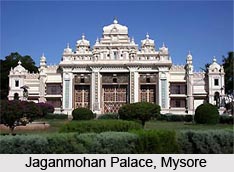
The Bangalore Palace resembles the Windsor Castle in England and is located in Bangalore and is a well-known venue for international music bands, rock stars. Bella Vista in Hyderabad was inspired from the Heney-on-Thames of England and was a royal palace of the Nizam.
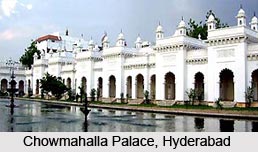
Palaces of IndiaChowmahalla Palace
Chowmahalla Palace was the official residence of Nizams of Hyderabad and the seat of Asaf Jahi dynasty. In the Persian language, 'Chahar' implies four while in Arabic language, 'Mahalat' (plural of Mahal) stands for palaces and therefore this gave birth to the term 'Chowmahallat' or four palaces. This palace received the UNESCO Asia Pacific merit award for its preservation of rare cultural heritage.

Falaknuma Palace
The Falaknuma Palace was built by the Paigah, Nawab Vikar-ul-Umra in the southern part of the old city of Hyderabad. This palace is considered to be one of the most magnificent palaces in the state of Andhra Pradesh. Paigarh Hyderabad State owned this palace, but it was later confiscated by the Nizams of Hyderabad. It is located in Faluknama which is at a distance of 5 km from Charminar and was constructed by Nawab Vikar-ul-Umra, the then minister of Hyderabad.

For more visit the page: 

Monday, 13 July 2020

Tantrism


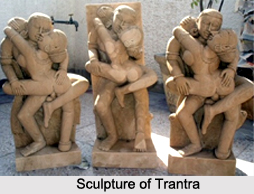
TantrismTantrism has persisted and thrived throughout Asian history since the middle of the first millennium. It deals with spiritual practices and ritual forms of worship aiming at liberation from ignorance and rebirth. The universe is regarded as the godly play of Shakti and Shiva. Tantrism developed into a tradition by the end of the Gupta reign. However it has influenced major religions like HinduismSikhismBuddhism and Jainism. Tantrism is characterized by the use of rituals thereby identifying macrocosm and microcosm. In Tantrism one uses the heavenly power that flows through the universe to achieve certain goals.

Origin of Tantrism
Origin of Tantrism is a debatable issue. There are diverse views - some say that the Pre-Aryan Indians could have been the discoverers; others consider it as the tradition of ancient people. Historically it dates back to the time of the rise of the religion of Buddhism as the later Buddhists adopted some of the Tantric symbols.

Relation to Vedic Tradition
The tradition of Tantrism may be considered as intertwined with the Vedic tradition. The sources of written Tantric tradition are the agama which consists of four parts describing jnana, yoga, kriya and charya. Elements of Tantrism exist in Shaiva, Vaishnava, Ganapatya, Shaurya and Shakta forms. The basic ideas of Tantra as a philosophy are found in the Rig Veda. Tantrism is a build-up of various resources to change mundane into super mundane. There are some hymns and use of mystic words during the Rig Vedic period which proves the origin of Tantra.

Saturday, 25 May 2019

Meditation and Diseases


02-healthier-12-Little-Things-That-Can-Change-After-Just-15-Minutes-of-Meditation_554143225-Chinnapong
stressed-woman-at-work Meditation is a practice to increase the concentration power of mind as well as to make a person more self-aware. The person who practices meditation daily becomes more aware about surrounding environment and ultimately the person have more control over self as well as on the surroundings. In this process, meditation is successful in reducing anxiety and stress as it generates a sense of empowerment and one have more control about his/ her physical well-being.
The diseases which are cured by meditation are as follows:
woman-meditating-flickr-praveen-kumar2.jpg
Drug Addiction: The Transcendental meditation technique has proven to be successful in coping strategy to deal with drug addiction.

Pain Management: Meditation helps people to cope up with pain. It reduces psychological pain like arthritis, backache, headaches, etc.

heart-attack-stroke-gettyimages-890776208Heart Disease: Transcendental meditation has also been found to reduce the risk of death, heart attack and stroke by 48 percent.

blood-pressure.jpg
High Blood pressure: meditation reliably reduced the blood pressure people with moderately elevated blood pressure.

Psoriasis: According to studies conducted, the skin patches of meditation practitionerdisappeared more quickly in comparison to the patients who receive only the regular medicines.
493x335_psoriasis_symptoms_ref_guide
Rheumatoid Arthritis: Another meditation technique called Mindfulness Based Stress Reduction (MBSR) has been reported to have a wonderful curative effect on the arthritis patients.