Showing posts with label theatrepersonalities. Show all posts

Wednesday, 27 May 2026

Surendranath Ghosh: The Enduring Legacy of Dani Babu in Bengali Theatre

 Surendranath Ghosh, popularly known as Dani Babu, remains one of the most enduring figures in the history of Bengali theatre. Born in 1868 in Bengal, he emerged during a transformative period for Indian performing arts when Calcutta, now Kolkata, served as the cultural centre of theatrical innovation and literary expression. Through his long and influential career as an actor, theatre manager, and partner of several theatre companies, he played an important role in shaping the evolution of Bengali stagecraft.


Early Life and Family Background

Surendranath Ghosh was the son of Girish Chandra Ghosh, one of the most celebrated personalities in Bengali theatre history. Born on 28 February 1844, Girish Chandra Ghosh earned immense recognition as an actor, playwright, director, and theatre reformer. He is widely regarded as one of the pioneers responsible for the golden age of Bengali theatre through his contributions to stage direction, dramatic literature, and performance. 

Despite belonging to such an illustrious theatrical family, Surendranath did not receive extensive formal guidance from his father. Girish Chandra Ghosh was deeply occupied with his professional commitments and reportedly had little time to train his son personally. Instead, Surendranath learnt the foundations of acting from his father’s favourite disciple, Amritalal Basu. This mentorship proved instrumental in shaping his theatrical abilities and understanding of stage performance. 

Entry into Theatre

Surendranath Ghosh received only a few years of primary education before becoming deeply involved in theatre. His early interest in performing arts led him to participate in local theatre groups, where he gradually developed a reputation for expressive acting and strong dialogue delivery. 

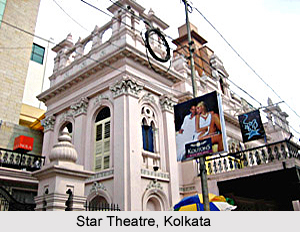
He made his first public appearance at the renowned Star Theatre in 1890 in the religious play “Chanda,” written by his father. This debut marked the beginning of a long and distinguished theatrical journey. Over the years, he became associated with several theatre companies, contributing not only as an actor but also as a manager and business partner. 

Artistic Style and Lasting Influence

Surendranath Ghosh was admired for his distinctive acting style, which combined emotional depth with measured restraint. His performances reflected the influence of traditional jatra theatre while also adapting to the emerging realism introduced by playwrights such as Bijon Bhattacharya and Utpal Dutt. He possessed the rare ability to internalize character psychology while maintaining the lyrical rhythm and elegance of Bengali speech. 

His long career allowed him to witness multiple phases of Bengali theatre, including its early growth, decline, and revival during the 1920s. Except for Amritalal Basu, he was perhaps among the few figures from the formative years of Bengali theatre who survived to observe its transformation across generations. 

Surendranath Ghosh’s contributions also helped sustain and revive urban theatre traditions in Bengal during the mid-twentieth century. His work laid important foundations for later experimental and political theatre movements that would emerge in Bengal in subsequent decades. 

As Dani Babu, Surendranath Ghosh occupies a respected place in the cultural history of Bengal. Through his dedication, artistic discipline, and lifelong association with theatre, he helped preserve and strengthen Bengali dramatic traditions. His legacy continues to be remembered as an important chapter in the evolution of Indian theatre.

Monday, 17 January 2022

Ancient Indian Theatre Stages

 Ancient Indian Theatre StagesThe Natyashastra by Bharata Muni depicts the mature form of a classical theatre of ancient India. Natyashastra is the most detail and elaborate of all treatises on dramatic criticism and acting ever written in any language. Bharata Muni here have discussed about a variety of topics in relation to the stage. The topics discussed in this work are: Mythical origin of theatre, its coming down to earth; construction of a play house, a stage, a tiring room and auditorium etc., ceremonies relating to the construction, preliminaries to a dramatic performance (ceremonies including songs, chants dances and instrumental music), choreographic elements (dance, gestures and movements of different parts of the body) and body in some conventional postures, costumes and make-up, classification of plays analysis of their structure, poetic aspects of plays and figures of speech in them, theory of music, metres of songs, chants, elocution, modes of playing instruments (Veenaflutes and drums) and Talas (time measure) to be observed during songs and playing of instruments, Roles and characters in plays (their classification, description and training of actors and actresses, members of theatrical troupes, and qualification of an ideal stage manager), criticism of a dramatic performance. Bharata Muni thus laid the foundation of the classical Theatre by composing the Natysastra.

Types of Playhouse
In Natysastra Bharata has discussed about three types of playhouse, oblong, square and triangular. These three have been further divided into large, medium and small. These measurements could be in terms of dandas or cubits, naturally giving us eighteen different dimensions of playhouse.

According to Natyasastra a regular theatre consists of three parts, the tiring room, the stage and the auditorium. The stage is required to have two Mattavaranis on the two sides. There was existence of permanent and temporary theatres in ancient India.

For more, visit the link below:

https://www.indianetzone.com/57/ancient_indian_theatre_stages.htm


Tuesday, 18 May 2021

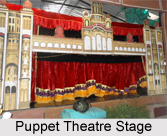
Indian Puppet Theatre


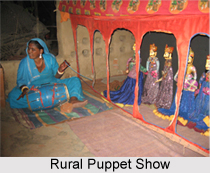
Indian Puppet TheatreIndia is the abode of puppet theatre from the inception, especially in the 5th Century BC. Puppetry or the puppet theatre is one of the ancient forms of entertainment in India. Although primarily it is used as a form of entertainment; yet its importance in conveying significant meaning cannot be denied. For centuries, Indian puppet theatre in one form or the other flourished in India, particularly in the villages.

Since ages, it has been an important part of folk culture depicting the folk traditions of India. From the ancient days, Indian puppet theatre therefore developed not only as an art form but also as an effort of conveying a lot whilst uttering actually nothing. India, which has a rich history of her creativity, has slowly become a name in the rich timeline of Indian natya with the emergence of this Indian puppetry as a typical visual art form. In Indian puppet theatre the puppets or the dolls comes alive, simulating life and reality whilst giving meaning to the creator's ideology.

History of Indian Puppet Theatre
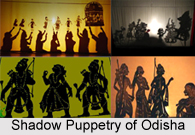
History of Indian puppet theatre is long, enlaced with a rich past. The origin of puppetry somewhat dates back to the long gone era of the 5th Century BC. The chic dash was then missing; even the modish approach was not there; yet Indian puppetry as an enduring form of entertainment stood apart as an intense form of theatre since the historic days of ancient times. Indian Puppet TheatreWhile some says Indian Puppet Theatre did originate in medieval India, other says that it was there throughout, typically as an art form even at the time of the Indus Valley civilization. Not only as an art form Indian puppet theatre at that epoch was an effort of illustrating the histories of great prince, princes, and mythological heroes and even unveiled the legendary incidents and also portrayed those eposes and stories from the epics. Puppetry was then chiefly a media for entertainment; an effort to teach the mass and guide the then society amidst its creativity and in the midst of its story telling aspects. It was during this time, in Indian puppetry two distinct forms were evolved; while one form was then chiefly evolved as the religious portrayal, the other form mainly made satire and farce as the central theme. It is with the colossal development of the religious puppetry, shadow puppetry evolved as a medium in epitomizing the stories of Ramayana and Mahabharata. It was much later; in the history of Indian puppet theatre, satire and farcical comedies became quite an important part in articulating the socio political set up of India.

Indian Puppet TheatreIndian Puppet Theatre as an Artistic Visual Art
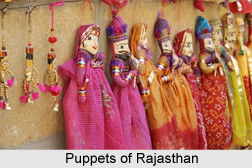
Indian puppet theatre as an artistic visual art is still vibrantly alive in a variety of style. The major types of puppetry that are practiced in different Indian states are: rod, string, shadow and glove puppetry. The puppetry is very popular in the states like OdishaRajasthanKeralaAndhra Pradesh and Karnataka. Sometimes the puppets are made with leather and the movements controlled by stick and often they are made with wood or cloth where the movements are duly controlled by strings. The string puppetry is prevalent in Karnataka and Rajasthan. Correct string movement is very important to make the puppetry a thriving entertainment. The string attached to the puppet's head goes over the operator's hands and fingers which again are linked back to the puppet. The operator controls the movement of each hand of the puppet by separate strings. In Indian puppet theatre, the puppets which are used are generally small in dimension. The large head accompanied with prominent eyes offers a magical charm to the puppets whilst sketching their personality.

Indian Puppet TheatreColours of Puppets in Indian Puppet Theatre
The colour of the puppets also determines the portrayal of character in Indian puppetry. To depict a royal character mainly a light coloured puppet with impressive moustaches is used whereas a gawk eyed and dark coloured puppet usually paints a negative character. The female figures hold their skirts or Sarees in their hands while dancing; thus showcase a vibrant show. The male puppets are shown as the ones who excel in fighting; they dash against each other strike, chase, wrestle and even fall dead whist offering life to the entire puppet show.

For more, visit the link below:

Thursday, 10 September 2020

Indian Theatre Festivals


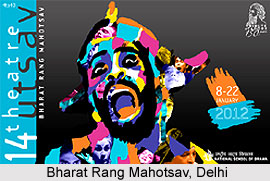
Indian theatre festivals help in bringing to the fore the various forms of Indian drama. India has the richest and longest tradition in theatre. The origin of Indian theatre is intimately associated with the ancient rituals and the seasonal festivals. The Natyashastra of Bharat Muni is the earliest surviving text on theatre and drama. The Indian theatre encompasses all the different forms of fine arts and literature like dance, music, mime, movement, sculpture, painting and architecture.


In Natyashastra, there are various codes and mudras that have been consolidated and codified by different tradition in drama, dance and mime. The philosophy of Natyashastra describes ten classification of drama ranging from one act to ten acts. Over the years, various regional theatres in India have helped in taking the theatre culture of India forward. In order to support and promote theatre in the country various festivals related to theatre are organized around the country! Each state, in their own way, organizes theatre festivals in order to promote new and raw talent among the people. There are various theatre festivals that can be found:

Prithvi Festival
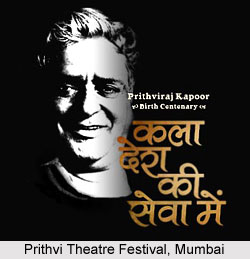
Prithvi Theatre Festival, MumbaiThe first Prithvi Festival in 1983 was held to celebrate 5 years of successful growth in theatre groups, as well as the development of an audience. Since then the Prithvi Festivals have been conducted annually and it includes theatre groups; featuring local groups from Mumbai, or national or international in scope, with various themes. They have attempted to encourage quality and originality in local various groups in Mumbai and also to bring some of the best and most interesting of Indian and world theatre to Mumbai in the interests of exposure. The Prithvi Theatre Festival has reached out to audiences beyond Mumbai also, touring its 1995 and 1997 Festivals to New Delhi and its 2000 festival to Pune.


Wednesday, 2 September 2020

Folk Theatre In India


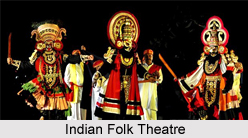
Folk theatre in India has a rich legacy. In the ancient Vedic culture and even in Buddhist literature folk theatre first made its presence felt as an art form to illustrate the unedited realities of life. However, it is only in the medieval period folk theatre gradually became an integral part of Indian drama. Historically folk theatre in India did emerge back in the 15th or 16th century as illustrations from puranas, eposes, historical epics, myths and biographies of the celestial heroes. It is right after the colossal success of Indian traditional theatre as an art form, the distinct style of Indian Natya changed and thus developed a whole new theatre form where Indian myth, dance, history, song, culture, mores, traditions, and beliefs all gained a matchless dimension.


Although much later this particular theatre form was named as the Indian folk theatre, yet it is indeed not an overstatement to say that the very basic rudiments of folk theatre in establishing itself as an artform was there in the mores, heritage and tradition of India. In rural society which is still regarded as the base of folk theatre the activity which displayed the first rudiment of drama are the rituals. Quite ideally therefore rituals, their varied facets and their colossal impact on Indian culture and life formed the very base of the folk theatre in India. Folk theatre therefore boasts the rich history of Indian folk culture that dates back to the age-old antiquity.

Folk theatre in India is mainly narrative in its form. This indeed point towards the origin and the age-old sagas of the sutradhara in Indian natya. The narrator or the sutradhara in order to make his visual art lot more inventive slowly involved acting into his narrative description which in an intimate manner later gave rise to the tradition of narratives in Indian folk theatre. Folk theatre in India still has retained its age old narrative form while echoing a highly dramatic narrative style. There is a long tradition of folk entertainers who either move alone or in groups in rural India. They are the entertainers as well as the preachers of value, philosophical tenets and indeed of religious cult. Folk theatre has adopted their mode of expression amidst dance, music and songs. Thus the spirited, dynamic and ingenious in forms and rich in variety, Indian folk theatre has established itself as the powerful medium of communication in folk cultures. With its timber and colour, dash and élan folk theatre in India is more than entertainment; rather an emotional experience and an effort of creating "an environment of receptivity in which communication of ideas is an effortless process".

For more visit the page:

Tuesday, 25 April 2017

Imtiaz AH Taj, Urdu Theatre Personality, Indian Drama & Theatre

Imtiaz AH Taj was a scholar in Urdu language. He was also popular as a playwright, and Urdu theatre activist. His father, Syed Mumtaz Ali, was a distinguished social reformer and writer. His mother also had several books to her credit. In 1918, Taj started an influential literary monthly named as ‘Kahkasha’n. He was drawn to theatre from his student days at Government College, Lahore, and participated in the college drama society.
He is remembered above all for his 1922 play ‘Anarkali’, based on the life of ‘Anarkali’, which staged hundreds of times and was tailored for feature films in India and Pakistan, including the Indian film Mughal-e-Azam (1960).  

He was a co-founder of the fictitious journal ‘Kehkashan’. In adding to his many translations of Shakespeare's plays into Urdu, counting ‘A Midsummer Night's Dream’ as ‘Sawan Rain Ka Sapna’, he also wrote a number of plays himself, the most distinguished being ‘Anarkali’ and ‘Chacha Chakan’, which continue to be performed today. 

Anarkali was different from the Urdu theatre and also popularized by Parsi companies. It was realistic in style and its prose. This was free from the artificial embellishments that characterized the dominant tradition of Urdu playwriting. However, Anarkali fails the test of stage worthiness. Although an ardent theatre enthusiast, Taj had little understanding of practical requirements. His play is too wordy and almost eight hours long. Because of this reason no regular group has produced it. However, it was made into a silent movie, The Loves of a Mughal Prince in 1928. In this movie Taj himself acted as Akbar. To know more read:


Tuesday, 13 September 2016

Parsi Theatre in Gujarati


Parsi theatre in Gujarati was the result of an increasing feeling of nationalism among the people. The medium of Gujarati plays was used to address the people and invoke nationalist sentiments in them. To know more read: