Monday, 14 September 2020

Bhakti Yoga


Bhakti YogaBhakti Yoga refers to a spiritual practise of offering utmost devotion (Bhakti) to GodBhakti is a series or succession of mental efforts at religious realization, beginning with ordinary worship and ending in a supreme intensity of love for God. Bhakti is the yoga of a personal relationship with God. A Bhakti Yogi is motivated chiefly by the power of love and sees God as the embodiment of love.

Origin of Bhakti Yoga
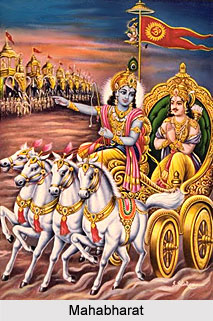
Bhakti Yoga is considered by some to be the oldest form of Yoga with its roots in the Vedas, or ancient scriptures of India. The concept of Bhakti Yoga, or the path of love in Bhagavad Gita, originated in the epic poem Mahabharata. Bhakti Yoga eventually became a popular devotional movement in India known as the Bhakti Movements. This movement flourished between 800 and 1100 A.D. in Southern India with the explanations of divine experiences by the Vaishnava Alvars. Bhakti Yoga continued to spread throughout India as many poet-saints travelled throughout the countryside singing the praises of their Gurus and sacred deities.

Forms of Bhakti Yoga
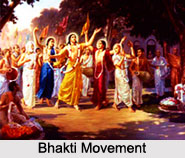
Bhakti YogaThe various forms of Bhakti Yoga are the ways in which a devotee attains the Supreme Ideal of Life. There are 9 forms of Bhakti Yoga which are as follows;

  • ‘Shravanam’ refers to listening to the stories of personal deity,
  • ‘Kirtanam’ refers to chanting the name of devotee with devotion,
  • ‘Smaranam’ is remembering the deity throughout the day,
  • ‘Padashevanam’ is service to the divine,
  • ‘Archanam’ includes ritualistic offering to the deity,
  • ‘Bandaram’ refers to worshipping everything as the form of divinity,
  • ‘Dasyam’ is being the servant of Almighty,
  • ‘Sakhyam’ refers to friendship with the deity,
  • ‘Atma Nivedanam’ depicts total surrender.


  • Stages in Bhakti Yoga
    Bhakti Yoga has 2 levels; the first is called "Gauni", or preparatory and includes all the preliminary practices; the second is "Para", or the state of supreme love and devotion to God. A beginner in Bhakti Yoga should first of all free his heart from attachment to earthly objects and pleasures; then realize divinity and consciousness of God in this life. When Bhakti ceases to be in preparatory stage and passes to the supreme, there is no fear of these hideous manifestations of fanaticism.

    For more visit the page:

    Friday, 11 September 2020

    Sources of Ancient Indian History


    Sources of Ancient Indian History include coins, inscriptions and accounts of various foreign travellers. The division of the country into marked and diverse regions led to the distinctive history of each region, which remained roughly independent of other regions. Ancient history of India is hugely magnificent, affluent and diverse. But the rebuilding of an uninterrupted history of ancient India, introduces immense difficulties. It is not because there is lack of stuffs, but because chronological arrangement of events is seldom found. Indians had their own techniques of recording and dating events exactly and with conviction. Not a sole historical work can be found, which may be compared to those created by Herodotus, Livy or Tacitus. It is because of this lack that many critics have commented that Indians lacked the historical sense wholly and there is no book which gives the chronological history of ancient India. Some writers have even coined this period as the 'dark age' on this account.


    However, it would be incorrect to say that Indians wholly lacked the historical sense. It is evident from history of India that there were many chronological difficulties in delineating the events and dates of ancient Indian history, but these difficulties have been agreeably solved by scholars. Kalhana's 'Rajtarangini' visibly depicts that the Indians did not lack the historical sense and that they had the concept of scientific inclination towards historical study.

    Sources of ancient Indian History are:
    Literary Sources: The ancient Indian literature was religious in nature and had no definite date for events and rule of kings. This includes the Indian Puranas and the epics. Epics like RamayanaMahabharata and the Jaina and Buddhist religious texts provide some important historical material with doses of religious messages.

    Sources of Ancient Indian HistoryUpanishads: This is one of the main sources of ancient Indian History. Some of the Jain texts like Parisistapravana and Buddhist texts like Dwipavamsa and Mahavamsa also contain traditions that do provide us some historical materials. Gargi Samhita is a book on astronomy, the grammar of Paniniand Patanjali Yoga Sutra has materials that help us in the reconstruction of the history of the ancient period of India.


    Thursday, 10 September 2020

    Indian Theatre Festivals


    Indian theatre festivals help in bringing to the fore the various forms of Indian drama. India has the richest and longest tradition in theatre. The origin of Indian theatre is intimately associated with the ancient rituals and the seasonal festivals. The Natyashastra of Bharat Muni is the earliest surviving text on theatre and drama. The Indian theatre encompasses all the different forms of fine arts and literature like dance, music, mime, movement, sculpture, painting and architecture.


    In Natyashastra, there are various codes and mudras that have been consolidated and codified by different tradition in drama, dance and mime. The philosophy of Natyashastra describes ten classification of drama ranging from one act to ten acts. Over the years, various regional theatres in India have helped in taking the theatre culture of India forward. In order to support and promote theatre in the country various festivals related to theatre are organized around the country! Each state, in their own way, organizes theatre festivals in order to promote new and raw talent among the people. There are various theatre festivals that can be found:

    Prithvi Festival
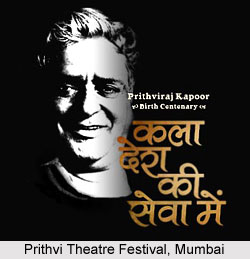
    Prithvi Theatre Festival, MumbaiThe first Prithvi Festival in 1983 was held to celebrate 5 years of successful growth in theatre groups, as well as the development of an audience. Since then the Prithvi Festivals have been conducted annually and it includes theatre groups; featuring local groups from Mumbai, or national or international in scope, with various themes. They have attempted to encourage quality and originality in local various groups in Mumbai and also to bring some of the best and most interesting of Indian and world theatre to Mumbai in the interests of exposure. The Prithvi Theatre Festival has reached out to audiences beyond Mumbai also, touring its 1995 and 1997 Festivals to New Delhi and its 2000 festival to Pune.


    Wednesday, 9 September 2020

    Tourism in Tamil Nadu

     Tamil Nadu is home to many popular places of interest. The tourism industry of Tamil Nadu is the second largest in India, with an annual growth rate of 16 percent. People from across the globe come here to see the temples with their exquisite Dravidian architecture, hill stations, and the heritage sites.


    Tamil Nadu Tourism Development Corporation promotes tourism in the state as Enchanting Tamil Nadu. This state is a place of varied beauty. Tamil Nadu has a long tradition of venerable culture. The most visible legacy of this protracted cultural flowering is a crop of astounding temples, whose gigantic gateway towers, or gopurams, still soar above just about every town large enough to merit a railway station.

    Pilgrimage Tourism in Tamil Nadu
    No Indian state is more dominated by its temples than Tamil Nadu where temple architecture catalogues the tastes of successive dynasties and testifies to the centrality of religion in everyday life. It is also known as the land of temples. The multiplicity in culture and religious performances in Tamil Nadu has led to setting up of several places of worship, which belongs to the followers of diverse religions. Since the Hindus exceed in population their places of worship temples dot the whole landscape. Most temples are built in honour of Lord ShivaLord Vishnu and their consorts; all are characterised not only by their design and sculptures but also by constant activity, devotion, dancing, singing, puja, festivals and feasts. Each is tended by Brahmin priests, recognisable by their dhotis, a sacred thread draped over the right shoulder, and marks on the forehead. The Kanyakumari temple of Tamil Nadu is an important center for pilgrimage for years. The Meenakshi temple complex in Madurai in Tamil Nadu is one of the largest in India and the presiding deity at the Meenakshi temple is Goddess Meenakshi. The Ramanathaswamy Temple is one of the most sacred shrines of the Hindus in India and is considered as holy as Varanasi. Pilgrims from all over the world come to pay homage to the deity. The inhabitants of Tamil Nadu also include Muslims, Jews, Jains and Sikhs. A number of Mosques, Synagogues, and Gurudwaras represent the sentiments of their respective religions. Of all the worship places, temples are the oldest. Tamil Nadu was also influenced by Christianity during the Portuguese and British invasions. Hence the travellers will also come across a number of churches.Tourism In Tamil Nadu

    Nature Tourism in Tamil Nadu
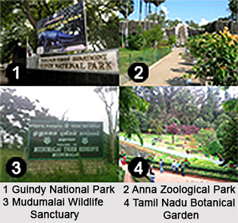
    There are several wildlife parks and gardens in Tamil Nadu that make it an interesting spot for the nature lovers. A state that is blessed by so many gods and goddesses is also bound to be blessed by nature's bounty. Its major wildlife sanctuaries Madumalai and Annamalai are located in the Western Ghats. The hills here provide a safe shelter for elephants, bisons, deer, monkeys and, of course, tigers. The forests here are filled with plants with medicinal value. Guindy National Park, in Chennai is a major attraction for all true wildlife enthusiasts. This park is located within the city and it has a few populations of animals. Arignar Anna Zoological Park of Tamil Nadu which is also known as the Vandalur Zoo was the first public zoo in India. It is a home to more than one hundred and seventy species of mammals, birds and reptiles. The Botanical Garden of the state is an ecstasy for bird watchers where a wide array of birds, both seasonal and year-round residents, can be sighted. The Madumalai National Park is the first wild life sanctuary of south India. Elephant safari and Jungle safari are arranged for interested tourists.

    Tuesday, 8 September 2020

    Indian Cricket Associations

     Indian Cricket Associations play a major role towards the betterment of a player, who plays in national, regional and the international level, and helps towards achieving their goals to reach high in life. The game of cricket has always been compared to religion in India and it is undoubtedly one of the most popular games in India, at the moment.


    Cricket in India
    The Gentleman’s game- Cricket game is being played in India at different levels. The Indian play the game at school level, college level, district level, state level, national level and also in the international level. In order to govern the game and also to maintain a high standard of cricket, there are several cricket associations in India.

    Formation of Indian Cricket Associations
    The Indian cricket associations are formed at various levels like district cricket associations, state cricket associations or women's cricket association. The national body for governing the game in India is the Board for Control of Cricket in India (BCCI).

    Indian States Owing Cricket Associations
    Indian Cricket AssociationsAlmost all the 28 states of India have their own cricket associations and there is more than one association in some of the states like MaharashtraDelhiBiharGujarat etc. The Indian cricket associations are in charge of selecting players to take part in various tournaments. The state associations of India select the State teams for taking part in the national level tournaments like Ranji TrophyDuleep Trophy, Challengers Trophy, Irani TrophyDeodhar Trophy etc.


    For more visit the page:
    Monday, 7 September 2020

    Pranayama, Yoga


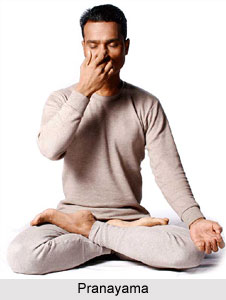
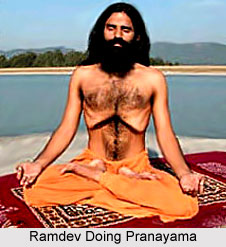
    Pranayama is the formal practice of controlling the breath, which is the source of Prana, or vital life force. It is a process by which the mind is controlled by voluntary regulation of the breathing. From yogic point of view it is a path that connects one's physical existence and the spiritual consciousness. According to Patanjali, a slightest change brought in the normal speed of breathing is ‘Pranayama’. Also systematically controlled and prolonged inhalations and exhalations constitute Pranayama. Obviously to do this a voluntary control is necessary. In normal breathing also, there is a pause between inhalation and exhalation that may be only for a few milliseconds. Therefore voluntary control brought on any one of the three, i.e., inhalation, exhalation, the pause, or on all three, will be called ‘Pranayama’.


    Etymology of Pranayama
    The word Pranayama is formed by 2 words i.e., ‘Prana’ and ‘Ayama’. ‘Prana’ means life force, which provides energy to different organs and also controls many vital life processes, like respiration and circulation of blood. ‘Ayama’, on the other hand, signifies the voluntary effort to control and direct the Prana. PranayamaBreathing is one of the vital activities governed by Prana, considering that the mind could be controlled effectively with the voluntary regulation over breathing.

    For more read the article: 

    Saturday, 5 September 2020

    Palaces of India


    Palaces of India are innumerable, scattered throughout the length and breadth of the country and belonging to numerous kings and rulers who ruled India for many centuries. The royal residences of these kings, the palaces are excellent works of architecture, which speak of the creative abilities, and artistic sensibilities of these rulers. These palaces are the assets of India and enhance the tourist quotient of the state where they are located. Some of these palaces have now been converted in to luxurious hotels and also open for public viewing. The palaces are maintained by the government as they bear ample testimony to the rich cultural Indian heritage.

    The Amar Mahal Palace is a grand palace in Jammu and Kashmir, which was built by Raja Amar Singh and presently has been transformed into a museum. This palace contains several interesting exhibits which consists of a golden throne that weighs 120 kg, some Kangra paintings, Pahari miniature paintings, a library which houses 25,000 unique books and many other art beautiful collections.

    Bangalore Palace
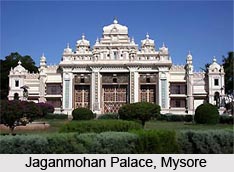
    The Bangalore Palace resembles the Windsor Castle in England and is located in Bangalore and is a well-known venue for international music bands, rock stars. Bella Vista in Hyderabad was inspired from the Heney-on-Thames of England and was a royal palace of the Nizam.

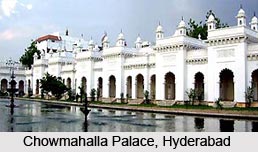
    Palaces of IndiaChowmahalla Palace
    Chowmahalla Palace was the official residence of Nizams of Hyderabad and the seat of Asaf Jahi dynasty. In the Persian language, 'Chahar' implies four while in Arabic language, 'Mahalat' (plural of Mahal) stands for palaces and therefore this gave birth to the term 'Chowmahallat' or four palaces. This palace received the UNESCO Asia Pacific merit award for its preservation of rare cultural heritage.

    Falaknuma Palace
    The Falaknuma Palace was built by the Paigah, Nawab Vikar-ul-Umra in the southern part of the old city of Hyderabad. This palace is considered to be one of the most magnificent palaces in the state of Andhra Pradesh. Paigarh Hyderabad State owned this palace, but it was later confiscated by the Nizams of Hyderabad. It is located in Faluknama which is at a distance of 5 km from Charminar and was constructed by Nawab Vikar-ul-Umra, the then minister of Hyderabad.

    For more visit the page: 

    Friday, 4 September 2020

    Shaivism, Hindu Religion


    Shaivism is the branch of Hinduism that worships Lord Shiva as the supreme deity. It is one of the major branches of Hinduism. Shaivism is a very deep, devotional and mystical denomination of Hinduism. It is considered the oldest of the Hindu denominations, with a long lineage of sages and saints who have outlaid practices and paths aimed at self-realization and the ultimate goal of Moksha, liberation.


    The followers of Shaivism are called ‘Shaivas’ or ‘Shaivites’. They believe that Lord Shiva is the ultimate being and supreme God. According to the followers of Shaivism, Lord Shiva is the creator, destroyer, preserver, concealer and revealer. It is one of the oldest and one of the four major sects in Hinduism.

    Scriptural Evidence of Shaivism
    In the Rig Veda, Rudra is mentioned only in three suktas. He represents the destructive power of nature. He destroys men and animals but in the Rig Veda itself at some places he is described as a benevolent God. People pray to him for having children and being prosperous. In the Atharva Veda, the malignant aspect of Shiva is emphasized. He is called fearful and destroyer. He is described as having dark blue colour and is called the lord of animals. In the Yajur Veda, there are references to Rudra in two suktas i.e. Tryambaka-homa and Satarudriya.

    In the Brahmanas, Rudra is called the chief of Gods i.e. Devadhipati, Lord Isana and the Great God Mahadeva. He is also called Bhutapati and is a dread figure who took over the dominion of Prajapati over all cattle. In the Svetasvatara Upanishad, Shiva is called the super God or Parabrahma and it is stated that with his power the Prakrti or Nature becomes active. In the Manavagrhya-sutra he is associated with the cremation ground. In the Apastamba Grhyasutra, Shiva is still classed among the minor Gods. In the Ramayana and the Mahabharata the full development of Shaivism can be seen.

    For more visit the page:

    Thursday, 3 September 2020

    Indian Yogic Philosophy


    Indian Yogic Philosophy on spirituality is intricately much deeper and rich than anywhere else. The strong roots have not only been preserved by the Indian culture and traditions since thousands of years, but have also spread to the western nations. It is based on this ideology that conception of Hatha Yoga has taken place. Since Hatha yoga has developed post-Vedic, it is important to place yoga within the context of Indian philosophy. To know Hatha, one has to understand at least some of the theoretical themes that reveal the practical endeavour of yoga. This elaborate theme is embedded in Indian philosophy or Darshanas. To understand the relation with Hatha Yoga, particular attention is required for the classical Yoga Darshana of Patanjali and its relevance to Hatha Yoga.


    The Six Astika Darshanas
    Vedic Samhitas may be seen as the roots of the Indian philosophical tradition. The BrahmanasAranyakas and Upanishads may arise from that root which then followed the multiple philosophical ‘schools’ in the post-Vedic era. The authority of these schools is derived from their adherence to the Vedic scriptures. Although, they all are secondary to the Vedas and Upanishads themselves, each major ‘school’ is presented not in the form of a long and rigorously argued treatise but as a series of terse statements, known as ‘Sutras’. Sutras are the coded medium to convey knowledge in different ways. The traditions of interpretation, which are based upon these texts, are known as Darshanas. Sutras, like shruti are believed to be verbal expressions of truth or realization.

    For more click the link below:

    Wednesday, 2 September 2020

    Folk Theatre In India


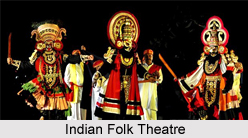
    Folk theatre in India has a rich legacy. In the ancient Vedic culture and even in Buddhist literature folk theatre first made its presence felt as an art form to illustrate the unedited realities of life. However, it is only in the medieval period folk theatre gradually became an integral part of Indian drama. Historically folk theatre in India did emerge back in the 15th or 16th century as illustrations from puranas, eposes, historical epics, myths and biographies of the celestial heroes. It is right after the colossal success of Indian traditional theatre as an art form, the distinct style of Indian Natya changed and thus developed a whole new theatre form where Indian myth, dance, history, song, culture, mores, traditions, and beliefs all gained a matchless dimension.


    Although much later this particular theatre form was named as the Indian folk theatre, yet it is indeed not an overstatement to say that the very basic rudiments of folk theatre in establishing itself as an artform was there in the mores, heritage and tradition of India. In rural society which is still regarded as the base of folk theatre the activity which displayed the first rudiment of drama are the rituals. Quite ideally therefore rituals, their varied facets and their colossal impact on Indian culture and life formed the very base of the folk theatre in India. Folk theatre therefore boasts the rich history of Indian folk culture that dates back to the age-old antiquity.

    Folk theatre in India is mainly narrative in its form. This indeed point towards the origin and the age-old sagas of the sutradhara in Indian natya. The narrator or the sutradhara in order to make his visual art lot more inventive slowly involved acting into his narrative description which in an intimate manner later gave rise to the tradition of narratives in Indian folk theatre. Folk theatre in India still has retained its age old narrative form while echoing a highly dramatic narrative style. There is a long tradition of folk entertainers who either move alone or in groups in rural India. They are the entertainers as well as the preachers of value, philosophical tenets and indeed of religious cult. Folk theatre has adopted their mode of expression amidst dance, music and songs. Thus the spirited, dynamic and ingenious in forms and rich in variety, Indian folk theatre has established itself as the powerful medium of communication in folk cultures. With its timber and colour, dash and élan folk theatre in India is more than entertainment; rather an emotional experience and an effort of creating "an environment of receptivity in which communication of ideas is an effortless process".

    For more visit the page:

    Tuesday, 1 September 2020

    History of Rajasthan


    The present state of Rajasthan emerged after merging 22 feudal kingdoms in independent India. In the British era the state was more popularly known as Rajputana or the land of the Rajputs. In the northeast of the state lies Mount Abu while the Aravalli ranges divides fertile Dhundar basin from the impressive Thar Desert. The lucrative trans-Thar trade routes have been an area of special interest from times immemorial. Both the Rajputs and Mughals amassed vast fortunes by taxing the movement of silk, spices and precious stones across their territories. This wealth was later utilised in developing the area and for new constructions.


    The word Rajasthan literally means the land of the rajas. Its history is woven with tales of courage, chivalry, friendship, loyalty and romance. This Indian state is a riot of colors when it comes to festivals. The craftsmanship of the Rajasthanis have been engraved in the historic monuments, such as, palaces, forts and finely carved temples. Today they comprise one of the country's richest crops of exquisite buildings. However these buildings are not the only legacy of the region's prosperous and militaristic past. The rule of Rajputs have created bound by codes of chivalry and honour powerful enough to have driven the female population of whole cities to mass suicide, or jauhar. From the very beginning Rajasthan has been a reflection of the true spirit of Indian culture.

    To learn more visit the article: