Monday, 26 April 2021

Hill Stations in Sikkim


Hill Stations in SikkimHill Stations in Sikkim are the popular where one can find the mixture of three cultural influences- Indian culture, Tibetan culture and Chinese cultural influences. GangtokGyalshingLachungNamchiPelling, Rangpo, Yuksom and many others are the popular hill stations, which are accessible from JalpaiguriSiliguri and Darjeeling (West Bengal). Sikkim is well connected by roadways and airways with all the states of India, especially the north eastern states of India. The monasteries of Sikkim are popular tourist attractions.

Gangtok, East Sikkim district
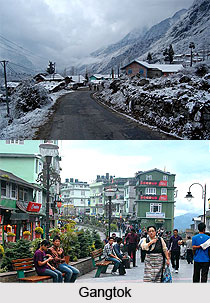
Gangtok is a municipality in Sikkim. Gangtok is the capital and the largest town of Sikkim. It is also the headquarters of the East Sikkim district. Located in the eastern Himalayan range, at an elevation of 1,650 meters, Gangtok has M. G Road, which is a popular shopping destination in north east India.

LachenNorth Sikkim District
Hill Stations in SikkimLachen bears a meaning 'big pass'. It is a town allures for the panoramic view of the Himalayan Range. Here in winter times, snow fall is dominant. It is advisable to visit in the month of summers, because in winters landslides are frequent.

Nathu La, East of Gangtok
Nathu La is located along the Indo-China border. It is one of the most exotic places in Sikkim, which connects with all other cities of Sikkim.

Gyalshing, West Sikkim District
Gyalshing is connected with the hill stations of West Bengal like Darjeeling and Kalimpong with Jorethang. This place is beautiful for the green valleys and the deep natural vegetation.

Lachung, North Sikkim district
Lachung has the blessings of Lachen River and Lachung Rivers, tributaries of the Teesta River. Lachung thus forms an eco tourism spot.

Namchi, South Sikkim District

Hill Stations in SikkimNamchi is a tourist spot and pilgrimage centre of Buddhism. Namchi monastery, Ralong Monastery and Tendong Hill are important Buddhist pilgrimage centers.

Pelling, West Sikkim District
Pelling is the cultural centre, located at a distance of 10 km from the district headquarters of Geyzing. Himalayan Mountain Range and the Kanchenjunga Peak are easily viewed from the many view points.

Rangpo, East Sikkim District
Rangpo is a popular tourism destination because it is connected with Siliguri and Gangtok. Rangpo enjoys sub-tropical climate throughout the year.

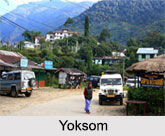
Yuksom, West Sikkim District
It is a historical town of Geyzing subdivision, where large numbers of archaeological ruins are located.

To explore more of Sikkim, click the link below:

Friday, 23 April 2021

History of Indian Premier League


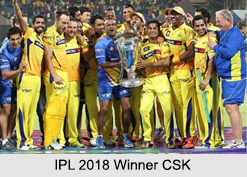
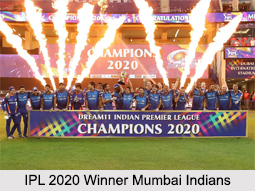
History of Indian Premier LeagueHistory of Indian Premier League dates back from 2008 and it is still continuing with pomp and grandeur. Indian Premier League is a Twenty20 format cricket tournament where different franchise teams participate for the title. The cricket tournament was inaugurated by BCCI with the aim to make cricket more interesting in India and to give an opportunity to you cricket talents to chase their goals.

Foundation of Indian Premier League
This international level cricket tournament was started in 2008 and from then it usually takes place every year in the months of April - June, especially in summer. It is currently supervised by BCCI Vice-President Ranjib Biswal, who serves as the League's Chairman and Commissioner of Indian Premier League.

Imitation from English Premier League
Like English Premier League, IPL is the most-watched Twenty20 cricket league in the world and also known for its huge commercial success. Indian Premier League is currently sponsored by Pepsi and thus officially known as the Pepsi Indian Premier League.

Introduction of Twenty20 Matches
Twenty-twenty cricket match was first introduced by the England and Wales cricket board in 2003. But Indian Premier League is largely credited in projecting the format of the game onto the world stage. IPL was inaugurated in 2008. During the same period Zee "Indian Cricket League" was operational. It was an enormous success. The annual tournament, played mostly in Indian summer has gone from strength to strength and is largely viewed as being the 'richest' tournament in the world cricket.

Until 2012, the Indian Premier League (IPL) was sponsored by DLF, a real estate firm and has the primary business in the development of residential, commercial and retail properties, after they paid 50 million dollars for the five year sponsorship. Pepsi took over the contract for the 2013 IPL after paying close to 4 billion rupees for the 5 year contract. In 2008, Sony has the television broadcasting rights over a ten year period. IPL is now watched across the world.

History of Indian Premier LeagueIndian Premier League in 2008
Indian Premier League season 2008 was the debut season of the cricket League, established by the Board of Control for Cricket in India (BCCI) in 2007. Board of Control for Cricket in India (BCCI), headquartered at Mumbai is the national governing body for all cricket activities in India. The board was formed in December 1928 as BCCI replaced Calcutta Cricket Club. BCCI is a society, registered under the Tamil Nadu Societies Registration Act. The IPL season commenced on 18th April 2008 with the final match held on 1st June 2008. The competition started with a double round robin group stage, in which each of the 8 teams played a home match and an away match against every other team. These matches were followed by two semi-finals and a final. Rajasthan Royals won the 2008 IPL by beating Chennai Super Kings, which was held in DY Patil Stadium, Navi Mumbai.

Indian Premier League in 2009
Indian Premier League season in 2009, abbreviated as IPL 2 was the second season of the cricket League. The tournament was hosted by South Africa and was played between 18th April and 24th May 2009. It was the second biggest cricket tournament in the world, after the World Cup Cricket, and was forecast to have an estimated television audience of more than 200 million people in India alone. The IPL was hosted successfully in South Africa and was hailed as an "extraordinary" accomplishment. The tournament was particularly praised for globalizing cricket and had set record television viewership. IPL2 was won by Deccan Chargers while the Royal Challengers Bangalore was declared as runners-up.

Indian Premier League in 2010
Indian Premier League season 2010, abbreviated as IPL 3 was the third season of the cricket League. Hosted by India, it had an estimated television audience of more than 200 million people in the country. Indian Premier League 2010 was played between 12 March and 25 April 2010. The tournament was won by the Chennai Super Kings, who defeated Mumbai Indians in the final, played at Mumbai. The purple cap went to Pragyan Ojha of Deccan Chargers, while the orange cap and the player of the tournament award went to Sachin Tendulkar of the Mumbai Indians. Saurabh Tiwary was declared the Under 23 success of the tournament, while the Chennai Super Kings won the Fair Play Award...

To learn more, check the link below:

Thursday, 22 April 2021

Introductory to Kama Sutra


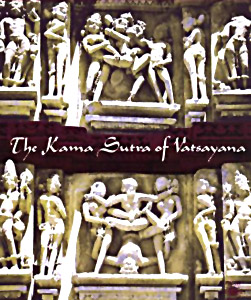
 Kama Sutra of Vatsayana, Kama Sutra Kama Sutra by ancient Sanskrit scholar Vatsayana is a stupendous text, redefining the art of corporeal love and eroticism, containing seven parts or sections, which are further sub-divided into thirty-six chapters.

Divisions of Kama Sutra
The first part or section of Kama Sutra is treated as an introductory to the extensive text, named as Introductory to Kama Sutra. Chapter 1 to this extensive treatise on the art of love is named as 'Salutation to DharmaArtha and Kama'. The initial chapter speaks evidently that the text of Kama Sutra was originally penned by several other litterateurs, like, Swayambhu ManuBrihaspati and Nandi, corresponding to Dharma, Artha and Kama. The master creations had in the subsequent ages, undergone further makeovers in separate poetic hands. Hence, it had become mandatory for a judicious author who could compile these colossal unobtainable volumes, into a unified one. Thus was Vatsayana introduced into the state of affairs, who lend his genius brain to shorten Kama Sutra into seven parts, making the treatise decipherable. Chapter 1 to Kama Sutra elucidates about the four basic goals of life, in the meantime speaking about other various aspects of the subsequent chapters.

Chapter 2
Chapter 2 of Kama Sutra is titled as 'On The Acquisition of Dharma, Artha and Kama'. This chapter mainly lays accentuation on the observance of the three worldly attainments of Virtue, Wealth and Love, i.e., on the acquisition of Dharma, Artha and Kama. Vatsayana goes on to additionally state that there lies a pre-ordained time for acquisition of each of these domains of humanity. Childhood, one's youth and old age must be exploited in accomplishing these canonical goals of life. However, attention must be rested on the fact that none of these Dharma, Artha and Kama learning should overlap in any of the life's fundamental stages.

Chapter 3
Chapter 3 to the Introductory of Kama Sutra is titled as 'On The Arts and Sciences to be Studied'. The present chapter instructs every human, especially women to study, comprehend and finally assimilate Kama Sutra within one's bodily system. There rests a very gross notion that the art of love can be mastered under any circumstances, which is indeed untrue. According to Vatsayana, one need must learn the art and science of Kama Sutra, though she is an unmarried maiden. The law and rule of Kama Sutra is not known to any unknowledgeable being, who base their knowledge merely upon apprehension. Women, who are already versed in the science of Kama itself, Kama Shastra, must make it customary to apprehend the sixty-four arts of Kama Sutra from somebody senior and married.

Chapter 4
Chapter 4 of the Introductory of Kama Sutra is named as 'The Life of a Citizen'. The said chapter deals basically with the household life of a man and his daily chores. The man of the household, having acquired the necessary wealth and education in his life, now sheds his attention upon his married phase. Vatsayana describes in a comprehensive manner where precisely the man should have his home, how many rooms would it contain and lastly, a phenomenal and meticulous portrayal of the inner and outer rooms.

To learn more, visit the link below:

Wednesday, 21 April 2021

Types of Indian Sweets


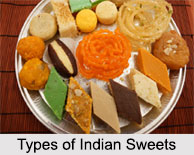
Types of  Indian SweetsTypes of Indian Sweets are an endless list. Sweets form an integral part of Indian cuisine. Apart from being a favourite confectionary, Indian sweets are also associated with culture and traditions of India. Many Indian sweets are considered auspicious and religious and cultural occasions remain incomplete without them. Factors like climate and availability of ingredients in different parts of the country dominate the type of sweets prevalent in that region.

Indian people, since ages have chalked out numerous recipes of delightful sweets. Some of the age old traditional sweets are still the most craved ones in the country.

Indian Milk Based Sweet
Khoya or mawa is a common yet important dairy product which is used for making many luscious sweet delicacies. Khoya can also be made at home, though the method is a little tedious. It is prepared by boiling and reducing the milk to a semi-solid stage. Different Types of Indian Sweets can be prepared by khoya which vary in terms of ingredients and recipe. Sweets made of Khoya include Kesar Barfi, KalakandKaju KatliGulab Jamun and many more. Another delicious milk based sweet is Kheer which is made with milk, sugar or jaggery and rice.Types of  Indian Sweets

Indian Flour Based Sweet
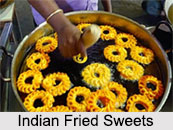
Many sweets in India are also prepared by flour. Flour based sweets enlist Jalebi and Gujiya with coconut fillings. Recipes of many sweets are a combination of flour and milk like Malpuas.

Indian Dry Sweets
A variety of dry sweets are prepared in India which is relished throughout the country. Popular dry sweets of India are Sandesh, Gujiya, PedaLaddu, Petha, Modak and many more. Depending on the regions, different specialities of dry sweets are found in India. They are also used as gift hampers in the festive seasons since they have a long shelf life and are not easily perishable.

For more, check the link below:

Tuesday, 20 April 2021

Folk Dances in Western India


Folk Dances in Western India, Indian DancesFolk dances in Western India are plenty in numbers. Strongly related to the original rituals and cultures, some of the folk dances are still common in many parts of the country, while others have washed away with the rebuilding process of the art. The Western Indian Folk dances are multi-coloured and energetic in nature.

Different Folk Dances in Western India
Following are different Folk Dances in Western India:

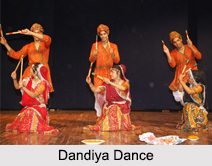
Dandiya Dance: ‘Dandiya’ dance is the folk dance of Gujarat, which demonstrates the great heartiness and joy of the inhabitants of the Western States of India. The dancers are accompanied by the musical instrument called the 'Meddale', which is played by the drummer placed in the centre.

Dulpod Dance: ‘Dulpod’ dance is a form of dance in Western India. The main themes of this dance are derived from quick rhythm and everyday life of the ‘Goans’. The tunes are based on the ‘dulpod’ which are generally in six-eight in measure. The ‘dulpod’ is usually performed in a sequence with a ‘Mando’.

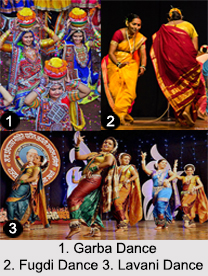
Garba Dance: ‘Garba’ Dance is so well-liked that there are a lot of modern versions of it. Most of the ‘Garba’ songs are in honour of the Goddess but the other subjects have come into use, like the stories of Krishna. The ‘Garba’ Dance is massively popular in Gujarat.

Dindi and Kala Dance: ‘Dindi’ and ‘Kala’ Dances are devotional dances of Maharashtra. In these dances, Lord Krishna is presented. ‘Dindi’ is a small drum. The musicians, comprising 'Mridangam' player and a vocalist, stand in the centre and give the dancers necessary musical background.

Folk Dances in Western India, Indian DancesKoli Dance: Koli Dance is a well-liked dance form of the fishermen community of ‘Kolis’ residing in the coastal areas of Maharashtra. This active dance helps people of this community to relax after a hard day’s work and forget several hardships that their profession presents to them on an every day basis.

Fugdi Dance: It is a ‘Goan’ folkdance performed by the women in the ‘Konkan’ region, and thus another dance form of western India. These dances are performed in many Hindu religious festivals like Ganesh Chaturthi, ‘Dhalo’ and in other social and religious occasions. ‘Fugdi’ is an art form that can be traced to the primeval cultural traditions of Goa.

Dhalo Dance: It is one of the most popular rural dances of Goa and western India. ‘Dhalo’ is performed by women folk on the moonlit night of Hindu 'Pausha' month. The dance is performed by ‘Kunbis’, ‘Bhandari’, ‘Naik’, ‘Gabit’ and ‘Gaudi’ communities. According to the legends, Radha used to sing love songs which are known as ‘dhalos’ to Lord Krishna. Earlier ‘dhalos’ referred only to the love of Krishna and Radha. Gradually people developed the songs which were sung in praises to other Gods also.

Tippani Dance: It is another folk dance of Western India. The dance starts slowly, with the singing and beating of the ground done in the same rhythm. As the speed go faster, the dancers alternately pound the floor and strike the handles of the hammers together, and then set up body movements, generally bending and raising themselves.

Goaf Dance: This dance is a copied of the ‘Dandiya Raas’. The dancer’s movements are choreographed in a way so that the ropes are woven and unwoven to make various patterns. The dancers also strike the sticks as they dance.

For more, visit the link below:

Monday, 19 April 2021

Types of Mudras

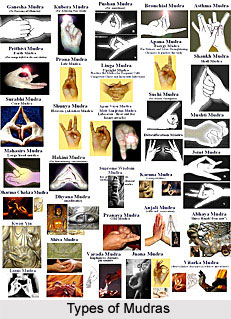
 Types of MudrasTypes of Mudras are various which are practiced by many people throughout the world. These various types of Mudras are easy to practice and can be done at any place and at any time. The Mudras enable the Chakra energy and mood, whilst lifting the inner self. Practicing the different types of mudras is considered good for health as it provides physical, mental, as well as spiritual benefits.

There are different types of mudras such as hand mudras, eye mudras, kaya mudras, etc. which allows one to balance mind and body and release energy. There are mudras related to Mana, Kaya, Dhyana, etc. All the mudras support further development of the self. The various types of mudras are divided into different categories, which are as follows:

  • Kaya Mudra: Kaya mudras are very much similar to asana, but mend the other types of simple mudras with Pranayama and concentration. These are the most complicated types of mudras and involve greater concentration and focus to hold. Kaya mudras strengthen the Prana in the body and direct the prana into particular chakras which are considered as energy centres.


  • Hasta Mudras: Hasta mudras encompass the involvement of hands and are used primarily in meditation, but can also be incorporated in asana and types of pranayama as well as in daily activities. Hasta mudras channel the prana into a new direction. These mudras are the most common of the categories of mudras.


  • Mana Mudra: Mana mudras utilize the sense organs of the ears, nose, eyes, tongue and lips. These types of mudras need concentration and focus on internal consciousness at the same time as elevating the cognizance.


  • Dhyana Mudra: Dhyana mudras, also known as contraction mudras involve the engagement of subtle skeletal muscles, mostly in the area of the pelvis. These types of mudras centralize the prana in the body and prime the energy channels for the awakening of Kundalini Shakti.
  • For more on different types of mudras and their health benefits, check the link below:

    https://www.indianetzone.com/38/types_mudras.htm 

    Saturday, 17 April 2021

    Ashtanga Ayurveda

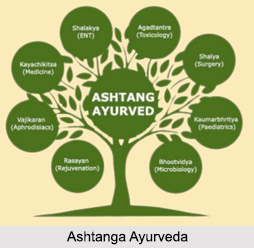
     Ashtanga AyurvedaAshtanga Ayurveda deals with the eight branches of Ayurvedic specialization. In accordance with Charaka Samhita, a scientific creation of Charaka, the science of Ayurveda is divided into eight different parts, collectively known as Ashtanga Ayurveda. These eight branches are as follows:

    1. Kayachikitsa or Internal Medicine
    2. Shalya Tantra or Surgery
    3. Shalakya Tantra or ENT and Opthalmology
    4. Kaumara Bhritya or Paediatrics
    5. Agad Tantra or Toxicology
    6. Bhutavidya or Psychiatry
    7. Rasayana or Geriatrics
    8. Vajikarana or Eugenics and Aphrodisiacs

    Kayachikitsa or Internal Medicinal Treatment: This methodology corresponds to the general medicine therapy which is required to treat chronic diseases, namely tuberculosisasthma or general health ailments like, fever or even mania. It covers specialities like pathology, cardiology or neurology also.

    Shalya Tantra: It deals with treatment of diseases caused by foreign bodies and diseases that need surgical therapies. It is carried out only for diseases, which cannot be cured by medicines. In Sushruta’s version of Shalya Tantra surgery was done with Yantra (blunt surgical instruments), Shastra (sharp tools), Kshara (bio-chemical substances), Agni (cauterization by blood-coagulation and tissue-destruction) for removing harmful foreign bodies.

    Shalakya Tantra: This Ayurvedic subdivision of Otorhinolaryngology (ENT) and Opthalmology (Eye) handles all problems of the ear, nose, throat, tongue and eyes. Sushruta has described about 72 diseases of the eye. His unique way of conducting surgery in cataracts and other eyes, nose and ear dysfunctions, amazes the modern medical science of the posterity.

    Kaumarabhrutya or Paediatrics: This is the Ayurvedic section of Paediatrics which deals with nourishment, support and maintenance of child and cures child diseases.

    Find out more in the link below:

    https://www.indianetzone.com/4/eight_branches_ayurved.htm