Friday, 18 February 2022

Indian Marble Sculptures


Indian Marble Sculptures, Indian SculptureIndian Marble Sculptures bear the excellent style and patterns of the finest craftsmanship that are achieved with quality. They provide an eloquent glimpse of strikingly attractive, versatile sizing of beautiful artistic designs and craftsmanship. The finest marbles used for sculpture does not contain stains. But some of natural stains are seen in the sculpture, which the sculptor skilfully incorporates into the sculpture.

History of Indian Marble Sculptures
The marble carving is the oldest art form concerning the formation of three dimensional forms from marble. Before the art of painting, the art of carving the shapes from the stones was started. There are records in the history stating that the art of carving statues and sculptures subsisted from the ancient times.

Famous Indian Marble Sculptures
Following are the Famous Indian Marble Sculptures:

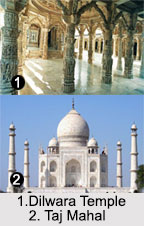
Dilwara Temple: Dilwara Jain Temples are one of the most outstanding and tantalizing marble stone cutting work of the temple and it is one of the finest Jain temples in the world over, known for its amazing architecture and wonderful marble stone carvings. There are total five shrines in these temples. All shrines are built with the help of white marble stones. Around the large courtyard of temples, numerous small shrines are seen. Every small shrine is employing a beautiful image of the tirthankaras with a series of elegantly carved pillars, giving rich look from the entrance to the courtyard. It is believed that this artwork was constructed during 11th and 13th centuries AD. In later period, many Hindu temples were carved with marble. The interiors of all these temples are covered with delicate design or religious symbols. Even Sanchi is famous for the Grand Stupa built by king Ashoka and there are total four gateways that were carved intricately in marble. The two richly carved pillars, rise to be crowned by carved lionselephants and dwarfs, from these the famous is Ashoka lions, the official seal of India.

For more, visit the link below:

Thursday, 17 February 2022

Sahaja Yoga


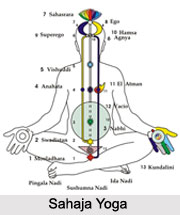
Sahaja Yoga, Types of YogaSahaja Yoga is a way of special meditation based on the experience of Self Realization or Kundalini awakening which might occur within the human body. Shri Mataji advocates that self-realization is the highest achievement of human being. Through Sahaja Yoga, an inner transformation takes place in human being, which helps one to become moral, united, balanced and integrated. Sahaja Yoga is the way to arouse divine power as the cool breeze. This power inherits the spiritual tradition of the world.

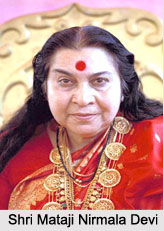
Shri Mataji Nirmala Devi
Shri Mataji Nirmala Devi introduced ‘Sahaja Yoga’ in 1970 among the commoners in India as well as abroad. She is an erudite woman who took active part in the freedom movements of India. Shri Mataji possessed spiritual power from her very childhood but she adopted the path of spiritual mission only after fulfilling her familial duties. Mataji rediscovered the ancient art of Sahaja Yoga, which brought her worldwide recognition.

Concept of Sahaja Yoga
Sahaja Yoga is an ancient practice, which brings the sensation of all pervading divine powers in the human being. By practicing Sahaja Yoga one can reach the absolute understanding about oneself. The aim of this method of meditation is to achieve self realization through Kundalini Awakening.Sahaja Yoga, Types of Yoga

Method of Sahaja Yoga
Sahaja Yoga is a very easy method to achieve self-realization. One can feel gentle cool breeze in the palms and above head after Sahaja yoga method is done. Sahaja Yoga brings relaxation in mind and body. It is very important to forgive everyone before performing the Sahaja yoga.

Self Realization in Sahaja Yoga Meditation
Self realization is the awakening of Kundalini. Kundalini rising is very easy by Sahaja Yoga meditation. Kundalini is the power of pure desire in human being. Kundalini is located at the base of the sacrum and is aroused through the central channel of the body by piercing the 6 charkas. This brings self-realization that takes the human being to the better state of life.

For more, visit the link below:

Wednesday, 16 February 2022

Indian Classical Dancers


Indian Classical DancersIndian Classical Dancers are the torch bearers' of Classicism who have had forayed into self chosen ways of traditional upswings to become the dancers they have become. Some of the well know2n Classical Dancers are Alokananda RoySwami HaridasAmita DuttChitra VishweswaranPadma Subramanyam, Madhavi Mudgal, Mahua Mukherjee and many other exponents.

Sonal Mansingh
Sonal Mansingh is one of the finest classical dancers of the country, who has made her mark in the field of Odissi Dance. She was born on 1st May 1943 to a devout mother Poornima Pakvasa who had a love for creative art. Sonal Mansingh took up dance as profession at a time when it still had not gained respectability as a profession. Prejudices still exist in order that a dancer was called names like 'nautch girl', she did not pay heed to such snide remarks. She grew up in a family, which emphasized through their living, the values of the free Indian spirit. Her grand father Mangaldas Pakvasa, a freedom fighter was a man who believed in equality of gender. He instilled in her, timeless values that she still cherishes today and encouraged her artistic talents, which she wanted to use to serve the cause of culture with dignity through dance. So the support from grandfather and mother to learn dance raised the great dancer. To her dance is a part of the environment and dance forms should reflect issues of the society and she firmly believes that art forms have the power to bring even countries closer. Some of her choreographic works reflects issues concerning women and environment.

Yamini Krishnamurthy
Yamini Krishnamurthy is an exponent of Bharatnatyam and Kuchipudi and has dedicated her life to Indian classical dance for decades. This eminent dancer of Bharatnatyam and Kuchipudi, Yamini Krishnamurthy was born into a Telugu family on a full moon night in 1940 at Madanapalli, Andhra Pradesh. Yamini's father, M. Krishnamurthy, was a Sanskrit scholar and grandfather was an expert in Urdu poetry. Her grandfather named her 'Yamini Poornatilaka', that means "a beautiful mark on the brow of light". Her charisma and stage presence were recognized when she gave her debut in 1957 in Chennai. She became one of the most admired dancers in the country by 1960. Her performances brought about national and international recognition to the classical styles of Bharat Natyam and Kuchipudi. Yamini's played significant role in popularizing Kuchipudi that was then emerging as a solo dance form of Andhra Pradesh in southern India.

Mallika Sarabhai
Mallika Sarabhai is one of the most renowned Kuchipudi and Bharatanatyam dancers in India today. This performer and creator of many talents developed from being a young, internationally acclaimed classical dancer and film personality, to being an activist and commentator on social issues. Positive reassertion of images of womanhood has been reflected through her dance, theatre and writing. She exercises the vocabularies of Indian traditions as biting tools to carve new reactions in a culture, which favors conservatism. As dancer, actress, choreographer, writer, or instigator of community projects she challenges audiences to sit up and think, realign themselves to questions of ecology, women's place in society, gender awareness, cultural atrophy, the very place of the arts in our society. Dynamic, charming and dry-witted, she is a rare creature in the arts. It is her expertise and deep knowledge of two forms of Indian classical dance, Bharatanatyam and Kuchipudi from Tamil Nadu and Andhra Pradesh respectively at the root of Mallika's performance. Mallika received her first award in 1977. Along with many salutations she was the recipient of the "French Palme D'or", the highest civilian award by the French Government and in Paris she was honored as the 'Best Soloist Artist' among 400 dancers from 25 countries among other awards.

For more, visit the link below:

Birju Maharaj, Indian Classical Dancer


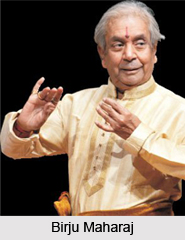
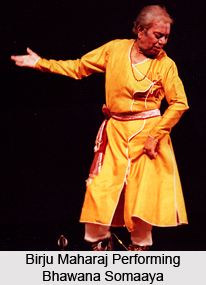
Birju Maharaj, Indian Classical DancerAccording to renowned musician Ravi Shankar, Birju Maharaj inherited from his father, uncles and few more 'greats' of his earlier generations, a loving approach towards the great art form of Kathak. He will remain a historical person in the world of Kathak as Mrs. Sumtra Charat Ram asserts. Pandit Birju Mahara, anj internationally renowned Kathak dancer and a great guru has imparted his immense knowledge and produced several renowned artists. Apart from dancing, he has shown his talents as a superb musicianpercussionistcomposer, teacher, directorchoreographer and a poet. He has a special flair for playing percussion instruments like TablaPakhawajDholak, Naal and string instruments like Israj, Violin, Swar-Mandal, Sitar etc. He has performed in thousands of concerts in India and abroad. He has extensively toured all over the world, i.e. USSR, USA, Japan, UAE, UK, France, Germany, Italy, Aaustria, Czechoslovakia, Burma, Ceylon etc. for performances as well as lecture-demonstrations.

Birju Maharaj, Indian Classical DancerEarly life of Pandit Birju Maharaj
The leading exponent of the Lucknow Kalka Bindadin gharana of Kathak dance in India, Pandit Birju Maharaj was born on 4th February 1938. He was a descendant of the legendary Maharaj family of Kathak dancers and was named as Brijmohan Nath Mishra. Renowned Acchan Maharaj was his father as well as guru and Shambhu Maharaj and Lachhu Maharaj were his uncles. He has five children three daughter and two sons.

At the very tender age of seven he performed his first recital and since then there was no looking back. He taught at the Bharatiya Kala Kendra in Delhi, and at the Kathak Kendra a unit of the Sangeet Natak Akademi where he was Head of Faculty, and Director, retiring in 1998.

Besides being a superb dancer, he was also gifted with a number of other qualities, which add to his artistic career. He is a wonderful singer having command over, ThumriDadra, Bhajan and Ghazals. He is also superb drummer, with ease and precision playing nearly all drums. With the experimentation of this superb quality in the dance dramas, he has given a new dimension to Kathak. It became successful medium for mass dispersion. His bold and intellectual compositions in traditional themes are brilliant, whereas his contemporary works are also refreshing in concept, crisp and entertaining.

For more, visit the link below:

Tuesday, 15 February 2022

Origin of Gharana


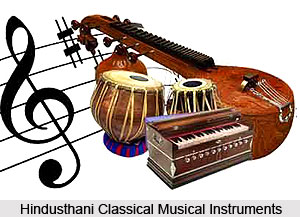
Origin of GharanaHindustani Classical Music or North Indian Classical Music has always undergone steady growth but at times it has also suffered a setback and stagnation over the last few hundred years. Majority of the Muslim rulers were disinclined towards music as it was stated in their religion. However a few of these emperors became great lovers of Indian music and art. Hence they encouraged the development of music and welcomed many great musicians in their courts from their native lands. Among these famous singers was Amir Khusrao. He is considered as the most notable musician and is credited with assimilating the Iranian mquam with Indian Raaga and then creating new raaga from this union.

The import of talented musicians from outside India has had a positive influence on raaga music in the Hinduism music tradition. Emphasis was placed on the aesthetic element of the Raaga structure. Rendering of Raaga became much more submersed with human emotions that were initially designed. The original raaga music still retained the ancient essence and its good old qualities. This made Hindustani music more active, making it an important art in the royal courts. Unfortunately being in a superior position in the courts and enjoying the fruits of the highest patronage from the kings, musicians became confident, idle and somewhat vain. Music faced a setback. From a strange combination of strength of the dynamism and weakness of the setback evolved what came to be known as the Gharana System.

Gharana in the musical terms came to represent a particular tradition or a particular way of presenting Hindustani music. It is interesting to trace the history of the concept of Gharana. Gharaha gained importance after the 16th century. King Akbars court proved to the most supportive to the propagation and flourishing of the Hindustani music, but his successors did not prove to be so. Therefore gifted musicians left their courts one by one and went all over North India looking for patronage from other courts and states. Origin of GharanaOnce taken the rulers were averse to the musicians to go anywhere else. They were isolated from their people completely and forced to live in some kind of musical confinement. Naturally there remained no scope for these musicians to widen their musical knowledge or musical vision. Continued isolation produced rigid adherence to one?s style creating almost an obsession. From these arose strict musical lineages that were zealously guarded and preserved. Master of that lineage assumed the leadership of the followers of that musical lineage. Since the ?father? and the entire lineage was confined to one geographic area, their musical lineage, called ?Gharana? came to be known after the name of that place and their musical style itself as the style of that Gharana. The names of different Gaharana assumed the names of the villages and towns in North India.

For more, visit the link below:
Monday, 14 February 2022

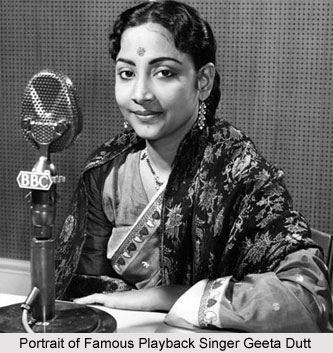
Geeta Dutt, Indian Playback Singer


Geeta Dutt, Indian Playback SingerGeeta Dutt was born into a rich Zamindar's family as Geeta Ghosh Roy Chowdhuri in Faridpur, East Bengal in 1930. In 1942, her parents shifted to a Dadar apartment in Mumbai when she was twelve. Over there in their modest flat at Dadar, composer/music director Hanuman Prasad overheard her singing casually and agreed to impart her training in singing. He launched her in a chorus song in Bhakht Prahlad (1946), where she sang only two lines. But her rendering of those two lines stood out and astonished everybody in the recording studio. Her major assignment was in the following year with Do Bhai. The music of that film clicked in a big way and Geeta became a top playback singer. 1947 - 1949 saw Geeta as the number one playback singer in the Bollywood film industry as she moved from strength to strength. Only two playback singers managed to survive Lata's onslaught in the 1950s. They were Shamshad Begum and Geeta Roy. Though relegated to the second spot, Geeta managed to hold her own against Lata for more than a decade, and she and Lata Mangeshkar became the premier female playback singers of the 1950s.

Initially, Geeta was a singer well known for singing Bhajans and weepy, sad songs, but 1951 saw the release of Baazi. The jazzy musical score of the film by SD Burman created a new facet in Geeta's singing. The sex appeal in her voice and the ease with which she went western was marvellous to behold. From then on in the 1950s for a club dance and a seductive song, was the first choice was Geeta. During the recording of a song, she met the young and upcoming director of the film, Guru Dutt. Thus blossomed a romance and they became engaged. They had to overcome a lot of family opposition to marry. They married on 26 May 1953 and had three children. They were Tarun (b. 1954), Arun (b. 1956), and Nina Dutt (b. 1962). Geeta went on to sing some of her best songs in his films while continuing to sing in various outside assignments as well.

S.D. Burman was amongst the earliest to discover the magic in her voice with Do Bhai. He effectively used the Bengali lilt in her voice memorably in films like Devdas (1955) and Pyaasa (1957).In fact, no female singer has better articulated the spirit of Burmanda's music in its early years had developed the side of Geeta which had emerged with Baazi. Under his freewheeling baton, Geeta developed into a really hep singer who could belt out any number - soft, sultry, happy, snappy, romantic, teasing or tragic. It was O.P. who got Geeta to stop being overly emotional in sad songs. However by 1957, Geeta's marriage had run through rough weather and was on the rocks. Guru Dutt had gotten romantically involved with his new leading lady Waheeda Rehman. The breaking up of her marriage also began giving repercussions on her career. To quieten things down, Guru Dutt launched a film Gauri (1957) with her in the lead. She was to be launched as a singing star and it was to be India's first film in cinemascope but the film was shelved after just a few days of shooting. This was the time when one heard complaints from music directors about her not being easily available for rehearsals and recordings.

For more on her life and career, visit the link below:

Friday, 11 February 2022

Ancient Hindu Medicine


Ancient Hindu MedicineThe ancient Hindu medicine dates back to the prehistoric time and it is as old as the civilisation is. The rudiments of ancient medicine started from Vedic period and in the there are mentions of medicinal plants and herbs. The introduction of Ayurveda in earth was made by Lord Brahma when he saw the suffering of human beings.

Archaic Hindu medicine in its earliest context is to be found mostly in the hymns of the Atharva Veda, and the Vedic term 'bheshaja', used to denote medicinal charms, which occurs also in the Avesta as baesaza or baesazya, suggests a common Aryan origin. It is a 'psychosomatic' approach to healing, part of a philosophical system. It is a scheme in which the lay physician and the priest perform their respective roles in controlling the ills of the body and of the soul. Native pre-Aryan tradition and practice were imbibed. Mohenjodaro, which had the finest public health facilities in the ancient East, could boast bathrooms and a drainage system, and no doubt influenced personal hygiene. The deity Dhanvantari, custodian of the elixir of immortality, became the fount of wisdom for virility and duration in life (ayurveda) and the remedies (bhaishajya) to ensure these. He figures in Susruta as the divine authority in medicine.

The theoretical basis of ancient Hindu medicine was metaphysical and was restricted by tradition and by isolation from other sciences. In the practice of ancient Hindu medicines, diseases like fever was considered as a demon, offspring of indigestion, the commonest cause of illness. According to ancient Indian scriptures, the human body was maintained in a state of health by the three humours, phlegm, gall, and wind (or breath) in their correct proportions. These proportions could be achieved by proper diet, an important consideration in a trying climate. The humours were forms of the life-energy and corresponded to divine forces or agents in the macrocosm, i.e. outside the body; thus phlegm, cool and heavy, which resided in the chest and lungs, was associated with the moon. Hindu interpretation gave wind prime significance among the humours, since it appeared to govern the dynamics of the body; from the pre-Aryan Yoga to the Vedanta philosophy there developed a theory of winds (vayu) or manifestations of the life-breath.

For more, visit the link below:

Herbalism


HerbalismHerbalism is a traditional method of medicinal practice based on the use of plants and plant extracts. Herbalism is the part of folk medicine and also known as botanical medicine, medicinal botany, herbal medicine, medical herbalism, herbology and phytotherapy. Herbal medicine sometimes included fungi and bee products as well as minerals, shells and many animal parts.

The plants have certain medical benefits to human beings though many of the beneficial effects are not proven scientifically. It is recommended that proper double blind clinical trials are needed to be done before the practical use of the medicines in order to determine and ensure the safety and efficacy of each plant or plant product. Many consumers believe that herbal medicines are safer as these are purely natural. But herbal products should not be used while taking synthetic drugs as it causes toxic effects on the patients by interacting with the synthetic drugs. Herbal products might have contamination and the herbal medicines can replace the synthetic drugs even without their efficacies proven.

Many plants synthesize certain products that are beneficial to the maintenance of health in humans and other animals. The useful plant products include aromatic substance. The plant products are mostly phenols or their oxygen substituted derivatives like tannins. Many secondary metabolites have been isolated from the plant products, which ranges about twelve thousand. In many cases these substances, particularly the alkaloids acts as the defence mechanism of the plants against the predation of the microorganisms, insects and herbivores. Many of the herbs and spices, used in seasoning food are the useful medicinal compounds of plants.

The herbal medicine is still useful and coherent in the modern era as they are natural and easy to use. Many of the pharmaceuticals currently available to the physicians have a long history of use as herbal remedies such as quinine, aspirin, opium and digitalis.. HerbalismHerbal medicine consists of the greater part of all traditional medicinal system. Herbal medicine is a part of Ayurveda, naturopathic, homeopathic, traditional Chinese medicine and Native American medicine.

The research on herbal medicine and its uses has increased in the recent years. Pharmacologists, botanists, microbiologists and natural product-chemists are in constant effort to reveal the benefits of different plant products for the treatment of various diseases. In India, Ayurvedic medicines have complex formulae with a number of ingredients that undergo alchemical processing and then used to balance VataPitta and Kapha.

For more, visit the link below:
Thursday, 10 February 2022

Culture of Odisha


Oriya Culture Oriya culture is a rich mix of ethnicity and tradition. Being the home of famous temples and religious shrines, the pious and spiritual customs intermingle in the social interactions of Oriyas. Music and dance compliment the religious rites and rituals. Oriya culture started its development process a long time back. Discussed below are some of the major aspects of Oriya culture which provide a deeper insight into the life and lifestyle of the Oriya people.

Festivals of Odisha
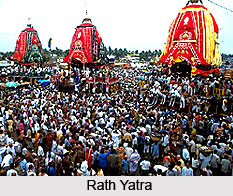
Festivals are part and parcel of Oriya culture. All the popular Indian festivals are feted by the Oriyas along with some local festivals, incorporating religious rituals with social norms. The main festival of Odisha is the Rath Yatra. It is held on the second day of 'Asadha' or monsoon seasons. On this day, the idol of Lord Jagannath, together with Lord Balaram and Subhadra are being brought out in roads in chariots by thousands of devotees. Another popular festival, Dhanu Yatra, is held in the months of December or January to celebrate the occasion of the visit of Lord Krishna to Mathura. The Annual Konark Dance Festival is a huge celebration of Indian classical dance. Magha Saptami is feted in the month of 'Magha' to revere the Sun God at Konark. The five day long Puri Beach Festival starts from November 5, and is observed in the beautiful coastal beaches with great merrymaking and enthusiasm.

Oriya CultureMusic and Dance of Odisha
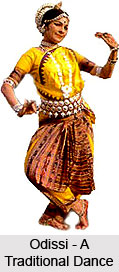
Oriya music can broadly be divided into various genres of folk music, light music, light-classical music and classical music. Folk music like Balipuja Geeta, Kendra Geeta, Jaiphula Geeta depicts the woes and sorrows of the natives. Bhajan, a popular song type of light classical music is famous throughout the nation. Sariman, Champu, Malasri, Vyanjani, Chaturang, Tribhang, are the various sub categories of the conventional Odissi music. They fall under the Oriya classical music genre.

For more, visit the link below:
Beaches of Odisha


Beaches of OdishaBeaches of Odisha engulf the visitors in their enchanting tranquility and mesmerizing landscapes which make these places ideal for beach holidays. Basking in the moderate sun over the vast expanses of golden gleaming sand in the beaches is immensely inviting.

The state of Odisha hosts some of the most resplendent beaches of the country embraced with the beauty of magnificent Eastern Ghats Mountain Range in India. Each of these beaches have some or the other unique features which owes to their popularity and invites a large number of tourists throughout the year.

The swaying palm trees, clear blue sea water, serene ambience, rolling waves and rendezvous with the intrinsic culture of the regions are some of the delights to savour at the beaches of Odisha. These are excellent destinations to spend a rejuvenating time and regain the lost vigour.

Chandipur Beach, Baleswar District
Chandipur Beach, situated in the Baleswar district, is unique as during the ebb tide, the water recedes from 1 to 4 kilometres. The exquisite beach is the home to many aquatic species including Horseshoe crab. Tourist can enjoy glorious sunrise and sunset at the beach. It also serves as an ideal picnic spot. Nestled along the Bay of Bengal, Chandipur Beach is visited by many for its beautiful landscapes and serenity.Beaches of Odisha

Gopalpur Beach, Ganjam District
Gopalpur Beach lies in the Ganjam district of the state. A perfect destination for spending leisure time, the beach is beautifully dotted with casuarinas and coconut grooves. It is a calm and peaceful place which has been well maintained. There is also a lighthouse which is open for the tourists. The beach is the site of Gopalpur Beach Festival.

Talasari Beach, Baleswar District
Talasari Beach spreads in the district of Baleswar, in the north eastern coast of India. It is adorned with tall palm and coconut trees and casuarinas. It is still quite unexplored and thus exhibits its untamed natural beauty. The calm water and the shimmering expanse of white sand make the beach delightful. Sunrise and sunset at the beach is fascinating. Talasari is the last beach of the state towards its north.

Satapada Beach, Puri District
Beaches of OdishaSatapada Beach is located in the Puri district at the northeast cape of Chilika Lake and Bay of Bengal. It offers magnificent views of Chilika dolphins. Water sports like kayaking and canoeing can be enjoyed here. Migratory birds can be spotted at the beach.

Gahirmatha Beach, Kendrapara District
Gahirmatha Beach is another splendid beach of Odisha which demarcates Bhitarkanika mangroves from the Bay of Bengal. It is accredited as the most significant nesting beach for Olive Ridley Sea Turtles in the world. The beach forms a part of Gahirmatha Marine Wildlife Sanctuary.

For more, visit the link below: