Tuesday, 8 February 2022

Royal Bengal Tiger


Royal Bengal Tiger, Indian AnimalThe Bengal tiger, also known as the Royal Bengal Tiger or the Indian tiger, is the Mainland Asian Tiger, which is the subspecies with the largest population. It is the national animal of both India and Bangladesh and its scientific name is Panthera Tigris Tigris. The tiger first arrived in the Indian subcontinent about 12,000 years ago. The Royal Bengal Tiger ranks among the biggest wild cats alive today. It is considered to be belonging to the world's charismatic megafauna. Since 2008, this animal is listed as endangered on the IUCN Red List and is threatened by poaching.

Physiognomy of Royal Bengal Tiger
The physiognomy of the Royal Bengal Tiger is extremely attractive. It is a mammal with thick legs, strong teeth and jaws. The Royal Bengal Tiger's coat is yellow to light orange, with stripes ranging from dark brown to black; the belly and the interior parts of the limbs are white, and the tail is orange with black rings.

Male tigers have a length of 270 to 310 cm on average including the tail, while female tigers measure 240 to 265 cm on average. The tail is typically 85 to 110 cm long; the weight of male tigers ranges from 180 to 258 kg and weight of females ranges from 100 to 160 kg.

Distribution and Habitat of Royal Bengal Tiger
Most of the populations of Royal Bengal Tigers are in India, but there are some smaller groups in Bangladesh, Nepal, and Bhutan as well; it may also be present in some areas of China and Burma. An estimate of the World Tiger Recovery Program indicates that there are about 440 tigers in Bangladesh, about 155 in Nepal and about 75 in Bhutan. The approximate number of specimens is less than 2,500.

However, the latest census of 2016, as received from government sources, indicates that there are 106 tigers in Bangladesh, 103 in Bhutan, 198 in Nepal and 2,226 in India. This information is yet not confirmed by independent organizations. The Royal Bengal Tigers usually dwell in tropical rainforests, marshes, and tall grasses.

Diet of Royal Bengal Tiger
This animal mainly searches for medium or large prey, mainly ungulate mammals. Their hunting includes the gaur, water buffalo, sambar, chital or mottled deer, wild boar and other species of deer. They occasionally consume small prey such as rabbits and porcupines, and they may attack domestic livestock sometimes as well. Royal Bengal tigers can consume up to 40 kilograms of food on a single occasion, though they usually consume a smaller amount.

Hunting Process of Royal Bengal Tiger
The power of the Royal Bengal tiger can clearly be observed when they are hunting. Tigers cannot follow their prey for long distance so they use a tactic for the hunting which includes both stealth and camouflage. During hunting in the sunlight, the tigers hide in the tall grass to stalk the prey. Camouflage can be so effective that the unsuspecting prey can be just a few meters away from the tiger. When it is ready, it attacks silently by the side or behind the victim, jumps quickly on it and strikes with a blow with its retractable claws or a bite in the neck. Then they drag the animal several meters to consume it or they can even transport the body through to the water.

For more, visit the link below:

Tiger Reserves in India


Tiger Reserves in IndiaTiger reserves in India are protected areas dedicated to the protection of tigers in the country. It is important to note that 70 percent of the tigers in the world are present in India. Tigers are considered to be a cardinal part of any forested area and ecosystem. Bengal tigers are known to be present at the top of the food chain. They have ecological, scientific, economic, aesthetic and cultural values. They have exceptional capability to catch prey. The count of tigers was 1,411 in the year 2006. This count increased to 1,706 in the year 2011, which further increased to 2,226 in the year 2014. The records of World Wildlife Fund and Global Tiger Forum highlight 3891 wild tigers in the year 2016.

History of Tiger Reserves in India
When the tiger population was in danger, the Government of India tried to locate tigers in the dark areas of forests. Project Tiger was launched by the government in 1973 to save the endangered species called tigers. During 1973-1974, there were nine reserves in India. At present, there are 50 tiger reserves in India.

Management and Aim of Tiger Reserves in India
The state forestry departments handle about 53,547.5 square kilometers of the declared reserves in India. These reserves are administered under Project Tiger. Tiger reserves in India aim to maintain viable populations of Bengal tigers, which are dependent on protection. However, poaching and surreptitious killing of tigers is a major setback and a serious hindrance to the protective measures executed in the tiger reserves. Tiger reserves in India are upgraded and revamped at appropriate times, with the introduction of necessary inputs.

For more, visit the link below:
Monday, 7 February 2022

Sweets of West Bengal


Sweets of West BengalSweets of West Bengal occupy a prominent place in the Indian cuisine. The sweets from this eastern part of the country are known for its rich taste and texture. Most of the sweets in West Bengal are made from ‘Chhana’ or cottage cheese. Some of the well known sweets in West Bengal are ‘Sandesh’, ‘Rosogolla’, ‘Kanchagolla’, ‘Chamcham’, ‘Kalojam’ and a lot more. Chhana-based sweets in Bengal are too numerous to enumerate in full.

Sandesh of West Bengal
Sandesh is made from sweetened and solidified Kheer. Since the dryness of the kheer made it easy to preserve, Bengalis developed the custom of carrying some sandesh with them whenever they visited some-one. The term ‘sandesh’ also meant news and the sweet, therefore, became the perfect offering for visitor bearing news.

The chhana for sandesh can be pressed, dried, flavoured with fruit essences, coloured and cooked to many different consistencies, filled with syrup, blended with coconut and moulded into a variety of shapes. The names of the sandesh are based on form, content, consistency and flavour.

Rosogolla of West Bengal
Sweets of West BengalNext to sandesh, the Rosogolla is the best known as the representative sweet from West Bengal. It is made of cottage cheese that is formed into balls and soaked in sweet syrup. This delicacy was invented in Kolkata by confectioner Nabin Chandra Das in the 1860s.

Mishti Doi of West Bengal
Mishti Doi is synonymous with West Bengal and is one of their most famous desserts. It tastes great and is amazingly simple to make. It is the quintessential Bengali dessert. Made with condensed milk and caramelized sugar that simply melts in the mouth.

For more, visit the link below:

Gujarati Cuisine, Indian Regional Cuisine


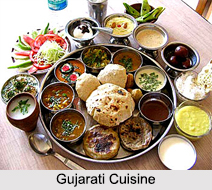
Gujarati Cuisine, Indian Regional CuisineGujarati Cuisine refers to the culinary preparations of the native people from the state of Gujarat in the western region of India. The Gujarati cuisine is primarily vegetarian, due to the influence of Hinduism and Jainism. The archetypal ‘Gujarati Thali’ is made up of Roti, Daal or Kadhi, Rice, and Sabzi or Shaak, which is a dish made up of different combinations of vegetables and spices, which may be a fried or sauted, and it could be spicy or sweet flavoured. Gujarati cuisine varies widely in flavour and heat, depending on individual family’s preferences as well as the region of Gujarat they belong to. North Gujarat, Kutch, Kathiawar and South Gujarat are the 4 major regions of Gujarat that all together bring their own style to Gujarati food. Many Gujarati dishes are characteristically sweet, salty and spicy at the same time. Thus, Gujarati cuisine is popular for its diversity and variations.

Features of Gujarati Cuisine
The staples of Gujarati cuisine include homemade Pickles, Khichdi, Pulao, Khatta-Mittha Bhaat, Undhiyu and Buttermilk. Main dishes of Gujarat revolves around steamed vegetables and Daals that are added to a Vaghaar, which is a mixture of spices cleaned in hot oil that varies depending on the main ingredient. Salt, sugar, lime, lemon, and tomato are used commonly to prevent dehydration in a dry region like Gujarat. Gujarati Cuisine, Indian Regional CuisineGujarati cuisine is usually adorned with increased sugar or Jaggery to some of the Sabzi, Saag and Dal. The sweet flavour of Gujarati cuisine is believed to counteract the slightly salty taste of the water. Different cooking styles and combination of spices are incorporated in preparing different dishes marking uniqueness of each.

Gujarati cuisine changes with the seasonal availability of vegetables. The spices used in the Gujarati foods also change depending on the season. Garam Masala and its ingredient spices are hardly used in summer. Regular fasting, with diets including merely milk and dried fruits and nuts, are quite common. During the cold winters, the Gujarati cuisine consists of thick Rotis called as ‘Bhakhri’ made up of Bajra flours, Garlic Chutney, Onion pieces and lots of Buttermilk near Saurashtra. Sweets form an integral factor in Gujarati cuisine, sweets made of local Sugarcane, Jaggery, Milk, Almonds and Pistachios are served at weddings and family occasions.

For more, visit the link below:

Friday, 4 February 2022

Deccani School of Painting


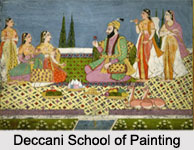
Deccani School of Painting, Indian PaintingsDeccan school of painting was effective in southern part of India in medieval age and later years. Adil Shahi, Nizam Shahi and Qutub Shahi rulers were the patrons in the development of Deccani School of painting. A lot of artists flourished during the rule of Ibrahim Adil Shah (II) (1580-1627), who was a great lover of painting. It is evident from the availability of numerous portraits of Ibrahim Adil Shah in different museums of the world. Deccani painting can be illustrated as a perceptive and an extremely included mix of original and overseas style of art.

History of Deccani School of Painting
The miniature painting method, which increased at first in the Bahmani court of Bahmani Sultanate and later in the courts of Ahmadnagar, Bijapur, Bidar Berrar and Golkonda is generally well-known as the Deccan school of Painting. The Nujum-ul-ulum of 1570 is the first dated manuscript, appears to be a producer of Bijapur, which continued to be one of the major centres of the style. Deccani art also had its consequence on the expansion of miniature painting in the Hindu courts of Rajasthan and central India.

The art of painting carried with it the influence and essence of the culture it represented. The art of painting widespread in other parts of India were very much influenced. Ibrahim Adil Shah was shown as a musician in few other paintings available in the Naprstck Museum, Prague, and the Goenka Collection, Kolkata. Although the Mughal School of painting and the Deccani School of painting developed the naturalism due to European influence, yet there was a difference between the two. The Mughal school paintings were more dazzling in technique whereas the Bijapur or the Deccani School of painting represented more naturalism due to imaginative composition and poetic content.

Features of Deccani School of Painting
Deccani School of Painting’s style is a perceptive, highly integrated merge of indigenous and foreign art forms. The Vijaynagar painting’s similarity is seen in the lengthened figures while the floral backgrounds with a general use of landscape shows Persian influence. Deccani colours are rich and luminous, and much use is made of gold and white. For the most part of the colour of Deccani paintings are Islamic, Turkish and Persian tradition particularly the arabesques, but those are surmount by a pure Deccani part of undergrowth. These paintings have a distinct quality of their own in the very unconventional composition. The rich landscape mysterious atmosphere, gem-like colouring, lavish use of gold, exquisite finish, profusion of large plants, flowering shrubs and typical Dakhni castles in the background and above all, the sweeping decorative rhythm that is of Bijapur origin are quite visible in them.

For more, visit the link below:

Thursday, 3 February 2022

Kriya Yoga


Kriya Yoga, YogaKriya Yoga is an ancient meditation technique of energy and breath control, or Pranayama. It is also a comprehensive spiritual path, which includes additional meditation practices and right living. Kriya Yoga is practiced in India since times unknown and is still a popular means of spiritual growth. Although this yoga was widely practiced in ancient India, the technique gradually was forgotten in the later ages.

History of Kriya Yoga
Kriya Yoga dates back to the thousands of years ago. It has its mention in the Bhagavad Gita. The earliest reference of Kriya Yoga can be traced back to Patanjali Yoga Sutra. Patanjali further states the need for cultivating the virtues that constitute Kriya yoga. These elements are purity (Shaucha) and contentment (Santosha).

According to the history of Kriya Yoga, it was Lahiri Mahasaya who revived the methods of Kriya Yoga and taught it to his disciples, among which Paramhansa Yogananda was the most famous one. Lahiri Mahasaya learnt it from his guru Sri Mahavatar Kriya Babaji, the founder of Kriya Yoga.

Concept of Kriya Yoga
Kriya Yoga, YogaKriya simply means "to work". The basic tenet of Kriya Yoga lies in its technique of controlling the life force. By practicing it, the practitioner becomes able to overcome all the hindrances of life and to unite with the divine lord. Kriya yoga starts with Pranayama.

Features of Kriya Yoga
Kriya Yoga is the unique technique of highlighting the relationship between the mind and the breath as it is the mind which influences the breath and the breath in turn influences the mind. It is the science of controlling the mind, as breath control is ‘self-control’ and breath mastery is ‘self mastery’. Kriya Yoga is completely non-sectarian. Its easy techniques cause no hardships or austerities and were developed for aspiring householders as well as for the monks.

For more, visit the link below:
Wednesday, 2 February 2022

Yamini Krishnamurthy, Indian Classical Dancer


Yamini Krishnamurthy, Indian Classical Dancer"A dancer must have tremendous personality. A God like Christ and even a godman like Rajneesh had some personality. Combination of talent, dedication, creativity and being emotive is imperative. A coupling of these four qualities with technique is essential. Monotony is deterrent as it regards your style and I notice today, that new dancers perform in a startlingly similar fashion." - Yamini Krishnamurthy.

Yamini 'Poornatilaka' Krishnamurthy alias Yamini Krishnamurthy is a renowned Indian classical dancer who has dedicated her life to Indian classical dance styles Bharatnatyam and Kuchipudi for decades. She is considered as the torch bearer of the Kuchipudi form of dance. She gave her debut with a dance performance in Chennai in 1957, where her charisma and stage presence were discerned when she was only seventeen. She has led an illustrious and eventful dancing career and has been honoured with the Padma Shri, the Padma Bhushan and most recently the Padma Vibhushan, India’s second highest civilian honour, in 2016.

Early Life of Yamini Krishnamurthy
Yamini Krishnamurthy was born on December 20, 1940, in a Telugu family in Madanapalli city in the Chittoor district of Andhra Pradesh. Born on a full moon night, her grandfather named her Yamini ‘Poornatalika’, the term literally meaning "a full mark on the brow of night". She was brought up in Chidambaram, Tamil Nadu. Her mother tongue is Telugu. She hails from an eminent family that is more literally inclined than artistically. Her father, M. Krishnamurthy, was a Sanskrit scholar and grandfather was an expert in Urdu poetry.

At the age of five, she was enrolled as a student of Bharatnatyam in Kalakshetra School of Dance, Chennai under Rukmini Devi Arundale. After acquiring the foundation base at Kalakshetra, she went on to groom herself under renowned masters like Kanchipuram Ellappa Pillai, Thanjavur Kittapa Pillai, Dhandayudhapani Pillai and Mylapore Gouri Amma. She trained in Kuchipudi under Vedantam Lakshmi Narayana Shastri, Chinta Krishnamurthy and Pasumarthy Venugopal Krishna Sharma. In addition to Bharatnatyam and Kuchipudi, she learnt Odissi from Pankaj Charan Das and Kelucharan Mohapatra. She was also trained in Carnatic vocal music by M. D. Ramanathan and in Veena from Kalpakam Swaminathan.

For more, visit the link below:

Tuesday, 1 February 2022

Tappa, Indian music


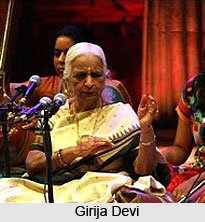
Tappa, Indian musicTappa, understood to have been the staple diction of the erstwhile camel drivers, has since come to a ripened age, by being nurtured in the hands of some of the legendary masters in this genre. The word Tappa stands for jumping, bouncing and skipping, implying the extraordinary rule of unremitting attempts made by a singer on the musical notes, not stopping or taking a pause for once. This outstanding formation is unique to tappa only, absent in the other Hindustani classical forms. It is thus composed of rhythmic and rapid notes, and such a style calls for immense and extreme hold over the singing diction. A contrary to which can damage the whole recital. Tappa is very unlike khayal rendition, crisp and highly volatile in its nature. And the few exponents like Ghulam Nabi, Pt. Bholanath Bhatt or Girija Devi have thus become legends in their own right.

It is usually held that tappa is derived from the songs and tunes sung by the camel drivers of North West Punjab. These songs were composed in Punjabi and Pusthu and, like thumri, were amatory in spirit. The word tappa is derived from the root word tap, which means to 'jump', 'bounce', or 'rebound' in the manner of a bouncing ball.

History of Tappa
History of Tappa outlines the biographical sketches included in the epic work of Indian Music, by Dr. Thakur Jaydev Singh. According to him, Shorie Miya had four significant disciples: Prasiddhu Maharaj, Miya Gammu or Gammu Khan, Tarachand, and Mir Ali Saheb, Gammu Khan's son, Sadi Khan and Babti Ramsahay. He is considered as a member of the kathaka community who together with his brother Manohar Maharaj founded the Prasiddhu-Manohar lineage. Like the other lineages of Tappa singers, this lineage asserted significant musicianship in the mainstream genres of vocal music. Prasiddhu's great-grandson, Ramkrishna Mishra taught and performed in Kolkata till 1955.

For more, visit the link below: