Showing posts with label kathakali. Show all posts

Thursday, 6 February 2025

Kathakali Dance


Kathakali is a classical dance-drama form originating from Kerala, India. It is known for its elaborate costumes, intricate facial expressions, and powerful movements. The performance in Kathakali is a highly disciplined art that integrates dance, drama, and music to narrate stories derived primarily from Hindu epics such as the Ramayana and the Mahabharata. 

Facial Expressions (Navarasas)

One of the defining elements of a Kathakali performance is its use of facial expressions, known as navarasas (nine emotions). These include: 

  • Sringara (love)
  • Hasya (humor)
  • Karuna (compassion)
  • Raudra (anger)
  • Veera (heroism)
  • Bhayanaka (fear)
  • Bibhatsa (disgust)
  • Adbhuta (wonder)
  • Shanta (peace) 

Performers undergo rigorous training to master these expressions, which are conveyed through eye movements, eyebrow gestures, and subtle facial changes. The ability to depict these emotions convincingly is essential for an effective performance. 

Body Movements and Gestures

Kathakali follows a structured movement system, integrating dynamic footwork, graceful hand gestures (mudras), and synchronized body postures. The kalasams (intricate footwork sequences) add rhythm and intensity to the performance. Each character in Kathakali follows a unique movement style:

  • Pachcha (green-faced characters): Represent noble and virtuous figures, moving with grace and dignity.
  • Kathi (knife characters): Denote villains and arrogant kings, displaying aggressive and forceful movements.
  • Thadi (bearded characters): Symbolize demons or uncivilized beings, characterized by exaggerated movements. 

Hand gestures (mudras) are used extensively to convey dialogues and emotions, making them an essential element of storytelling in Kathakali. 

Role of Music and Vocal Support

Music plays a crucial role in Kathakali, providing the rhythmic and melodic foundation for the performance. The orchestra consists of: 

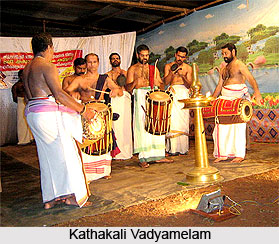
  • Chenda (a cylindrical drum) – produces powerful beats to match the dramatic intensity.
  • Maddalam (another type of drum) – complements the rhythm and adds depth.
  • Edakka (a small drum) – used for softer and more delicate expressions.
  • Cymbals and conch – provide additional musical effects.
  • Vocalists (Bhagavathar) – narrate the story through songs composed in the traditional Sopanam style of Kerala music.

The synchronization between the dancer and musicians ensures the seamless flow of the performance. 

Costumes and Makeup

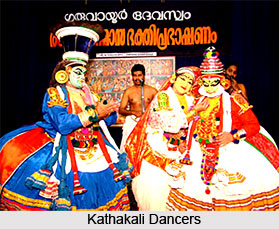
Costumes and makeup in Kathakali are elaborate and highly symbolic. Each character type has a distinct costume and facial paint. The makeup, known as chutti, is applied in layers to create bold and striking facial features, enhancing the expressions. The headgear and ornaments further distinguish the characters and add to the visual spectacle. 

A Kathakali performance is a culmination of disciplined training, expressive storytelling, and synchronized musical support. The art form demands precision in facial expressions, body movements, and rhythm to captivate the audience. Through its unique performance style, Kathakali continues to be a revered classical dance tradition that preserves the cultural heritage of India. 

Saturday, 6 May 2023

Kathakali Dancers in India


Indian Kathakali dancers are some of the most skilled performers in the world. They bring to life the vibrant and colorful stories of Indian mythology through their intricate movements, dramatic facial expressions, and ornate costumes. Kathakali is a classical dance form that originated in the southern state of Kerala, India. It has a rich history that dates back over 500 years and has evolved to become a highly respected art form. 


Kathakali is known for its unique style of storytelling through dance. It is a blend of classical dance, drama, and music, and it involves intricate footwork, hand gestures, facial expressions, and body movements. The dancers, known as Kathakali artists, spend many years mastering this art form, studying its history and techniques, and perfecting their craft. 

One of the most distinctive features of Kathakali is its elaborate makeup and costumes. The makeup, called chutti, is applied using rice paste and coconut oil, and it takes several hours to apply. The colors and designs used in the makeup help to convey the character's emotions and traits. For example, a green face represents a heroic character, while a black face represents an evil character. The costumes are equally ornate and often include colorful silk skirts, jewelry, and headpieces. 

Kathakali performances are usually based on stories from Indian mythology, such as the Ramayana and the Mahabharata. These stories are retold through dance, and the Kathakali artists use their movements, expressions, and costumes to bring the characters to life. The performances are accompanied by live music, which includes traditional Indian instruments such as the mridangam and the chenda. 

The training and preparation required to become a Kathakali artist are rigorous and demanding. It takes many years of practice and dedication to master the various techniques and styles of this art form. The training includes physical exercises, vocal training, and acting lessons, as well as learning the various musical instruments that are used in Kathakali performances. 

Despite its rich history and cultural significance, Kathakali is not as widely known outside of India as some other forms of dance. However, in recent years, there has been a growing interest in this art form, and Kathakali artists have been invited to perform in various parts of the world. The performances have been well received, and audiences have been amazed by the skill, precision, and beauty of the dance. 

Indian Kathakali dancers are some of the most talented performers in the world. Their intricate movements, dramatic facial expressions, and ornate costumes bring to life the vibrant and colorful stories of Indian mythology. Kathakali is a classical dance form that has a rich history and has evolved to become a highly respected art form. The rigorous training required to become a Kathakali artist is a testament to the dedication and commitment of these performers. Although not as widely known as some other forms of dance, Kathakali is gaining popularity around the world, and its unique style and beauty are sure to captivate audiences for years to come.

 For more, visit the link below:

https://www.indianetzone.com/18/indian_kathakali_dancers.htm


Saturday, 1 October 2022

Repertoire in Kathakali


Repertoire in KathakaliRepertoire in Kathakali borrows heavily from both Mahabharata and Ramayana. Kathakali is generally performed in the evening. It begins with the beating of drums as that plays a key role in creating an atmosphere to perform. The play is performed outside with the light of a single oil-lamp. The beating of drums is done to get the attention of the audience. Dance is combined with dialogue to bring about a life in the myth and legends narrated. In the actual performance, there are three main types of characters: the Satvik which include gods, kings or heroes; the Rajasik, characters with specific vices, such as greed, lust, or vanity; and the Tamasik, the evil characters, such as demons. The basic moral is always the eternal warfare between good and evil.

The playing of the drums or commonly called melappadam is followed by a devotional song called the todayam. Here one or two characters invoke blessings of God. Todayam is performed behind a curtain held by two stage-hands. After that a piece is performed known as the purappadu. Here two characters appear, it is either the hero and his consort, or two other characters who are painted green, or even the Pandavas. The purappadu is a dance of invocation which has no mime. Several dance sequences are performed known as kalasams. Through these cadences the techniques of Kathakali are performed. After this, the play that is chosen for that evening starts.

Repertoire in KathakaliThere is the slow revelation of the character from behind the curtain before any major character appears. As the curtain gets lowered the character gradually appears. A powerful character when appearing for the first time stands close behind the curtain. The character executes many dance sequences which is accompanied by drums and cymbals and seen by the audience partially. The suspense is maintained. Then the curtain disappears and he appears in his full beauty. The play with curtain is commonly known as tiranokku.

For more, visit the link below:

Saturday, 6 August 2022

Technique of Indian Classical Dance


Technique of Indian Classical DanceThe technique of Indian Classical dance as mentioned in numerous treatises begins with Natyashastra and progress through the medieval works of 16th and 17th Centuries. Indian dance synthesizes the techniques of other arts to evolve an art which was considered the most significant of all. The principles that govern the technique of Indian classical dance are identical to those that govern the technique of Indian classical drama. Three broad principles preside over Indian drama's structure and stage presentation. The first is the mode of presentation, namely, dharmis, Natya, loka. The second consists of the different types of styles namely Kaiseki, Sathavati, arbhati and bharati. The third is the four types of acting namely the angika, vachika, costume, make-up, stage props, and so on.

There are other principles related to these such as bahya, abhyantara, Pravrittis, samanyabhinaya and chitrabhinaya. It is the combination of all these principles which appear in their original form in the contemporary stage presentation of some of the Indian Classical Dances. Three broad principles govern the structure of Indian drama and stage presentation. The first is the mode of presentation, namely, dharmis, Natya and loka. The second consists of the different types of vrittis, namely Kaiseki, Sathavati, the arbhati and bharati. The third is full play of the four types of abhinaya, namely the angika, vachika, costume, make-up, stage props, aharya, satvika. However in Natyashastra, these principles have been discussed in the chapters on drama. The texts belonging to later period deals with dance as an independent art as well as consider these principles in relation to dance. In Abhinaya Darpana Prakasha the independent treatment of dance from the view of the principles that govern it has been enumerated. Sarangadeva and the writers of the Vishnudharmottara Purana and the Natyashastra Sangraha follow this.

For more, visit the link below:

Monday, 14 March 2022

Forms of Indian Classical Dances


Forms of Indian Classical DancesForms of Indian classical dances are numerous, and were classified by the Hindu masters as of two kinds, 'Margi' and 'Desi'. The artistic composition of movement and its classification into various types of action is carefully described in the 'Natyashastra' of Bharata Muni. There are three main components elucidated in this ancient treatise. The first one is 'Natya' or actions that belong to the drama. Expressive movements of the body which are accompanied by facial expression and governed by rules of rhythm are called 'Nritya' or dancing. Nritta refers simply to movements of the limbs, and does not involve facial expression. Dancing is again divided into two kinds known as 'Tandava' and 'Lasya'. The Tandava dance is characterized by intense excitement, the heroic mood (Vir) and the touch of wrath. It also expresses cosmic activity, the divine conquest of evil or the attainment of bliss. It is performed by both sexes. Tandava dancing joined to vocal music often forms a prelude to a certain type of dramatic presentation. Lasya dancing includes amorous expression and graceful movement of the limbs. It is danced by women and their consorts. The 'Ras Leela' of Lord Krishna with the 'Gopis' of Vrindavan is of the Lasya kind. 'Laghu' dancing is performed by raising the heels slightly and alternately beating them on the floor.

Forms of Indian Classical DancesThe most popular forms of classical dances practised in India involve Manipuri Dance, Bharata Natyam Dance, Odissi and several others, being widely prevalent in their patron states.

Bharata Natyam Classical Dance
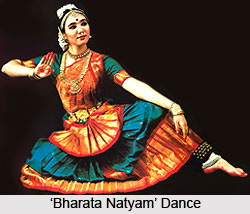
Bharata Natyam is a well acclaimed classical dance which is the 19th and 20th century modifications of the dance-form called 'Sadir' practised by 'Devadasis' or temple dancers. It is quite popular and widely patronised in Tamil Nadu, particularly appreciated for its tender elegance, sculptural 'mudras' and poses, and also its natural grace. Lord Shiva is believed to be the God of Bharata Natyam.

Chhau Classical Dance
The Indian tribal dance-form of Chhau is performed mainly in West Bengal, Jharkhand and Odisha and resembles martial arts to some extent. 'Purulia Chhau', 'Seraikella Chhau' and 'Mayurbhanj Chhau' are the various dances, classified according to its area of origin. Modern dance scholars are of the view that the term Chhau is a derivation of the Sanskrit term 'Chaya' implying mask or shadow.

Kathak Classical Dance
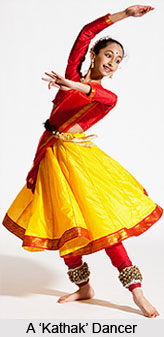
Kathak is one the most famous classical dances which is influenced by temple dances, the 'Bhakti Movement', central Asian dance and Persian dances which were often displayed in the Mughal courts. The nomadic storytellers who were known as 'Kathakars' are the ancestors of this dance form while Kathak is obtained from Sanskrit term 'katha' implying 'story'. It belongs to the 'gharana' of Varanasi, Jaipur and Lucknow, which can be traced to the courts of Nawab of Awadh, Kachwaha Rajput rulers, etc.

For more, visit the link below:

Wednesday, 2 February 2022

Yamini Krishnamurthy, Indian Classical Dancer


Yamini Krishnamurthy, Indian Classical Dancer"A dancer must have tremendous personality. A God like Christ and even a godman like Rajneesh had some personality. Combination of talent, dedication, creativity and being emotive is imperative. A coupling of these four qualities with technique is essential. Monotony is deterrent as it regards your style and I notice today, that new dancers perform in a startlingly similar fashion." - Yamini Krishnamurthy.

Yamini 'Poornatilaka' Krishnamurthy alias Yamini Krishnamurthy is a renowned Indian classical dancer who has dedicated her life to Indian classical dance styles Bharatnatyam and Kuchipudi for decades. She is considered as the torch bearer of the Kuchipudi form of dance. She gave her debut with a dance performance in Chennai in 1957, where her charisma and stage presence were discerned when she was only seventeen. She has led an illustrious and eventful dancing career and has been honoured with the Padma Shri, the Padma Bhushan and most recently the Padma Vibhushan, India’s second highest civilian honour, in 2016.

Early Life of Yamini Krishnamurthy
Yamini Krishnamurthy was born on December 20, 1940, in a Telugu family in Madanapalli city in the Chittoor district of Andhra Pradesh. Born on a full moon night, her grandfather named her Yamini ‘Poornatalika’, the term literally meaning "a full mark on the brow of night". She was brought up in Chidambaram, Tamil Nadu. Her mother tongue is Telugu. She hails from an eminent family that is more literally inclined than artistically. Her father, M. Krishnamurthy, was a Sanskrit scholar and grandfather was an expert in Urdu poetry.

At the age of five, she was enrolled as a student of Bharatnatyam in Kalakshetra School of Dance, Chennai under Rukmini Devi Arundale. After acquiring the foundation base at Kalakshetra, she went on to groom herself under renowned masters like Kanchipuram Ellappa Pillai, Thanjavur Kittapa Pillai, Dhandayudhapani Pillai and Mylapore Gouri Amma. She trained in Kuchipudi under Vedantam Lakshmi Narayana Shastri, Chinta Krishnamurthy and Pasumarthy Venugopal Krishna Sharma. In addition to Bharatnatyam and Kuchipudi, she learnt Odissi from Pankaj Charan Das and Kelucharan Mohapatra. She was also trained in Carnatic vocal music by M. D. Ramanathan and in Veena from Kalpakam Swaminathan.

For more, visit the link below:

Wednesday, 9 June 2021

Kathakali, Indian Classical Dance


Kathakali Dance Kathakali is a combination of literature, music, painting, acting and dance. "Katha" means story and "Kali" stands for dance. This is a form of dance formerly confined only to the festival stages in temples. It symbolizes a blending of the Aryan and Dravidian cultures, for shaping its technique. The most striking element in Kathakali is the dramatic quality which is inspiring and belongs exclusively to a world of myth and legend.

Origin of Kathakali
The actual roots of Kathakali can be traced to at least 1500 years earlier. The art of Kathakali incorporates the characteristic features of many of the dances and dramas of South India. It evolved out of the earlier dance forms like the Chakiayarkoothu and Koodiyattom, Mudiyettu, Theyyattom, Sastrakali, Krishnanattom and Ramanattom of Kerala. The ruler of Calicut in the 17th century wrote a poem on the life of Lord Krishna called the Krishnageeti and asked this to be performed at the temple. This was Kathakali preceded by a style called the Krishnatam, which was a masked dance drama, for very many similarities in the presentations, costumes, acting and background music could be cited in both. Another ruler of Kottarakara saw this play and was so impressed that he requested the Zamorin of Calicut to send the troupe to his kingdom, which the latter refused, angering the ruler of Kottarakara. He then decided to create his own play on the life of God Rama called the Ramanattam, which soon became popular and spread everywhere.

KrishnattamThe ruler Tampuran of Kottayam soon turned into Kathakali. The costumes and make up were improved so that the facial expressions were emphasized. Dramatic plots were also selected for presentation. Episodes from Mahabharata were chosen, which were more attractive to the audiences. The style was also renamed. With all these developments Kathakali remained in the shadows till the great poet Vallathol initiated Kerala Kalamandalam. Kathakali thereafter has acquired worldwide recognition.

Techniques of Kathakali
The technique of Kathakali includes a highly developed language of gesture, through which the artist can convey whole sentences and stories. The major original Kathakali styles included Vettathu Sampradayam, Kalladikkodan Sampradayam, and Kaplingadu Sampradayam. However these have come down to the northern and southern styles. Kathakali is a dramatic performance in which the actors interpret their emotions through highly sensitive medium. This is done by its vivid and persuasive mudras, natural and impressive gestures, graceful and rhythmic movements, pleasing choreography and above all delightful wealth of imagery. It belongs to the imaginative type spoken of in Bharata's Natyashastra. Kathakali is a male art and the dancing is masculine.

Kathakali PlaysTheme of Kathakali
Kathakali draws upon the inexhaustible treasure of the ancient puranas chronicling the love and conflicts of the gods and supermen of Indian mythology for its themes. They deal with the Mahabharata, the Ramayana and the Indian Puranas. The most popular stories are Nala Charitam, Duryodhana Vadham, Kalyanasowgandhikam, Keechaka Vadham, Kiratham, Karna and Shapadham. However recently, stories from other cultures, such as the story of Mary Magdalene from the Bible, and Shakespeare's King Lear have also been adapted into Kathakali scripts to popularise the art.

Performance in the Kathakali Dancers
In the evening one can witness a traditional Kathakali performance. It continues throughout the night, culminating at the auspicious hour of dawn, when good finally conquers evil. It has been changed for the urban audiences and is performed in a plush auditorium, within the span of a couple of hours. Earlier Kathakali used to be performed in temple premises or at the house of a local landlord.

To learn more about the origin, music and costume of Kathakali, visit the link below:

Friday, 13 September 2019

Dances of Kerala

090d570d6f967dafbe443d8a4b21968c Dances of Kerala  include a number of traditional as well as tribal dances. Kathakali, however, remains a popular dance form even today. The traditional dance forms mainly draw inspiration from the ancient texts and epics.
Kathakali, Mohiniattam and Thullal it includes in dances of kerala. Besides these, Theyyam, Koothu, Krishnanattom and Koottiyattam are also practiced in Kerala.

Mohiniyattam Dance
Mohiniattam is believed to be the dance of enchantress. Superficially Mohiniattam resembles the Tamil classical dance, Bharatnatyam, but it is less complex in its mime, and, in comparison, rustically vigorous and angular.

  Kathakali Dance
Kathakali is one of the most well known dance forms in Kerala.

Theyyam Dance
Theyyam is another important dance of Kerala. It is also known as Thirayattam. However this dance form belongs to the folk traditions. Theyyam is a performed to glorify Goddess Kali.
Koodiyattam Dance
Koodiyattam dance is a traditional dance of Kerala in which Sanskrit dramas are enacted skilfully.p.pngVelakali Dance
In Kerala, Velakali is still performed in certain temples. The dancers are dressed up as warriors and carry wooden swords and shields. It is often seen that make up and costume play an important role in the dances of Kerala.
2863898615_8df8c039d2_b.jpgThiruvathirakali Dance
Thiruvathirakali is performed by the womenfolk belonging to Hindu community. This is a beautiful group dance of Kerala and is done during festivals like the 'Thiruvathira' day as well as Onam.
1538560554_ramanatam
Krishnanattam Dance
Krishnanattam dance is inspired by folk dances like 'Mudiyattam', 'Theyyam' and others.

Duffmuttu Dance
Duffmuttu is quite popular with the Muslim population of Kerala.
oppana20131111114857_17_1
Opanna Dance
Oppanna is a special form of dance practised by the Muslims in Kerala. This bridal dance is done the last day prior to the marriage

The varied and interesting dances of Kerala have definitely enriched its art and culture over the years. Art has flourished in Kerala since the ancient times. Amongst a host of performing arts, dance has always taken the centre-stage in Kerala. Martial dances are also common in south India.

Read More :- Dances of Kerala

Saturday, 12 November 2016

Repertoire in Kathakali


Repertoire in Kathakali borrows heavily from both Mahabharata and Ramayana. Kathakali is generally performed in the evening. It begins with the beating of drums as that plays a key role in creating an atmosphere to perform. For more visit the page below: http://www.indianetzone.com/50/repertoire_kathakali.htm