Monday, 28 September 2020

Indian Buddhist Sites


Indian Buddhist sites are numerous in number which are scattered throughout the length and breadth of Asia. A majority of these renowned regions are closely associated with the life of Lord Gautama Buddha and have been visited by Buddha either for preaching Buddhist principles or for meditation. To transform himself from 'Siddhartha' to 'Sakyamuni' and then to Buddha he had travelled far and wide on various purposes. All those places that he went to are considered as Buddhist pilgrimage centres. However at some centres excavations have been carried out to know more about the great teacher. These are the historical Buddhist sites that are related with his early life. There exists four significant centres of Buddhist pilgrimage which include the birthplace of Buddha at Lumbini, the area where he achieved 'Enlightenment' known as Bodhgaya, the region which received His very first teachings called Benaras and the place where He attained 'Parinirvana' at Kushinagara.


Bodhgaya
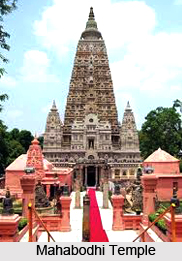
Bodhgaya is one of the most well known places for Buddhists which lies in the eastern Indian state of Bihar. The most important attraction here is the Bodhi tree under which Gautama attained Enlightenment. Another attraction here is the Mahabodhi Temple. It is believed to have been built by emperor Ashoka.

Sarnath
The Deer Park in Sarnath is the place where Buddha delivered his first discourse, through which he had preached the 'four noble truths' and their associated principles. The place is situated near Varanasi, Uttar Pradesh. Today there are some of most exquisite Buddhist monuments in Sarnath. Probably the most important of them all is the Ashokan Pillar. A Buddhist temple and the ruins of the several monuments add to the beauty of this historical Buddhist site.Indian Buddhist Sites

Kushinagar
Kushinagar town in Uttar Pradesh is the site where Lord Buddha attained Parinirvana following His demise and it was referred to as 'Kushavati' or 'Jatakas' during ancient periods. Ramayana has mentioned about this region as 'Kusha' city, named after Rama's son. Buddha attained 'Mahaparinirvana' or the 'Final Nirvana', immediately after he had consumed meals prepared with mushrooms. The 'Viharas' and 'stupas' located here belong to the 3rd or 5th century CE and Ashoka had erected several Buddhist monuments here.

Rajgir
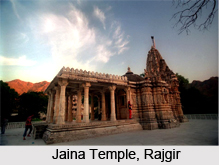
Rajgir, situated in Bihar was once a capital of the Magadha kingdom which later developed into Mauryan Empire and is believed to have come into existence during 1000 BC. It is a notable Buddhist site as the 'Atanatiya' conference was held here, at the mountain of the Vulture's Peak. Lord Buddha had been engaged in deep meditation for a considerable amount of time and delivered His lessons at 'Gridha-Kuta' or the Hill of the Vultures. Some of the most famous sermons were taught here and King Bimbisara had converted to Buddhism at Rajgir.

For more read the full article:

Friday, 25 September 2020

Patanjali Yoga Sutras


Patanjali Yoga SutraPatanjali Yoga Sutras is the ancient treasure narrating how to keep the body healthy. This yoga sutra is now one of the most acclaimed elements of everyday life. Yoga is an art, a science and a philosophy that touches the life of man at every level, bodily, intellectually and spiritually.

All yoga as practiced today is based on Patanjali Yoga Sutras, a collection of aphorisms offered more than 2000 years ago by the Indian sage, Patanjali. Patanjali Yoga Sutras by Maharshi Patanjali is the foundational text for Yoga. Historically, it is believed that Maharshi Patanjali may have lived in around 500 BC to 2000 BC and has compiled mainly three subjects of Patanjali Yoga Sutras namely, grammar, medicine and yoga. Patanjali's three works together deal with man's development as a whole in thought, speech and action.

Patanjali Yoga SutrasDivisions of Patanjali Yoga Sutras
Patanjali Yoga Sutra consists of 196 sutras which are divided into four chapters or padas. Each sutra consists of Sanskrit words that are written in one or two lines. The 196 sutras are precise, reflective and pious in approach. Each of the sutras contains a wealth of ideas and wisdom towards full knowledge of his real nature. The Patanjali Yoga Sutra state, through proper practice one can radiate grace, disposition and compassion. The four chapters or padas of the yoga sutras correspond to the four stages of life. The ultimate achievement of following the path of Patanjali Yoga Sutra is to experience the effortless, indivisible state of the prophet. The four chapters of Patanjanli Yoga Sutras include, Samadhi Pada, Sadhana Pada, Vibhuti Pada and Kaivalya Pada.

Thursday, 24 September 2020

Indian Freedom Fighters


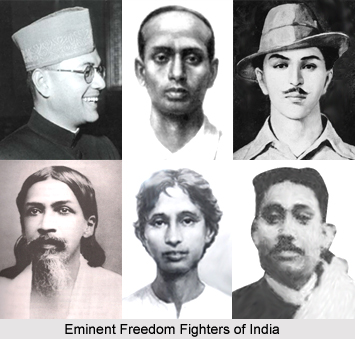
Indian Freedom FightersIndian Freedom Fighters had fought against the British Empire and continued the Indian freedom struggle with their undying spirit and bravery. The valorous Freedom Fighters of India sacrificed their lives to achieve independence for the nation.

The indian freedom fighters faced several tortures, hardships and exploitations to earn national freedom. Independent India was the dream of each and every Indian who lived under the British rule in india. Every individual, during the British rule, fought in some or other way having a common aim of abolishing the British and various other colonial authorities ruling over different parts of India. A century of struggle, revolution, blood shedding, sacrifices and battles followed and finally India became independent on the 15th of August, 1947.

India secured independence from the British rule but the nation lost a large number of men and women who possessed immense bravery and spirit of patriotism. These great people are honoured with the title of Freedom Fighters. The Indian Independence Movement comprised mainly the efforts by Indians to secure political independence from the rule of the British, the Portuguese and the French. This involved a broad range of Indian political organisations, rebellions and philosophies between 1857 and the independence of India on 15th of August, 1947.

Some of the famous Indian freedom fighters were Mangal Pandey, Rani of Jhansi, Tantia Topeand the famous leader Mahatma Gandhi who brought in the weapon of non-violence to fight against the enemy. Some of the other major freedom fighters of India include Lala Lajpat Rai, Annie Besant, Bal Gangadhar Tilak, Bipin Chandra Pal, Bhagat Singh, Sukhdev, Chandrashekhar Azad, Sarojini Naidu, Gopal Krishna Gokhale, Dadabhai Naoroji, Chakravarti Rajagopalachari, Sucheta Kriplani etc. There are a large number of women and men who fought daringly for the independence of India.

For more visit the page:

Wednesday, 23 September 2020

Classical Indian Dance Drama


Classical Indian Dance DramaIndian drama which began in the ancient days, as a form of humanizing the mass gradually became a rational way of expressing ideas amidst the artistry of "kala", "rupaka", "natya" and "mudraa". Theater bit by bit became an art form to reflect the realities of life. Although Sanskrit theater remained to be popular, yet it is during the medieval period Indian drama gained a whole new facet with the introduction of the style of classical Indian dance drama. It is an authoritative genre of Indian theater and is regarded as one of the most venerated artistic expression of the Hindu classical temple culture. Music, "ragas", "mudraas" coupled with the verve of the "taala" offered a whole new facet in Indian theater which later not only influenced the Indian theater but also added a dimension to Indian classical dance forms. Quite ideally therefore Classical Indian Dance Drama or the "Natya Yoga" as it has been termed, gradually became an effort of depicting the beauties of life and exemplifying the divine celestial elements of the universe amidst the artistry of raga and music. The elegant embodiement and the graceful personification of the "unedited realisms of life, death, law and love" is therefore the very crux of the classical Indian dance drama.

The vibrations of the sanskrit plays gains an articulation with the introduction of the Classical Indian Dance drama. The verve of the different classical dance forms like the Odissi, Kathak, Bharatnatyyam, Manipuri, Kuchipudi, Kathakali, Mohiniattam, Yakshagna, Sattriya further structured the very contour of the Classical Indian dance drama as an elegant way of thanking and revering the Divine. Dance forms here started ruling the theater form. Classical Indian Dance DramaWhile Bharatnatyyam, Odissi and Kuchipudi prefers to maintain the very orthodox style of the Indian classical dance form, it is the typical saltation form of Kathak that developed as a rather contemporary style in worshipping the elysian. Movement of the legs and the mudraas coupled with the gentle rhythm of the Sura and Raga, aided in weaving that magic in the dance form of Kathak.

The Classical Indian dance drama further gained that overemotional aspect with the introduction of the melodramatic form of the Kathakali dance. Quite ideally therefore Lasya, Natya and Rasas all gained a distinct facet in the Indian classical dance drama amidst the classic accession of the various Indian dance form.

Tuesday, 22 September 2020

Satellite Television in India


Satellite Television in India, Indian TelevisionSatellite television in India is delivered by the means of communications satellite and received by a satellite dish and set-top box. Satellite television provides a wide range of channels and services, often to areas that are not serviced by terrestrial or cable providers.

While Doordarshan was expanding rapidly during the 1980s, the cable television industry was mushrooming in the prime cities of India. The VCR greatly multiplied entertainment options for Indian audiences, providing alternatives to Doordarshan's single-channel programming. Video viewing at home and in community-based video parlors increased at a fast pace. The video collection consisted mostly of film-based entertainment, both domestic and imported. By 1984, entrepreneurs in prime cities such as Mumbai and Ahmedabad had begun wiring the prominent apartment buildings to transmit several films a day. Within a few years, this phenomenon became widespread in other urban centers as well. The number of cable operators in India increased from about 100 in 1984 to 1,200 in 1988, 15,000 in 1992, and to about 60,000 in 1999.

Satellite Television in India, Indian TelevisionThe Gulf War of 1991 popularised the news channel CNN, and the launching of STAR-TV in that same year the Whampoa Hutchison Group of Hong Kong, declared the arrival of private satellite channels in India. STAR-TV was initially broadcasted through the Chinese satellite ASIASAT 1 and offered five 24-hour channels in 38 countries of Asia. In 1992, Zee-TV, a Hindi-based satellite entertainment channel also began airing programs to cable television systems in India. Many cable operators installed large satellite dishes to receive these private satellite channels, and offered them to cable subscribers, greatly multiplying the entertainment options in India. By 1995, more than 12 million Indian households were watching cable and satellite channels; by the year 2000, this number had risen to more than 35 million. Over 40 private cable and satellite channels were available to Indian audiences that included several channels that focused exclusively on regional-language broadcasting like Sun-TV, Eenadu-TV, Udaya-TV, Raj - TV and Asianet. By the year 2000, Zee-TV also initiated several regional networks, broadcasting in Marathi, Bengali, and other languages.

For more visit the page:

The introduction of television in India dates back to 1959 when Doordarshan, the national public service broadcaster, began its operations. Initially, the reach was limited, but over the years, television penetration has grown exponentially, reaching even the most remote areas of the country. This extensive reach has played a crucial role in shaping public opinion and spreading awareness about various social issues, government policies, and developmental initiatives.

Monday, 21 September 2020

Indian Regional Cuisines


Indian Regional CuisinesIndian Regional Cuisines reflect miscellaneous taste. India is a country with different states that have been demarcated according to language, culture, tradition and most importantly geography. These factors influenced the cuisine of the country too, besides religion and foreign invasions. Though, such contradictions, the basics of an Indian meal are similar. Indian Regional Cuisines is thus myriad, different religions and culture intermingles and produces the taste of India.

Various Influences on Indian Cuisine
With a 3000 year old religious heritage, India is a home to many religions such as Buddhism, Hinduism, Sikhism, Islam, Jainism, Christianity, Zoroastrianism and the Baha’i religions. All these faiths demonstrated on the choice of food. Vegetarianism and non-vegetarianism also originated from these beliefs. This dictated in the choice of culinary in the states of India and thus became the Indian Regional Cuisines. The Jains are restricted from eating garlic or any kind of living thing. Besides, Jainism other religious beliefs do not abstain from eating meat. However, different religions have different restrictions on the type of meat. Such as Hindus, Parsis and Sikhs abstain from eating beef and Muslims regard eating of pork going against their religious belief.

North Indian Cuisines
Apart from the religious beliefs, foreign invasions have also played a vital role in deciding the culinary of a particular state. The Punjab was situated in Pakistan. Though, the Punjabis have their own distinct cuisine, as with any other Indian state and region, yet much of their cuisine has been influenced by the refugees who fled to India. It is here in Punjab products like milk and ghee, parathas stuffed with radishes and pomegranate seeds, mustard greens, corn bread, complete the richness of dishes.

Kashmir on the other hand is a Muslim dominated state. It is, therefore, a region reflects Mughal influence. Various Muslim dishes are enjoyed in the region which involves meat and cream dishes.

West Indian Cuisines
Gujarati Cuisine is another example of miscellany. Among the Indian Regional Cuisines, Gujarati cuisine refers primarily vegetarian cuisine. This region is solely influenced by the religious faiths of Hinduism and Jainism. The authentic Gujarati Thali includes Roti, daal or kadhi, rice and sabzi or shaak, which is a dish made up of different combinations of vegetables and spices. Gujarati cuisine varies widely in flavour and heat and is the example of variations.

For more visit the page:

https://www.indianetzone.com/39/indian_regional_cuisines.htm
 

Saturday, 19 September 2020

History of Tamil Nadu


History of Tamil NaduTamil Nadu is considered to be very much older than North India. As per the geological time scales North India and the Himalayan ranges appeared on the globe recently. Tamil Nadu is said to exist as part of the continent that linked Africa and Australia together even before that. It was called 'Lemuria' or 'Kumarik Kandam'.

Origination of Tamil Nadu
It is believed that the first man originated somewhere in this continent and later the race might have migrated to various parts of the world. The Tamils or the Dravidians are therefore regarded to be one of the earliest races of the world. Several prehistoric tools and weapons and burial sites have been discovered in various parts of Tamil Nadu.

Tamil Nadu in Sangam Era
Sangam age in Tamil Nadu is considered to be the earliest known period of Tamil history, when organised life and history of the inhabitants existed. But still there is confusion regarding the exact date. It is sometimes considered to be pre-Aryan, non-Aryan and probably goes back to 4000 B.C. The first, second and third Sangams flourished during this period and the Tamil poets of these 'Sangams' or Academies produced numerous literary works. Only a few anthologies are now available in printed form although most of them have been lost. Various historical elements like the everyday life of the people of those times and also their culture, polity and social set-up are revealed from these works. Three kingdoms named the Pandyas, Cheras and Cholas ruled Tamil Nadu. Earlier, Chera kingdom is now the modern Kerala state. The Pandyas ruled the south and the Cholas the north of Tamil Nadu. The Sangam Age is considered to be the Golden Age of Tamils.

Post Sangam Era in Tamil Nadu
During Post Sangam period, the Tamil country was dominated by an alien race called the 'Kalabras', which is considered to be a dark period for the region. At this time, the Tamil region became full of chaos and confusion and as a result instability arouse. The historians could not provide much evidence of this period.

For more visit the page:

Friday, 18 September 2020

Indian Classical Music


Indian Classical MusicIndian Classical music is rooted in the Vedas, the oldest of the Hindu scriptures. The term 'Classical' is indicative of the fact that the art was mainly patronised by the elite in society and performed for their benefit. Initially these elites were the Hindu Kings who maintained and supported the temples where such performances took place. Later this Classical tradition formed a chief source of courtly entertainment of the Muslim rulers with an Emperor's prestige often defined in terms of the quality of the court musicians. A highly complex and refined art, Indian classical music rests on two things-the raag(main melody)and the taal(rhythmic structure).Through time, Classical music has gone through a constant process of improvisation and has been subject to various influences.

Origin of Indian Classical Music
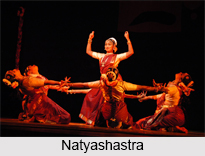
Indian classical music has developed through centuries of complex interactions between various cultures and people. Its earliest known instance can be traced back to the Samaveda which defined and developed hymns that had to be sung in prayer. Thus the earliest performance of music was for the purpose of worship as it was felt that the purest manifestation of divinity was the Naadbrahma or Om, and it is this divine purity that musicians strive to attain. Apart from the Vedas, the earliest mention of music was made in a Sanskrit treatise, Bharat's Natyashastra, which defined the role of music among other art forms. Classical music gradually developed through a combination between traditional ritualistic music and folk music. The 14th and 15th centuries were the periods of greatest development as it now came into contact with Persian music and the Mughal influence in the North and the outcome of this influence was the emergence of the two main schools of Indian Classical music-Carnatic and Hindustani.Indian Classical Music

Schools of Indian Classical Music
Indian classical music split into two branches: the northern Hindustani tradition, influenced by the musical traditions of the Mughals, and the southern Carnatic tradition which remained more or less culturally Hindu and devotional in nature. Both traditions differ from their ancestors and each other. Carnatic music emphasizes on the expertise of the voice rather than that of the instruments. Primary themes include Devi worship, Rama worship, descriptions of temples and patriotic songs. It developed gradually from the ancient musical traditions of South India, upon which ancient Tamil music and Sama Veda had important influences.

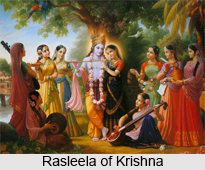
Indian Classical MusicDeveloping a strong and diverse tradition over several centuries, Hindustani music has contemporary traditions established primarily in India, Pakistan and Bangladesh. It was not only influenced by ancient Hindu musical traditions, Vedic philosophy and native Indian sounds but also by the Persian performance practices of the Moghuls. The prime themes of Hindustani music are Rasleela of Krishna and Nature in all its splendour. Hindustani classical music is primarily vocal-centric. The major vocal forms associated with Hindustani classical music are the Khyal, Ghazal, and Thumri. Other styles include the Dhrupad, Dhamar, Tarana, Trivat, Chaiti, Kajari, Tappa, Tapkhyal, Ashtapadi and Bhajan.Both these styles use different and distinct instruments.

Instruments Used In Indian Classical Music
Instruments used in Classical music are typical to the school of music which employs them. A comprehensive overview of these instruments includes veena, sitar, mridangam, tanpura, sarod, flute, sarangi, shehnai, tabla, harmonium and violin. The performance of a composition, based melodically on one particular raga and rhythmically on one Taal, begins with the performers coming out in a ritualized order: drone instruments, then the soloist, then accompanists and percussionists. The musicians begin by tuning their instruments; this process often blends imperceptibly into the beginning of the music.

For more visit the page:

Thursday, 17 September 2020

Indian Athletics


 Indian Athletics has seen many changes, ups, and downs during its journey, so far. The history of Indian Athletics dates back to the Vedic era, when Indian people used to take part in various track and field events. With due course of time, the Indian Athletes started playing the modern day Athletics events in India like Long Jump, High Jump, Discuss Throw, Javelin Throw, distance running etc.


Foundations of Indian Athletics Associations
After Independence, the organizational work of Indian Athletics started. Various Athletics associations started to be established in India for the management of Indian Athletics. The associations in term established various Indian Athletics training centers that helped in bringing up new talents from the grass route level. The Sports Authority of India (SAI) is one such training centre that is aimed at ensuring effective and optimum utilization of various sports facilities in India. The Indian Athletics training centers also teach the Indian Athletes about various rules and terms of Athletics.

Athletic Meets in India
Apart from training and coaching the budding Indian Athletes, the Indian Athletics associations also organize various Athletic meets in India that helps the Indian Athletes to get aware about the competitive nature of Athletics. The Indian Athletes have been participating in the Olympic Games since 1948; however, the performance of the Indian Athletes in Olympics is not very mentionable, since now.

For more visit the page:


Wednesday, 16 September 2020

Nature Cure Treatments, Naturopathy


Nature Cure Treatments, NaturopathyNature Cure Treatments are constructive methods of healing, which believe in the rational use of the freely available elements in nature for removing the basic cause of disease. It is not only a system of healing, but also a way of life, in tune with the internal vital forces or natural elements comprising the human body.

Nature cure is based on the realization that man is born healthy and strong and that he can stay as such by living in accordance with the laws of nature and even a slightest violation of the natural laws of nature result in an abnormal condition of the body called ‘Disease’. Fresh air, sunshine, a proper diet, exercise, scientific relaxation, constructive thinking and the right mental attitude, along with prayer and meditation all play their part in keeping a sound mind in a sound body.

Concept of Nature Cure Treatments
The nature cure system adopts methods of cure, which are in conformity with the constructive principles of nature and aims at the re-adjustment of the human system from abnormal to normal conditions and functions. Such methods remove the accumulation of toxic matter and poisons from the system, without injuring the vital parts of the body in any way. They also stimulate the organs of elimination and purification to function better.

Types of Nature Cure Treatments
Nature Cure Treatments, NaturopathyNature Cure Treatments include different methods for curing the human system using the natural processes. A well-balanced diet, sufficient physical exercise, the observation of the other laws of well-being such as fresh air, plenty of sunlight, pure drinking water, scrupulous cleanliness, adequate rest and right mental attitude can ensure proper health and prevent disease. There are different methods that have been developed to cure the different types of diseases.


For more visit the page:

Tuesday, 15 September 2020

World Heritage Monuments in India


The World Heritage sites are declared by the UNESCO in1972, the General Conference of UNESCO adopted a resolution with overwhelming enthusiasm creating thereby a 'Convention concerning the protection of the World Cultural and Natural Heritage'. Receiving a special attention from UNESCO they are maintained properly for their cultural, traditional and environmental values. India boasts of being a land with numerous monuments, temples and national parks. Hence there are several places throughout the sub-continent which are included in the list of World Heritage sites in India which comprise both cultural and natural properties and are scattered in East, West, North and South regions of India.


The main objectives of the convention were to define the World Heritage in both cultural and natural aspects; to enlist Sites and Monuments from the member countries which are of exceptional interest and universal value, the protection of which is the concern of all mankind; and to promote co-operation among all Nations and people to contribute for the protection of these universal treasures intact for future generations.

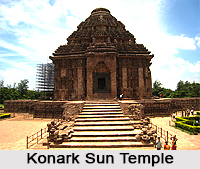
The enlisted sites on the World Heritage list now stands at 830 incorporating both cultural and natural sites, and endowment that is shared by all mankind and the protection of which is our primal concern. From 1977 they have been working in close co-operation with other International agencies like ICOMOS (International Council of Monuments and Sites), IUCN (International Union for the Conservation of Nature and Natural Resources) and ICCROM (International Centre for the Study of preservation and Restoration of Cultural Property).The World Heritage sites in India consist of religious places, historical monuments, national parks and sanctuaries. World Heritage Monuments in IndiaWhile the ancient ruins of Hampi, Bhimbetka and others reflect the splendid Indian architecture, the Sun Temple of Konark, Mahabodhi Temple and other such religious places are also part of the UNESCO recognised World Heritage Sites in India. The magnificent architecture of the Indian monuments, the antiquity of the place and the cultural importance are some of the reasons why these have been included in this prestigious list.


For more visit the page: