Thursday, 20 January 2022

Bodies and Chakras, Yoga


Bodies and Chakras, YogaBodies and Chakras are meant to be the seven bodies and their corresponding chakras that govern the respective type of the bodily aspects of a human. One may desire to be conscious of wearisome areas in one's own body and their corresponding chakras. The seven subtle bodies hold various forms of information and the respective chakra system produces energies that create the aura.

Physical Body
The physical body is the thickest of the seven bodies, the only one which can be seen without psychic vision. Through the physical body, one can articulate, receive and become conscious. These seven chakra levels consist of the physical body.

Emotional Body
The emotional body has a vibratory rate by which one feels and conveys emotions; it is also a passageway to the divine and when fully developed, serves as a channel for feelings of divine love.

Mental Body
Bodies and Chakras, YogaThe mental body is the vibratory rate through which one thinks and reasons out. When one operates in lower levels of the mental body, one’s opinions and attitudes may be heavily influenced by feelings, giving rise to a "desire mind", products of which include preconceptions, opinions and other forms of emotionally-seasoned thinking. Operating at the superior levels of the mental body, one is capable of non-figurative thinking, creativity, logical analysis, mathematics and philosophy.

Intuitional/Compassionate Body
This is the vibratory rate where one feels empathy and has understanding of self and others. It is also a medium for the manifestation of higher forms of love - a gateway to the Divine - functioning as a connecting link between the emotional and the divine levels. In this body, one is above the confines of time and space; there is understanding without the need to go through a process of analysis and judgement. This body is the home of intuition.

For more, visit the link below:

Wednesday, 19 January 2022

Folk Dances of Maharashtra


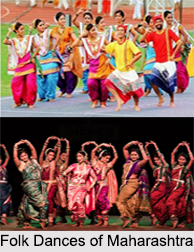
Folk Dances of MaharashtraFolk Dances of Maharashtra have evolved mainly from the rural areas of Maharashtra. Several folk dances in this state are performed during the time of festivalsor other occasions, representing the merrymaking and culture of Maharashtra. The state has been famous for its vibrant music and the folk forms are the true reflection of the society.

Various Folk Dances of Maharashtra
Kala and Dindi are the religious folk dances of this state which are performed with a lot of enthusiasm. Apart from the religious folk dances, there are various other folk dances which are performed in the state of Maharashtra. The folk dances of Maharashtra are detailed below:

Kala: Kala is a form of folk dance which describes the jovial mood of Lord Krishna. This folk dance of Maharashtra includes in its performance a pot which symbolizes fertility. A man breaks the pot and splashes curds over the dancers. The dancers twirl sticks and swords in a feverish battle dance after this ceremonial opening. The most prominent attraction of this dance form is the rhythm and the beat.

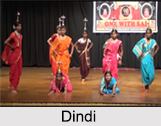
Folk Dances of MaharashtraDindi: Another religious folk dance of Maharashtra is Dindi. This dance is performed mainly during the day of Ekadashi in the Kartik month of the Hindu calendar. This dance portrays Lord Krishna performing naughty deeds and having a playful nature. The dancers dance with the rhythm of the drum beat known as Dindi by encircling the musicians, and thus creating a fantastic musical background.

Koli: Koli Folk Dance is another folk dance of Maharashtra which got its name from fisher folk of the state called 'Kolis'. The Kolis are known for their lively dances and a separate identity. The dances of these fishermen possess elements taken from their occupation, which is fishing. Koli is performed in this state by women and men, who divide themselves in two groups. They depict the boat rowing movement in the Koli dance. The Koli dancers also present the wave movements and the net casting movement as if catching fish.

For more, visit the link below:

Tuesday, 18 January 2022

Tyagaraja, Indian Music Composer


Tyagaraja, Indian Music ComposerTyagaraja was the most well known Carnatic musiccomposer of South India. He was born on May 4 in 1767 AD in a Telugu family, which belonged to the smartha Mulakanadu sect of Brahmins in Thanjavur district of Tamil Nadu. They lived at Tiruvarur, the temple town close to the Thanjavur area. It is said that his family migrated from Vijayanagara Empire and came to the present day Andhra Pradesh and got settled in Thiruvaiyaru.

Early Life of Tyagaraja
Tyagaraja's father Kakarla Rama Brahmam was a Sanskrit scholar and his mother was Seethamma. The name of his mother was found from his song 'Seetamma mayamma' (raga Vasantha/Lalitha, tala Rupakam). But few also take it as 'Shantamma'. He got his name after the name of Lord Tyagaraja, the presiding deity of the temple at Thiruvarur. Telugu was the mother language of the family of Tyagaraja.

The king of Thanjavur Tulaja II gifted a land to Tyagaraja's father, when Tyagaraja was very young. This place was a famous pilgrimage centre of five rivers. Tyagaraja went to the Maharajah's school in Tiruvaiyaru to learn Sanskrit. The worship of Rama, which was taught to him by his father, became a lifelong passion for him. He took his musical training under the great singer Sonti Venkataramanayya. As he attained good knowledge in music, Tyagaraja started composing songs on his favourite deity Lord Rama.

Life in Music for Tyagaraja
There is a doubt regarding which was his first song. But, the 'Ela ni daya' (raga Athana, tala Adi) and 'Namo namo ragbavava' (raga Desika Todi, tala Tisra laghu Adi) are the two songs, which are often cites as being the first one. Tyagaraja also considered the mythical sage Narada as his mentor in music. He has composed many songs indicating the fact. He was a bhakta of Lord Rama and he composed hundreds of devotional songs in the praise of him. Even today, many of his compositions are very popular. The five of his compositions, known as the 'five gems' (Pancharatna Kirthis), are sung during many festivals to honour Tyagaraja.

It is believed that at a very young age, Tyagaraja got married twice, first to Parvati and after her death to her sister Kamalamba. He got a daughter named Seethalakshmi from his second wife. He became the poet-composer in the court of the king of Thanjavur. He wrote poem, which was a joke on himself and Lord Ganesha. His father passed away when Tyagaraja was only 20 years old. After that, their paternal property got divided between Tyagaraja and his brother Japyesa. The ancestral house on Tirumanjana Veedi in Tiruvaiyaru was also partitioned and divided between the two. But his brother made his life miserable, as he was unhappy with few of his songs, which were written on brotherly desolation. This can be seen in his composition 'Anyayamu scyaktira'.

For more, visit the link below:
Monday, 17 January 2022

Ancient Indian Theatre Stages

 Ancient Indian Theatre StagesThe Natyashastra by Bharata Muni depicts the mature form of a classical theatre of ancient India. Natyashastra is the most detail and elaborate of all treatises on dramatic criticism and acting ever written in any language. Bharata Muni here have discussed about a variety of topics in relation to the stage. The topics discussed in this work are: Mythical origin of theatre, its coming down to earth; construction of a play house, a stage, a tiring room and auditorium etc., ceremonies relating to the construction, preliminaries to a dramatic performance (ceremonies including songs, chants dances and instrumental music), choreographic elements (dance, gestures and movements of different parts of the body) and body in some conventional postures, costumes and make-up, classification of plays analysis of their structure, poetic aspects of plays and figures of speech in them, theory of music, metres of songs, chants, elocution, modes of playing instruments (Veena, flutes and drums) and Talas (time measure) to be observed during songs and playing of instruments, Roles and characters in plays (their classification, description and training of actors and actresses, members of theatrical troupes, and qualification of an ideal stage manager), criticism of a dramatic performance. Bharata Muni thus laid the foundation of the classical Theatre by composing the Natysastra.

Types of Playhouse
In Natysastra Bharata has discussed about three types of playhouse, oblong, square and triangular. These three have been further divided into large, medium and small. These measurements could be in terms of dandas or cubits, naturally giving us eighteen different dimensions of playhouse.

According to Natyasastra a regular theatre consists of three parts, the tiring room, the stage and the auditorium. The stage is required to have two Mattavaranis on the two sides. There was existence of permanent and temporary theatres in ancient India.

For more, visit the link below:
https://www.indianetzone.com/57/ancient_indian_theatre_stages.htm


Saturday, 15 January 2022

Naturopathy for Weight Management


Naturopathy for Weight Management, Indian NaturopathyNaturopathy considers Obesity to be less about diet and more about correcting underlying imbalance through lifestyle change that requires a plan of care that supports long-term sustainable health optimization. Naturopathy is the science of healing the natural way. It is a body-mind-spirit system of healing that stimulates the body’s healing power and treats the underlying cause of disease without the use of drugs.

Healthy weight is the main goal for obesity treatment. According to Naturopathy, if calories in is less than calories out then it amounts to weight loss. This is an oversimplification for most people to trying to reduce weight. The naturopathic treatment of obesity works on 6 Principles of Naturopathy:

  • Dietary changes
  • Yoga
  • Obesity treatment by naturopathy
  • Acupressure to control obesity
  • Exercise and Physical activity
  • Behavioural changes


  • Being overweight is primarily an issue of health. Excess weight is seen as an excess condition of toxicity that needs to be eliminated. Obesity is associated with complications in pregnancy, heart disease, diabetes and certain cancers, in particular those related to gastrointestinal tract.

    Naturopathy for Weight Management, Indian NaturopathyThere are several ways to lose weight, be it dieting, exercise, drugs, surgery, etc. More than simply losing weight, what becomes necessary when planning to a weight loss program, is that to take care of all the aspects of repairing the health.

    Medicinal Herbs for Weight Management
    Some of the common herbs that are prescribed for Weight Management are listed below:

  • Betel Leaves: Right from maintaining oral hygiene to treating gastric ulcers to controlling blood sugar levels, betel leaves are highly versatile. Research also says that these leaves are useful in weight loss as well.

  • Gymnema: This herb is an effective natural remedy for diabetes, besides being used for arthritis, diuretic, anaemia, osteoporosis, high blood cholesterol, asthma, constipation, microbial infections, indigestion and anti-inflammatory. The herbal extract is used in dietary supplements since it reduces body weight, blood cholesterol and triglyceride levels.

  • Friday, 14 January 2022

    Tourism in Jammu and Kashmir


    Tourism in Jammu and KashmirJammu and Kashmir is a paradise for tourists. It is situated on the top most part of the country and it is set like a jewelled crown on the map of India. The majestic Himalayan Mountain Range and the Pir Panjal Range in Jammu and Kashmir, represent the awe-inspiring supremacy, beauty, and opulence of Nature.

    Pilgrimage Tourism in Jammu and Kashmir
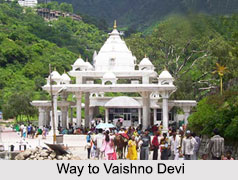
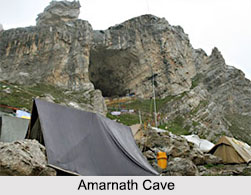
    Jammu and Kashmir is a home to several sacred places of worship. There are many lofty temples, which attract a large number of Hindu pilgrims. The sacred cave shrine of Vaishno Devi, in Jammu and Kashmir, is flooded with devotees almost all throughout the year. A pilgrimage to the Vaishno Devi mandir is regarded as one of the holiest pilgrimages. In the cave there are images of three deities, Mahakali, Mahasaraswati, and Mahalakshmi.Tourism in Jammu and Kashmir The Amarnath cave, located on the mount Amarnath, is another holy place for the Hindus. In the month of Shravan, on the full moon in August, thousands of Hindu religious devotees go on a pilgrimage up to the cave. The Mahakali temple at Jammu, in Jammu and Kashmir, is considered second to the Vaishno Devi in respect to spiritual power. The Khir Bhawani temple, in Srinagar, is a very important Hindu Shrine. It is dedicated to the Hindu goddess Ragnya Devi. Khir Bhawani temple is visited by Hindus in large numbers to offer prayers to seek the blessings of the deity. Charar-e-Sharif in Jammu and Kashmir is the mausoleum of Shaikh Noor-ud-Din Noorani, and is a holy place for the Muslim devotees. This shrine draws people from all division of life to seek his blessings and favour. The most important Gurudwara in Jammu and Kashmir is Chhatti Padshahi Gurudwara, situated near the Kathi Darwaza, Srinagar, which is held in great awe and reverence by devotees of all faiths especially the Sikhs.

    Nature Tourism in Jammu and Kashmir
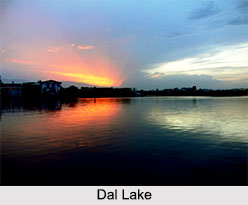
    Tourism in Jammu and KashmirThe beautiful natural landscape of Jammu and Kashmir makes it one of the most coveted destinations in India. The outstanding beauty of the Himalayan Mountain range attracts tourists from all over the world. The valleys in Jammu and Kashmir are an indispensable part of its tourism. The natural splendour of the Kashmir valley is bound to mesmerise the visitors. The Puga valley of Jammu and Kashmir is renowned for its borax and sulphur deposits and hot water springs. This valley is a major crowd pull. The Suru Valley forms the foundation of the Kargil district in Jammu and Kashmir. It is a fertile valley and a much visited destination of Jammu and Kashmir. The Nubra valley of Jammu and Kashmir, portrays some characteristics which are not seen any where else in the Himalayan valleys. The exquisite water bodies of Jammu and Kashmir enhance the beauty of the state. These water bodies are of great environmental and socio-economic implication. The most well-known of these are Dal Lake and Nagin Lake of Srinagar with their multi-faceted eco system and magnificence. National and international tourists horde to the place fascinated by the awe-inspiring beauty of the places.

    For more, visit the link below:
    Thursday, 13 January 2022

    Forms of Kabaddi


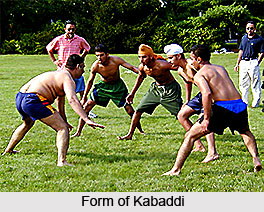
    Forms of KabaddiKabaddi in India is recognised as a traditional and one of the most popular sports. Kabaddi is played quite extensively all over the country. The game has passed a long way since its inception in India, during the pre-historic period. The Indian people love to play the game very much, as it does not need many kinds of equipments to play. Another reason is that, the game helps one to be physically fit and also teaches about how to defend and attack at the same time.

    Different Forms of Kabaddi in India
    There are various forms of Kabaddi in India. These forms atre played in different regions in India.

    Amar
    This form of Kabaddi is played based on points scored by both sides. Here, the play field has no specific measurements and 9 to 11 players constitute each of the teams. In this form of Kabaddi, there is no out and revival system or Lona (a bonus of two points awarded to the team that gets all opponents out). However, it is a time bound game. According to the rules of this form of Kabaddi, all the players are bound to remain within the court throughout the match. By this, the players can give their best, without the fear of having to miss out a great deal of action.

    Gemini / Gaminee
    In this form of Kabaddi, each of the sides comprises nine players and this form brings with it an inherent fear. The fear is of being called "out", as it literally means that the player has to go out of the court and wait there until all his opponents face the same fate or inflict the same consequence on his team-mates. The team that becomes successful in getting all the opponents out is awarded a point. This system is being used in the modern version of Kabaddi also; however, there is a slight variation. In the modern version, a team successful in getting all the opponents out is awarded a bonus of two points called the Lona. In the Gemini or Gaminee form of Kabaddi, a team is revived once all its members are dismissed, and the game continues till five or seven such points are gained by either of the teams. This game is not time bound, and sometimes it can be quite frustrating for a player who is out early, to wait until a Lona is achieved.

    Forms of KabaddiSurjeevani
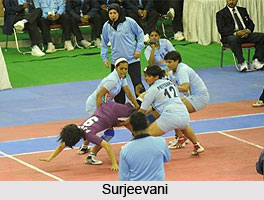
    This is one of the forms of Kabaddi that has a lot of resemblance with the modern version of the game. In this form, the players who are out are instantly revived and the game lasts for 40 minutes with a 5-minute break in between. Each of the team comprises nine players in this form, and a Lona is usually awarded to the team that succeeds in getting all the opponent team members out. The team that earns the maximum points, after the limited duration of the game, is declared the winner. The Surjeevani form of Kabaddi is played on a bigger field in comparison to the other two forms of the game. The rules of this form of Kabaddi regarding out and revival system of a player, have great resemblance with that of Modern Kabaddi.

    Modern Kabaddi
    This is the latest of all the forms of Kabaddi and it is actually a synthesis of all the other three forms, with notable changes with regards to rules and regulations. Here, each team consists of 12 players, out of which seven are on court at a time, and five in reserve. The two teams collect points by either touching or capturing an opponent member. Both the teams aim for higher points within the time limit of 40 minutes, by alternating in defence and offence. There are two halves, each of 20 minutes in this form of Kabaddi, with a break of five minutes. In modern form of Kabaddi, the playground is required to be level and soft and is also required to be made of earth, manure or saw dust. The measurement of the playing area is 12.50 mteres x 10mters, divided by a line into two halves. Each half of the ground measures 10 meters x 6.25 meters and there shall be strip of one meter wide on each side of the play field that is called lobby. The side that wins the toss first sends a 'raider', who enters the opponents' court chanting, 'kabaddi-kabaddi'. The repeated clear sound of Kabaddi within the course of one’s respiration is called cant.

    For more, visit the link below:
    Wednesday, 12 January 2022

    South Indian Dances


    South Indian Dances, Indian DancesSouth Indian Dances are originated in the temples as a means to praise the Gods and Goddesses which were performed by Devadasis and gradually the concept of dancing girls originated who started nurturing the art of dance in the courts of the kings. South Indian states comprise of Tamil Nadu, Andhra Pradesh, Karnataka, and Kerala which offer varied and interesting culture, cuisine and art form. Though visibly diverse forms exist in the southern states, yet they are a part of the important culture of India.

    The South Indian Culture is mainly a celebration of the eternal universe. Thus South Indian Dances are the embodiment of the outline of expression, social interaction or presented in a spiritual or performance setting. The states have popular form of dances which include classical, folk, tribal and modern forms. The dances of South India have a long and elaborate history. During the medieval era in India, South Indian Dances prospered with the support of various kings and art-admirers.

    Different types of South Indian Dances
    The dances such asBharatnatyam, Kuchipudi, Kathakali and Mohiniattam thrived as popular classical dances of the region. These dance forms originated from the days of the creation of the Natya Shastra. Following are the different types of South Indian Dances:

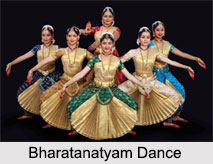
    Bharatanatyam Dance: The classical Indian dance Bharatanatyam was invented from the art of temple dancers in the South India state of Tamil Nadu. Bharata Natyam is considered to the oldest form of dance and mother of all other types of classical dances in India.

    Kathakali Dance: Kathakali is one of the most attracting classical Indian dance-drama presented by well trained artists. Kathakali was originated in Kerala in 17th century and got well-liked at every corner of India.

    South Indian Dances, Indian DancesKuchipudi Dance: Kuchipudi is the most well-liked traditional dance form in South India performed with violin, flute and the tambura instruments and the characters first initiates themselves by the dharavu. Kuchipudi Dance originated in Andhra Pradesh state and got its name from Kuchipudi village near the Bay of Bengal.

    Odissi Dance: Odissi is the oldest existing dance form in India that originated from state of Odisha. Odissi Dance is traditional and a very old style of dance performed in the temples.

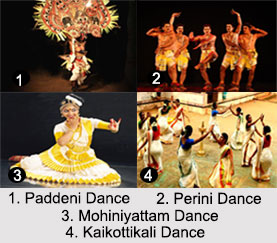
    Mohiniyattam Dance: The Mohiniyattam is a popular dance form with a drama in dance, performed with delicate gestures and footwork. Mohiniyattam is another classical dance style from Kerala and one of the eight principal Indian classical dances.

    Padayani or Paddeni Dance: Padayani or Paddeni is connected with the festivals of certain temples. Padayani dancers wear Kolams of different shapes, colours and designs, painted on the stalks of areca nut fronds.

    Kummi and Kolattam Dance: Kummi is a very easy form of dance, where dancers form circles and clap as they dance. Kummi and Kolattam are the dances performed by the tribal womenof Tamil Nadu, during certain festivals.

    Kargam and Puli Vesham Dance: It is performed by men, in which they balance pots, filled with raw rice and enclosed by a tall pointed bamboo frame covered with flowers, on their head.

    For more, visit the link below: