Saturday, 5 March 2022

Temples of Uttarakhand


Temples of UttarakhandThe state of Uttarakhand is located in the northern part of India, more specifically, in the Himalayas. This state is divided into two parts namely, Garhwal and Kumaon and has a total of 13 districts. This state, also called Devbhumi has major rivers, nationally protected monumentsmuseumsforest reserves, national parks, hill stations and mountain peaks. They have not only beautified this state but have also made Uttarakhand one of the famous tourist destinations of India. Temples of Uttarakhand are no exception in this regard. They have also added value to the tourism of this state.

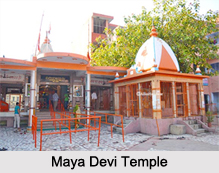
Badrinath Temple
Badrinath Temple is located in town of Badrinath in Chamoli district. This temple is devoted to Badrinath (Badrinarayan), a form of Lord Vishnu. The idol of Lord Vishnu is believed to be one of eight ‘swayam vyakta kshetras’ or self-manifested statues of Vishnu. This temple was established in 9th century C.E. by Adi Shankara.

Kedarnath Temple
Kedarnath Temple is situated at a height of about 3,583 m on the Garhwal Himalayan range near the River Mandakini in Kedarnath. This temple is dedicated to Kedarnath (Lord Shiva). It is believed that this temple was constructed in the 8th century CE.

Yamunotri Temple
Yamunotri Temple is situated in the western region of Garhwal Himalayas in Uttarkashi district. The ruling deity of this temple is Goddess Yamuna. This temple was established in the 19th century.

Chandi Devi Temple
The district of Haridwar serves as a home to Chandi Devi Temple. This temple is dedicated to Goddess Chandi Devi. It was created in 1929 by the King of Kashmir namely, Suchat Singh. Adi Shankaracharya, the savant of Bharat is credited with the installation of the main murti of Chandi Devi in the temple in the 8th century.

For more, visit the link below:

Friday, 4 March 2022

Cuisine of Uttar Pradesh


Cuisine of Uttar PradeshThe cuisine of Uttar Pradesh is just as diverse as its geography. It consists of both vegetarian and non-vegetarian dishes. Majority of the Uttar Pradesh cuisine comprise of simple and sober vegetarian meals. Dal, roti, subzi and rice constitute the essentials of daily food habits of the locals. Pooris and kachoris are relished on special occasions. Some of the popular preparations of Uttar Pradesh are Dum Biryani, Kebabs, Kulcha-Nihari, Pasanda Kebab, Mutton Kofta, Allahabad ki Tehri etc. ‘Banarasi Paan’ is famous all over the India for its taste and ingredients. It is taken after having the food as peppermint to digest them.

Awadhi Cuisine of Uttar Pradesh
Awadhi Cuisine is native to the city of Lucknow, capital of Uttar Pradesh. Most of the dishes of this region have been influenced by Mughal cooking techniques. The Awadhi cuisine has similarities to those of Kashmir and Punjab. The most famous cuisines in Oudh or Awadh are ‘Kebabs’, ‘Biryani’ and ‘Nihari’. Because of the Muslim dominance most of the items of this region chiefly concentrate on meat. Among the kebabs, ‘Shami’, ‘Kakori’, ‘Boti’ and ‘Galauti’ kebabs are the specialty of Lucknow and so are ‘Kulcha-Nihari’ and ‘Biryani’. Exceptional feature of the Awadhi tradition of cooking is the ‘Dum Pukht’ process of preparing food. In this exclusive style, food is sealed in large pots called Handi and placed over slow fire, allowing the ingredients to be cooked in their own juices under the strict supervision of specialist experts known as ‘Bawarchi’ (cooks). Hence, Dum Biryani (both in chicken and mutton) is one of the most popular and dominant dish originated from Awadhi cuisine. Awadh is also known as the place for ‘Nawabi Foods’.

Common Dishes of Uttar Pradesh
There are several popular veg and non-veg preparations in Uttar Pradesh. Wheat is the staple food of the state; breads are mostly used to prepare ‘Naan’ or ‘roti’. Plain rice and all kinds of vegetables are also included in the list of common dishes of Uttar Pradesh. Some of the common dishes of the state are Aaloo ParathaBaati chokha/ LittiBoondi, Chaat, Chilla, Chole Bhature, Daal Bhari Puri, Daal MakhaniDum Bhindi, Fara, Gobhi Mussallam, Kachori, Kadi Chawal, Pakoda Kadhi, Kofta, Korma, Laapsi, Meethi Roti, Methi Paratha, Nimona (Green Pea & Potato Curry), Palak PaneerPakoda, Pasanda Kebab (skewered boneless mutton), Pasanda Paneer, PuriRaitaRajma, Rizala, Saada Paratha, Samosa, Seek Kebab, Shab Deg (a winter dish, turnips and mutton balls with saffron), Sooji Halwa, Sultani Dal, Tehri etc.

For more, visit the link below:
Thursday, 3 March 2022

Tanjore Paintings


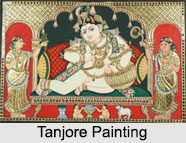
Tanjore Paintings, Indian PaintingsTanjore Paintings have a very rich heritage. Tanjore Painting is one of the most popular forms of classical South Indian painting. It is the local art form of Thanjavur city of Tamil Nadu. The pattern of art had flourished in Thanjavur, the capital of the Chola dynasty and since got such a name as Tanjore paintings.

The premise of Tanjore painting is essentially religious and spiritual and the art is renowned for its artistic portray of legendary characters and themes. The Brihadeeswara temple, for instance, houses several illustrations of Thanjavur paintings in the form of Chola murals and Nayak paintings. Even the Maratha palace is an ideal place to explore these paintings.

History of Tanjore Paintings
Tanjore Painting of India originated in the 16th century, under the sovereignty of the Cholas. The drop of the Vijayanagar Empire and dismiss of Hampi in the Battle of Talikota in 1565 CE effected the immigration of painters who had been dependent on the aid of the empire. Some of them roamed to Thanjavur and worked under the patronage of the Thanjavur Nayakas. Then, the Maratha rulers defeated the Thanjavur Nayakas and began to raise the Thanjavur atelier. During the Gupta Empire around 18th century, Tanjore had reached the peak of success. The Tanjore painting adorned the interiors of the palaces and soon found their place in every household. The "Saraswathi Mahal Library" in Tanjore displays the famous Tanjore paintings.

Features of Tanjore Paintings
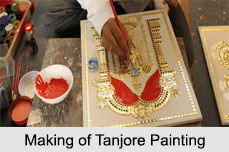
Tanjore Paintings, Indian PaintingsTanjore paintings are famous for rich colour, exterior prosperity and compressed work of art. Tanjore Paintings are embellished with rich precious stones, glass pieces and gold that add colour to the surrounding. To include 3d effect, the painters use limestone. Subjects of most of the paintings are Hindu gods and goddesses and saints. The paintings are made on wood and cloth made canvass. Tanjore Paintings come in three finishes classic, stamped and exceptional. High quality of 22-carat gold foil is used to make sure that it lasts for generations.

The characteristic of Tanjore painting is that the figures in the paintings have a round body and egg shaped effulgent eyes and are surrounded by curtains and arch. These paintings illuminate in the dark room. The artists then sketches the meticulous pictures on the canvas while the paste of limestone and fastening substance is used during adorning and engraving ornaments into the paintings. The pillars, dresses, arch and thrones of the Tanjore paintings are gilded with the gold leaves and gems of different colours. After this, colours are painted on the sketch. For outlines dark brown is usually used. Red is preferentially used as the background colour but sometimes green is also used. The yellow colour is used for the Goddesses while for Gods it varies: blue for Lord Vishnu and white for Nataraja. Previously artists used the natural colours made from vegetable dyes. The portfolios of the old Tanjore paintings were restricted to the drawings of the divine figures. But now-a-days the modern artists explore new dimensions. They also start depicting the presiding deities of the famous temples.

For more, visit the link below:

Wednesday, 2 March 2022

Ujjayi Pranayama, Yoga Breath Exercise


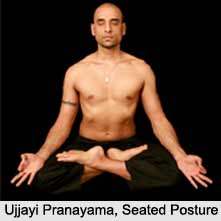
Ujjayi Pranayama, Yoga Breath Exercise‘Pranayama’ in Sanskrit is a yoga breathing exercise essential to develop a deep and thorough yoga practice. Amongst the wide varieties of Pranayama that are popular throughout India, the ‘Ujjayi Pranayama’ is a prominent one. Pranayama is one of the classical Eight Limbs of Yoga, according to the ‘Yoga Sutras’, the ancient yoga text compiled by the sage Patanjali. There are about 70 types of Pranayama mentioned in the traditional texts. These breathing techniques in addition to deepening the yoga practice, calm and invigorate the body and the spirit, benefiting life of the mat. The Ujjayi Pranayama is one such exercise that calms the mind and warms the body. The technique involves breathing deeply through the nose, slightly contracting the throat and filling the lungs completely. It is widely used in Ashtanga and Vinyasa yoga practices. In the Ashtanga yoga, Ujjayi Pranayama is mentioned as the archetypal yoga breathing practice of controlling ‘prana’, the life force, through paused breath.

Etymology of Ujjayi Pranayama
The word ‘Ujjayi’ is a concoction of Sanskrit words 'ud' and 'jayi' which together mean "to be victorious" or "to conquer". ‘Pranayama’ is formed by two words ‘prana’ which means life force, particularly breath, and ‘ayama’, which refers to extend or draw out, thus signifying extension of breath. Quite ideally therefore, in Ujjayi Pranayama, the lungs of the practitioner are fully expanded as that of a mighty conqueror. It is also often referred to as "victorious breath." Given the sound it makes when performed correctly, this breath is also sometimes called the "ocean breath" or "hissing breath". Many yoga teachers simply refer to it as "Ujjayi breath".

Technique of Ujjayi Pranayama
Ujjayi Pranayama is a diaphragmatic breathing technique, first filling the lower belly, activating the first and second ‘chakras’ (energy points or nodes in a subtle body, one of a series of psycho-spiritual elements of living beings), rising to the lower rib cage to activate the third and fourth ‘chakras’ and finally up to the upper chest and throat. Unlike some other forms of Pranayama, the Ujjayi breath is typically performed with ‘asana’ (the place and posture while practising yoga) practice. The distinct exercise aids in stretching the breath whilst warming it, by prior letting it into the lungs and therefore heating the body. The 3 breathing techniques of ‘Puraka’, ‘Kumbhaka’ and ‘Rechaka’ form the wholesome process of Ujjayi Pranayama.

Puraka: The process of single inhalation has been termed as Puraka. In Ujjayi Pranayama, Puraka is therefore the act of inhalation through the nose, where the "ocean sound" is created by moving the glottis as air passes in. As the throat passage is narrowed and thus, so is the airway, the passage of air through which creates a hissing sound.

Kumbhaka: In Pranayama, Kumbhaka stands for a particular breathing technique. The apt process of suspension and retention of breath is the key element in Kumbhaka, performed while inhalation, termed as ‘Antara Kumbhaka’ (retaining the air after slightly forceful inhalation, thus filling the lungs with more air than normal) as well as exhalation, termed as ‘Bahya Kumbhaka’ (suspending the breath after exhaling more air than normal).

For more, visit the link below:

Tuesday, 1 March 2022

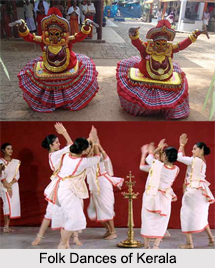
Folk Dances of Kerala


Folk Dances of KeralaFolk Dances of Kerala reflect the temperaments and moods of the native people. Kerala has a rich variety of folk dances. There are around 50 popular folk dances in the state. Religious influence is explicitly visible in the dances which are performed during harvests, sowing of seeds, festivals, etc. Most of the folk dances of Kerala are accompanied by songs which are sung by the dancers themselves or occasionally by a group of musicians. The costumes and ornaments of these folk dances differ with places.

Some of the popular Folk Dances of Kerala are as follows:

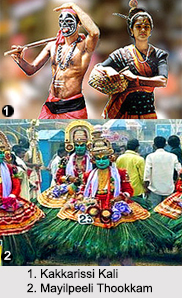
Kakkarissi Kali
Kakkarissi Kali is a group dance which is prevalent among the Kuravas of Thiruvananthapuram district. It also contains wild beatings of primitive drums like Para, Veekkan, Chenda, etc.

Folk Dances of KeralaDappu Kali
This dance is named as Dappu Kali because ‘dappu’, a kind of musical instrument, is used in the dance. It is a group-dance of the Moplahs of Malabar.

Sarpam Thullal
Sarpam Thullal, a ritual folk dance of Kerala is done to appease the snake God in the temples. Many ancient families in Kerala have Kavus, which are the special snake shrines, whom they worship regularly, on various occasions.

Kaavadiyattom
Kaavadiyattom is mainly performed as an offering in temples of Lord Subrahmaniam. For performance, a number of dancers gather in temple, dressed in yellow or rose colour costumes. They stand in a row and dance with the rhythmic beatings of instruments like UdukkuChenda and even Nadaswaram.

Kolkkali
This is a mixed dance in which both men and women participate. The performers move in a circle, striking small sticks and keeping rhythm with special steps. The circle expands and contracts as the dance progress.

Bhadrakali Thullal
This is a devotional offering of Pulayas and this is the only community who performs this ritual, for Goddess Bhadrakali.

For more, visit the link below: