Showing posts with label meditate. Show all posts

Friday, 24 July 2026

Anganyasa and Karanyasa: Sacred Rituals of Bodily and Hand Consecration

 Anganyasa and Karanyasa are two closely related yet distinct ritual practices in Hindu religious tradition. They are primarily performed by Brahmins during the early hours of the morning as part of daily prayers and spiritual observances. These sacred rites involve the recitation of specific mantras accompanied by symbolic hand movements and the touching of different parts of the body. The practices of Anganyasa and Karanyasa are intended to purify the devotee, invoke divine presence, and prepare both the body and mind for worship.


Understanding Anganyasa

The term Anganyasa is derived from the Sanskrit words anga (limb or body part) and nyasa (placing or establishing). It is a ritual in which sacred mantras are recited while touching designated parts of the body, such as the head, heart, shoulders, eyes, and other limbs. The symbolic act represents the installation of divine power within the body, transforming it into a sacred vessel fit for prayer and meditation. 

Anganyasa emphasizes the belief that the human body can become a manifestation of divine consciousness. By sanctifying different parts of the body through mantra and touch, the practitioner seeks spiritual purification, mental focus, and a deeper connection with the deity being worshipped. The ritual is often performed before the recitation of Vedic hymns, devotional chants, or other forms of worship. 

Understanding Karanyasa

Karanyasa is a complementary ritual that focuses specifically on the hands. Since the hands are the primary instruments used in religious ceremonies, they are first ritually purified and consecrated before performing acts of worship. The practice establishes divine energy within the palms and fingers, sanctifying them for sacred actions. 

During Karanyasa, the devotee recites prescribed portions of a mantra while using the thumb of the right hand to sequentially touch or stroke the fingers of both hands. The ritual includes touching both the front and back surfaces of the fingers, ensuring that every part of the hands is symbolically infused with divine energy. The practice is generally concluded by rubbing the palms together and gently patting the backs of the hands, signifying the completion of the ritual consecration. 

Ritual Significance

Both Anganyasa and Karanyasa combine the spoken power of mantras with symbolic physical gestures. These coordinated actions are believed to awaken spiritual awareness and establish the presence of divine energy within the practitioner. The rituals also promote concentration by synchronizing speech, movement, and intention, allowing the devotee to approach worship with a purified body and focused mind. 

Although the two practices differ in their focus—Anganyasa sanctifying the body and Karanyasa consecrating the hands—they are frequently performed together. Their combined observance serves as a preparatory rite before the commencement of more elaborate religious ceremonies, meditation, or the chanting of sacred texts. 

Anganyasa and Karanyasa remain important elements of traditional Hindu ritual practice. Rooted in the philosophy of consecrating the human body as an instrument of divine worship, they symbolize the harmonious union of mantra, gesture, and devotion. By purifying the body and sanctifying the hands, these rituals prepare the devotee to perform religious duties with reverence, discipline, and spiritual awareness, preserving a practice that has been followed for generations in Hindu worship.


Monday, 9 March 2026

Meditation: A Path to Mental Clarity and Inner Balance

 Meditation is an ancient practice that focuses on training the mind to achieve clarity, calmness, and heightened awareness. Originating from spiritual traditions across the world, meditation has evolved into a widely accepted method for improving mental and physical well-being. In modern times, it is practiced not only for spiritual growth but also for stress management, emotional balance, and overall health. By encouraging individuals to focus their attention and regulate their thoughts, meditation promotes a state of relaxation and inner harmony.


Historical Background of Meditation

The roots of meditation can be traced back thousands of years, particularly within ancient Eastern traditions. Practices associated with meditation were integral to spiritual systems in India, China, and other parts of Asia. Early scriptures and philosophical teachings emphasized meditation as a means to achieve self-realization and spiritual enlightenment. Over time, the practice spread across cultures and religious traditions, including Buddhism, Hinduism, and later Western philosophical movements. Today, meditation is widely practiced in both secular and spiritual contexts, making it accessible to people from diverse backgrounds.


Types of Meditation

Meditation is not a single practice but a broad category encompassing various techniques designed to cultivate mindfulness and concentration. One of the most common forms is mindfulness meditation, which involves observing thoughts and sensations without judgment. Another widely practiced method is focused meditation, where attention is directed toward a specific object, sound, or breathing pattern. Transcendental meditation emphasizes the repetition of a mantra to promote deep relaxation and mental clarity. Additionally, loving-kindness meditation aims to develop compassion and positive emotions toward oneself and others. Each technique serves the same fundamental purpose of calming the mind and increasing awareness.


Health Benefits of Meditation

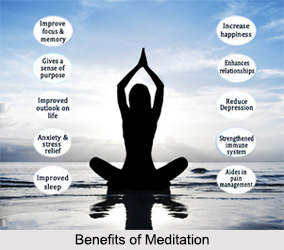
Numerous studies have demonstrated that meditation offers significant health benefits. Regular practice helps reduce stress and anxiety by lowering the levels of stress hormones in the body. It also improves concentration and cognitive functioning, enabling individuals to maintain focus in daily activities. Meditation has been linked to better emotional regulation, helping individuals manage negative emotions more effectively. Furthermore, it supports physical health by lowering blood pressure, improving sleep quality, and strengthening the immune system. As a result, meditation is often recommended as part of a holistic approach to well-being.


Meditation in Daily Life

Incorporating meditation into daily life does not require extensive time or complex preparation. Even a few minutes of quiet reflection each day can produce noticeable benefits. Many individuals begin by setting aside a specific time in the morning or evening to sit in a calm environment and focus on their breathing. Over time, meditation becomes easier and more natural as the mind learns to settle into a state of stillness. Consistency and patience are essential, as the benefits of meditation gradually develop through regular practice.


Meditation, like yoga, serves as a powerful tool for cultivating mental clarity, emotional balance, and physical well-being. Rooted in ancient traditions yet relevant in modern society, it continues to offer practical benefits for individuals seeking peace and self-awareness. By dedicating time to meditation, individuals can develop a deeper connection with their inner selves while fostering a healthier and more balanced life.

Wednesday, 3 September 2025

Meditation to Find Happiness


In today’s fast-paced world, stress has become an inevitable part of life. Balancing work, relationships, and personal responsibilities often leaves people feeling drained and overwhelmed. Meditation, an age-old practice rooted in mindfulness and awareness, offers a simple yet powerful way to manage stress and cultivate happiness. By training the mind to focus and remain calm, meditation can transform the way one experiences daily challenges. 

Techniques of Meditation

There are various meditation techniques that individuals can practice depending on their needs and lifestyle: 

1. Mindfulness Meditation

This technique involves observing thoughts, emotions, and sensations without judgment. Practitioners focus on the present moment, often beginning with attention to breathing. Mindfulness meditation helps reduce overthinking and increases clarity of mind. 

2. Breathing Exercises

Simple breathing techniques, such as deep diaphragmatic breathing or alternate nostril breathing, calm the nervous system. These practices slow down the heart rate and promote relaxation, making them effective for reducing immediate stress. 

3. Guided Meditation

Guided sessions, often led by instructors or through audio recordings, involve visualization exercises where practitioners imagine peaceful settings or positive scenarios. This method is especially helpful for beginners who find it difficult to meditate on their own. 

4. Transcendental Meditation

In this technique, individuals silently repeat a specific mantra to settle the mind. It allows deep relaxation and helps release tension stored in the body. 

5. Loving-Kindness Meditation

Also known as Metta meditation, this practice focuses on generating feelings of compassion and love toward oneself and others. It encourages emotional healing and fosters stronger social connections. 

Benefits of Meditation

The benefits of meditation extend beyond stress reduction, influencing physical, emotional, and mental well-being: 

1. Stress Reduction

Meditation lowers cortisol levels, the hormone associated with stress. With regular practice, individuals experience a calmer mind and improved ability to handle stressful situations. 

2. Improved Emotional Health

By fostering mindfulness and self-awareness, meditation reduces negative thinking patterns. It promotes emotional stability, reduces anxiety, and can even alleviate symptoms of depression. 

3. Enhanced Concentration and Focus

Meditation trains the mind to remain attentive, improving concentration and memory. This is particularly beneficial for students, professionals, and anyone seeking greater productivity. 

4. Better Sleep

Stress often disrupts sleep patterns. Meditation helps relax the body and mind, making it easier to fall asleep and achieve deeper rest. 

5. Greater Happiness and Well-being

Meditation fosters inner peace by shifting focus from external pressures to internal balance. Practices like loving-kindness meditation nurture positive emotions, leading to greater contentment and a happier outlook on life. 

Finding Happiness Through Meditation

Happiness is not simply the absence of stress but a state of inner fulfillment. Meditation creates a pathway to this state by encouraging individuals to live in the present moment, appreciate small joys, and cultivate resilience against life’s challenges. With consistent practice, meditation becomes more than a stress-relief tool—it becomes a way of life that nurtures harmony, clarity, and genuine happiness.

Wednesday, 2 March 2022

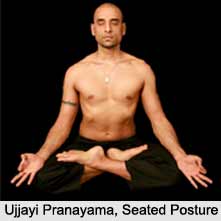
Ujjayi Pranayama, Yoga Breath Exercise


Ujjayi Pranayama, Yoga Breath Exercise‘Pranayama’ in Sanskrit is a yoga breathing exercise essential to develop a deep and thorough yoga practice. Amongst the wide varieties of Pranayama that are popular throughout India, the ‘Ujjayi Pranayama’ is a prominent one. Pranayama is one of the classical Eight Limbs of Yoga, according to the ‘Yoga Sutras’, the ancient yoga text compiled by the sage Patanjali. There are about 70 types of Pranayama mentioned in the traditional texts. These breathing techniques in addition to deepening the yoga practice, calm and invigorate the body and the spirit, benefiting life of the mat. The Ujjayi Pranayama is one such exercise that calms the mind and warms the body. The technique involves breathing deeply through the nose, slightly contracting the throat and filling the lungs completely. It is widely used in Ashtanga and Vinyasa yoga practices. In the Ashtanga yoga, Ujjayi Pranayama is mentioned as the archetypal yoga breathing practice of controlling ‘prana’, the life force, through paused breath.

Etymology of Ujjayi Pranayama
The word ‘Ujjayi’ is a concoction of Sanskrit words 'ud' and 'jayi' which together mean "to be victorious" or "to conquer". ‘Pranayama’ is formed by two words ‘prana’ which means life force, particularly breath, and ‘ayama’, which refers to extend or draw out, thus signifying extension of breath. Quite ideally therefore, in Ujjayi Pranayama, the lungs of the practitioner are fully expanded as that of a mighty conqueror. It is also often referred to as "victorious breath." Given the sound it makes when performed correctly, this breath is also sometimes called the "ocean breath" or "hissing breath". Many yoga teachers simply refer to it as "Ujjayi breath".

Technique of Ujjayi Pranayama
Ujjayi Pranayama is a diaphragmatic breathing technique, first filling the lower belly, activating the first and second ‘chakras’ (energy points or nodes in a subtle body, one of a series of psycho-spiritual elements of living beings), rising to the lower rib cage to activate the third and fourth ‘chakras’ and finally up to the upper chest and throat. Unlike some other forms of Pranayama, the Ujjayi breath is typically performed with ‘asana’ (the place and posture while practising yoga) practice. The distinct exercise aids in stretching the breath whilst warming it, by prior letting it into the lungs and therefore heating the body. The 3 breathing techniques of ‘Puraka’, ‘Kumbhaka’ and ‘Rechaka’ form the wholesome process of Ujjayi Pranayama.

Puraka: The process of single inhalation has been termed as Puraka. In Ujjayi Pranayama, Puraka is therefore the act of inhalation through the nose, where the "ocean sound" is created by moving the glottis as air passes in. As the throat passage is narrowed and thus, so is the airway, the passage of air through which creates a hissing sound.

Kumbhaka: In Pranayama, Kumbhaka stands for a particular breathing technique. The apt process of suspension and retention of breath is the key element in Kumbhaka, performed while inhalation, termed as ‘Antara Kumbhaka’ (retaining the air after slightly forceful inhalation, thus filling the lungs with more air than normal) as well as exhalation, termed as ‘Bahya Kumbhaka’ (suspending the breath after exhaling more air than normal).

For more, visit the link below:

Saturday, 29 January 2022

Zen Meditation


Zen MeditationZen Meditation or Zazen is a concept of seated meditation. Zen Meditation is performed when seated and this is a discipline performed to calm the body and mind and experience insight into the nature of existence. The Zen Buddhists are known as 'Meditation.

Buddhists' and basically the Zazen is the study of self. Originally Zen referred to a sitting practice alone, but now it is widely used to meditate in any posture.

Zen Meditation has a long history of practice. It is thought that during his enlightenment, Buddha was in a seated meditation. The meditation practice has continued for two thousand five hundred years from generation to generation. The most important aspect of Zen Meditation is its spread from India to China, to Japan, to other parts of Asia and then finally to the West. Zen Meditation is very easy to describe and practice but needs an orderly manner to perform. The great master Dogen said about Zazen "To study the Buddha Way is to study the self, to study the self is to forget the self, and to forget the self is to be enlightened by the ten thousand things."

The common practice in meditation is to see the body, breath and mind separately, but in Zen meditation they come together as one reality. The first important thing is to pay attention to the position of the body. The body has a way of communicating outwardly to the world and inwardly to oneself. Our mind and breath depends a lot on our position of the body. Since the evolution of Buddhism, the most effective posture practiced in Zazen is the pyramid structure of seated Buddha. During Zen Meditation seating on a floor is recommended because it is a very stable way. A 'Zafu' or a small pillow is used to lift the back just a little, so that the knees can touch the ground. With the bottom on the pillow and two knees touching the ground, the body takes a tripod shape that gives three hundred and sixty degree stability.

For more, visit the link below:

Tuesday, 11 May 2021

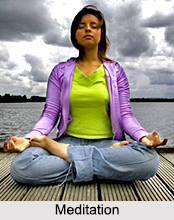
Meditation


Meditation"Meditation is the dissolution of thoughts in Eternal awareness or pure consciousness without objectification, knowing without thinking, merging finitude in infinity". - Swami Sivananda.

Meditation is an intense spiritual as well as personal experience. Meditation may be described as a state of concentrated attention on a thought or on awareness. This thought process is, to turn the attention inward, to the mind itself. Meditation is used for personal development, better concentration, to achieve peace and harmony for spiritual closeness to God, to become healthier and even to impart calmness, love, purity, well being and truthfulness.

Etymology of Meditation
The word Meditation comes from the Latin word ‘meditatio’, which originally indicated any physical or mental exercise that is done scientifically. Meditation is considered to be the component of Eastern religion, where it has been practiced for more than 5000 years. Later the concept evolved into the more specific meaning, "contemplation", where awareness is brought forward on the reality of the present moment without deliberately encouraging imagination.

Meaning of Meditation
One of the meanings of the word meditation is to control the activities of the mind, speech and body. Steadying the mind or focusing the concentration is one of the prime objectives of meditation.

Thus, meditation can be termed as any one of the following:

  • A state of relaxed concentration over one’s mind while keeping the reality of the present moment intact
  • A state of freedom of the mind, when the person’s mind is free of any kind of thoughts
  • A state of spiritual concentration, which brings one closer to God.
  • A state of concentration which helps one focus the mind on a single object or thought
  • A state of detachment from the outside world, pressure and tensions
  • A state of attaining not only a healthy mental condition but physical growth as well
  • A process, which makes one look towards the positive side of the world, keeping all the negativity behind


  • Stages of Meditation
    MeditationAll of the above teamed with various process and types of meditation go a very long way in enhancing ones personality, changing ones attitude towards life, encouraging someone and building inner growth related to self-confidence and motivation. Posture, preparation, length of the period of the practice of meditation, all contribute to various forms of meditation like the Transcendental Meditation, Yoga Nidra, Vipassana and Mindfulness Meditation. While meditation is a continuous process, it can be said to have three stages:
  • Concentration (Dharana)
  • Meditation (Dhyana) and
  • Enlightenment or absorption (Samadhi)


  • Once the attention gets intermeshed then concentration slowly turns into meditation or dhyana. It is then the person who effortlessly merges with the object of concentration, which might either be the present moment or could be the Divine Entity.

    For more, visit the link below:

    Thursday, 29 October 2020

    Meditative Asanas, Yoga


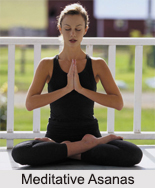
    Meditative Asanas, YogaMeditative Asanas are the postures one assumes in order to sit or stand comfortably for extended durations, enabling one to concentrate and meditate without interference from muscle proprioceptors. The idea behind Meditative Asanas is merely to position oneself in such a way so that one’s limbs cease to send stimuli to the mind, allowing the practitioner to concentrate on meditation.

    Meditative Asanas have been consistently mentioned in various Indian Text on Yoga over the ages, including the Puranas and the Vedas, and have formed the core around which a comprehensive physical culture of asana practice was developed.

    Types of Meditative Asanas
    Asanas classified as meditative are considered highly important in the canonical Yoga texts. There are 12 meditative postures listed in various Hatha Yoga manuals, and variations on the same have been devised over the years, of which 16 are known, resulting in a total of 28 Meditative Asanas. Only 19 of these, however, can be considered real Meditative Asanas, since the others are corrective or cultural.

    Postures of Meditative Asanas
    All the meditative Asanas are similar, and invariably involve keeping the neck and body erect to let the blood flow freely along the spine and to avoid pressure on the visceral organs. The legs are rooted to the ground to maintain a steady posture. Meditative Asanas are also performed with either of two gazes; the nasal gaze and the frontal gaze (focusing on the nose or directly in front) and also involve the three Bandhas: the chin lock, abdominal compression and anal contraction. Some hand and finger symbolisms known as ‘Mudras’, are also performed in some meditative Asanas.

    For more visit the link below:

    Monday, 19 October 2020

    Types of Meditation


    Types of MeditationTypes of Meditation are numerous which assert to keep the mind calm and composed. The breath tends to become slow, deep and regular. The mind revolves about the continuous rhythm of inhalation and exhalation which provides a natural object of meditation. Meditation can be initiated with the simple process of breath watching. Yoga and meditation is associated with a direct correlation between one’s breath and one’s state of the mind.

    Meditation is a method which is considered to be an ancient approach for achieving a peaceful mind and attaining concentrated mind. It is practised to achieve a mind-body connection and to realize specific developmental goals. This very method is considered to be about 4,000 years old and is present since the beginning of Yoga. There are many different types of meditation that are practiced at present. Thus, the benefits from number of different types of meditation are also felt. All meditation types are found to be effective in reducing stress. These methods eliminate stress by creating detachment. Meditation compliments the physical world as the final step in spirituality, and honours the problems of life as the stimuli of growth.

    There are various types of meditation and they can be categorized into broader approaches.

    Concentrative Meditation: Concentrative meditation is the form that mainly focuses the attention on the breath, on an image, or a sound (mantra), which can be a soothing music. Concentrative meditation is practised by sitting quietly and focusing the attention on the breath. It concentrates on opening up the mind, to sense the five given sagacity and allows the mind to achieve greater awareness and clarity.

    Mindfulness Meditation: Mindfulness meditation involves in opening the attention to become aware of the continuously passing parade of sensations, feelings, images, thoughts, sounds, smells, touch and so on, without becoming involved with each of them. It is the process of watching the mind and simply witnessing whatever goes through the mind. Thus a non-reactive state of mind can be achieved.

    Types of MeditationTranscendental Meditation: Transcendental meditation is a diverse type of meditation which is related to repetition of a specific sound or a mantra. This mantra or sound has to be repeated or practiced according to specific procedure. The mind is engrossed in settling down or is “transcended” and a state of restful alertness is experienced.

    Thursday, 18 August 2016

    Technique of Transcendental Meditation

    It is a simple, natural and effortless procedure which needs to be practiced for 20 minutes twice a day, sitting comfortably with closed eyes. This practical method requires no effort or concentration, no special skills and neither any change in one’s lifestyle. To know more visit the page below:
    http://www.indianetzone.com/13/technique_transcendental_meditation.htm