Friday, 9 April 2021

Kabaddi in India, Indian Traditional Sport


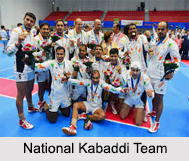
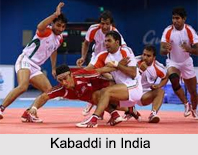
Kabaddi in India, Indian Traditional SportKabaddi in India is counted among the most common and widely played traditional sports. There is a popular belief that Kabaddi originated in the Indian state ofTamil Nadu, almost 4,000 years ago. According to a legend, this game came into existence, when a boy hit another boy for his candy. The boy who was hit chased the boy who hit him, and hit him back and ran away. The feature of holding the breath while chasing, was added later when the game evolved. Kabaddi is the game, where one person play against seven people. Kabaddi is also known as the "Game of the Masses" and it has simple, easy to comprehend rules.

The game of Kabaddi requires minimum equipment while having all the ingredients of thrill and excitement and audience appeal. Sometimes, the people enjoy the game of Kabaddi more than any other popular game, like Football or Basketball. This is a team game that requires both skill and power on behalf of the players, and it also combines the characteristics of wrestling and rugby.

Legends Attached to Kabaddi
In India, Kabaddi is quite famous and popular in the state of Punjab. There is also a popular belief that the game has its roots in the way Abhimanyu was killed in Chakravyuha by the Kauravas. Kabaddi is a rather simple and inexpensive game, and it does not require a massive playing area, or any expensive equipments. There are also some other ancient scripts that refers to the existence of Kabaddi in India. In MahabharataArjuna had a unique talent in the game of Kabaddi, as he was able to go inside the wall of enemies, destroy them all and come back unscathed. According to the Buddhist literature, Gautam Buddha used to play Kabaddi for recreation in the early era. Apart from those manuscripts, history also reveals that princes of yore loved playing Kabaddi and took the game as a means to display their strength and won their brides. With due course of time, the game earned a lot of popularity in the Southern Part of Asia. For this inexpensive nature, the game of Kabaddi has become extremely popular in rural India.Kabaddi in India, Indian Traditional Sport

History of Kabaddi
Kabaddi is probably the only game of offence and defence in which attack is an individual attempt, while defence is a combined effort. The Tamil Language speaking people know the game in various names like Kabaddi, Sadugudu, Gudugudu, Palinjadugudu and Sadugoodatthi (Tamil). The word 'Kabaddi' may have originated from the Tamil words kai (hand) and pidi (catch).

Naming of Kabaddi
Kabaddi is also known as "Chedugudu" or "Hu-Tu-Tu" in southern parts of India, "Hadudu" (Men) and "Chu - Kit-Kit" (women) in eastern India, and as Kabaddi in northern India. The sport has earned a lot of popularity in the other Asian nations like Nepal, Bangladesh, Sri Lanka, Japan and Pakistan.

Kabaddi in Modern India
In modern times, Kabaddi in India attained National status in the year 1918. The state of Maharashtra is considered to be a pioneer for bringing the game to the National platform. The standard rules and regulations for Kabaddi were also formulated in 1918; however, the rules were brought out in print in the year 1923. An All India Tournament was also organized at Baroda following these rules, in 1923. Since then, the journey of Kabaddi in India has always been towards success and more popularity and numerous tournaments are now organized all over India throughout the year. The game got international exposure for the time during the 1936 Berlin Olympic Games. The game was also introduced in the Indian Olympic Games at Calcutta (now in Kolkata), in 1938. 

To know more, visit the link below:

Thursday, 8 April 2021

Indian Tribal Paintings


Indian Tribal PaintingsIndian tribal paintings possess an inimitable sensitivity, as tribal folks possess a passionate awareness, massively varying from the urbanised population. India presents before the world perhaps as sunny a field as any solitary country in the world pregnant with a perfect specimen of all the minute varieties of Oriental life; of Oriental scenery, Oriental nations and Oriental manners, and it is open to the globe to explore these peculiarities to the last degree while enjoying perfectly European security. And tribal paintings cater to such Orientalism, inexhaustible charisma of the "others"; a perfect expression of their life redrawing their passion and mystery.

Tribal painting is the mirror of the energy of the respective art of various tribal groups. It is a living and changing art form, which changes with time, necessity, environment, memories, global influences and experiences of these people.

Wall Painting
Wall painting is the simplest art in any tribal society. The custom of making designs on walls and floors for some festivals or other religious purposes is common in the Indian tribal scenario. Every year when they repair or whitewash their surroundings, they either recreate a fresh design or recreate the previous one with fresh colours.

Tribal Painting of different regions of India
The Saura painting of Odisha which is done by the 'Sauras' is one of the important paintings of the eastern zone which consists of sublime portraiture of human beings, horse, elephant and sun with symbolic meanings behind each. Painted to appease the Gods and ancestors, these paintings are noted for their elegance, charm, iconography, aesthetic and ritualistic association. This form of art is mostly found in Rayagada districtGajapati district and Koraput of Odisha.

Another Indian tribal art of eastern zone is Santhal Painting which is portrayed by Santhal tribes, located in BiharOdisha and West Bengal. It is painted freehand and reflects their perception of life. This painting possesses the simplest themes like harvesting, field, happy family, dance, domestic violence, quarrel, wine party, Gods and Goddess on the canvas. They are done on a handmade paper with poster colors. The Khovar and Sohrai paintings occupy a significant part in the tribal art of India. Khovar is the mural art form practiced by tribal women artists during the marriage season from January to June. The term Khovar is a popular term for the painted rock art caves across India.

The Khovar is the Bridal Room where the decorated nuptial room is a tribal tradition. The decoration is done in the bride's house by the bride's mother. These two forms of Indian tribal painting redraw Indian illustrious lines in painting and artistic lineage. Kurmi villagers are close to the rock art sites. Tigers and elephants are common motifs in their form of Indian tribal painting along with peafowl and the legendary man-like bird Chibha which runs on legs and stands upright and has hands. This art is colorful, vibrant and evocative, reminiscent of the natural expression of people.

For more, check the link given below:

Wednesday, 7 April 2021

History of Indian Folk Music


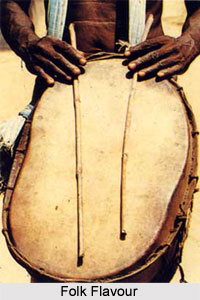
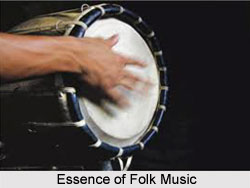
History of Indian Folk MusicHistory of Indian folk music has a unique tale to tell as, it has, over the years, developed an elaborate flexible melodic character. From one end to the other, it has influenced the music of the common man of India. Despite the fact that India is home to variety of races with diverse musical traditions, a uniform cultural mode of expression of monolithic character can be discerned among the population. Folk-music is a part and parcel of this system.

Folk-music of India adheres to monophonic structural system. According to scales of modern raga modes, the classification of music will prove more suitable. Ancient music and folk-music are based on their respective techniques, derived from elementary methods of formative processes of the general system easily explainable through Indian musicological principles. It is true that connecting links between folk-tunes and ragas have not been properly established as yet. And these features are important facets of this discipline.

But it can be seen that the folk-music of West Bengal and adjacent Indian states actually belongs to the same stock as is in vogue in other parts of the country, having originated somewhere at a certain stage and hybridized and developed later. They are akin to the basic system and are understandable by application of the same basic principles.

Indian Folk MusicAs per legends, folk-lore in India has its primordial source in the Vedic literature, so also has the folk-music Folk-ballads of the Rig Veda. Vedic gathas in the Satapatha Brahmana and Aitareya Brahmana are the earliest specimens of marriage songs, the types of which were used by folk people. All this information dates back to 1500-500 B.C. No direct information about primitive music and folk-music is normally available. In the Vedic age, the people of the higher society endeavoured to tame Asuras-Raksasas, and divert their attention to their own. These are but general ideas about conversion of folk and local tunes into standard music.


For more, visit the link given below:

Tuesday, 6 April 2021

Food in Vedic Period


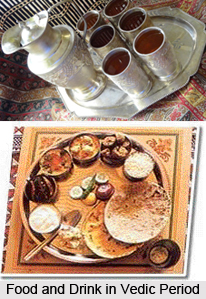
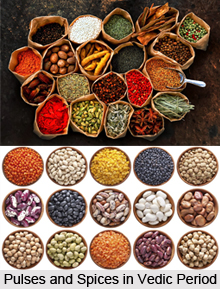
Food in Vedic Period, Food in Ancient IndiaFood in Vedic period begins with cereals like rice and barley which formed a major part of food in Vedic period. The Vedic literature throws considerable light on the food and drink habits of the people of the ancient India. Among the food grains, the Rig Veda repeatedly mentions barley, particularly fried barley. These were used in preparing sweet cakes which were either dipped in ghee before eating or consumed with "Somarasa" prepared with curd and butter which formed a major part of Vedic meal. Along with this the food of the Vedic period include large varieties of pulsesdairy products, meat, salts and spicessweets and a variety of beverages which reflect the culture of Vedic period that came through the food habits of the Indian people.

Different Food Products in Vedic Period
Food in Vedic period included both vegetarian as well as non-vegetarian food items. The agrarian culture of Indian society allowed the Vedic people to cultivate a number of pulses like masura, masa, arahar, grams, peas and kulattha along with rice, wheat and barley form a major part of food in Vedic society. Among the dairy products, milk formed the principle ingredient of the Vedic society. Generally cow’s milk was consumed after boiling it. Milk was used for preparing some more items in which milk was milked with either with soma juice or messed with grains to create a whole meal of barley. Along with cow’s milk of buffaloes was also included which has been mentioned in Rig Veda and post- Rig Veda period. Largely milk was taken in the form of fresh milk, or boiled milk or with cream. Along with various forms of milk goat milk also formed a major part of Indian society that is mentioned in the Rig Vedas.

Food in Vedic Period, Food in Ancient India
Food in Vedic period along with these included some non vegetarian items like meat. Rig Veda mentions that whatever is offered as sacrifice including animals shall be consumed by the priest. This allows the people of Vedic age to take animal flesh as food items. Along with such food items the food of Vedic period is prepared with large variety of salts and spices such as brassica, turmeric and long pepper which are frequently mentioned in Rig Veda and other Vedic literature. Within the fruits and vegetables the Rig Vedic civilization saw distinctive use of olives and Kharitira, while mango and amlaka has been frequently referred in Vedic literature. Vegetables like cucumber and lotus stalk were used as major food items. Other food items include edible roots of the lotus and bottle gourd and saphaka which have been used as food items.

Beverages in Vedic Period
Food in Vedic period also gave special importance to beverages particularly Soma Juice which has been mentioned in all the rituals as well as all the occasions and has been treated as the most auspicious drink. The Vedic literature lays down a list of intoxicating beverages which are largely prepared by fermenting the fruit extracts. Most important among them was Soma Ras that was sweet and delicious in taste.

For more, check the link given below:

Monday, 5 April 2021

Mohiniattam, Indian Classical Dance


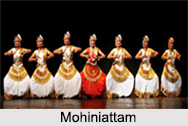
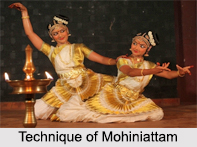
Mohiniattam, Indian Classical DanceMohiniattam is one of the major classical dance styles of India. There is a considerable amount of disagreement among scholars regarding the origin of this traditional dance form of Kerala. It has only been in recent decades that Mohiniattam has risen in popularity and acceptability. Mohiniattam though born out of the fusion of Kathakali and Bharatnatyam, has developed its own identity.

Etymology of Mohiniattam
It is said in the word Mohiniattam, 'Mohini' means a maiden who charms the onlooker and 'attam' means dance. The Mohiniattam dances describe episodes from the epics and legends through graceful steps, rhythmic movements of her arms and facial expressions.

Origin of Mohiniattam
The first reference to Mohiniattam is found in Vyavaharamala composed by Mazhamangalam Naryanam Namboodiri, assigned to the 16th century A.D. Most of them agree that it was during Maharaja Swathi Thirunal's rule in the 16th century that Mohiniattam achieved its refined form. Mohiniattam is mentioned in some 18th century texts, but the practical aspect of the style was revived in the 19th century, Swathi Tirunal, the enlightened ruler of Travancore in Southern Kerala promoted its study. He composed many of the musical arrangements and vocal accompaniments, which are hymns in praise of Lord Vishnu, and provide the musical backdrop for the Mohiniattam dancers' performance.

History of Mohiniattam
Mohiniattam evolved from the state of Kerala which also has an association with the old tradition of Lasya style of dancing. The temple sculptures of the state are the earliest manifestations of Mohiniattam or other dance forms similar to it. Mohiniattam poses are also palpable from the various feminine sculptures that adorn the 11th century Vishnu temple at Trikodithanam, and the Kidangur Subramanya Temple.

The Lasya theme was incorporated by Malayalambards and playwrights, a fact evident from the text-based records starting from the 12th century. The 16th century book titled ‘Vyavaharamala’ written by scholar, poet, author and astrologer Mazhamangalam Narayanan Namboodiri is the first known book that mentions the term Mohiniattam in connection with a payment due to a Mohiniattam dancer. While discussing about various performing art forms of Kerala, renowned poet Kunchan Nambiar in his 17th century book ‘Gosha Yatra’ mentioned about Mohiniattam. By that time this dance form had emerged as one of the classical art forms of the state.

Under the patronage of the princely states, the dance form of Mohiniattam developed between the period of 18th and 19th centuries but as the British colonialism spread, there was a stark decline in various classical dance forms. Eventually social and economic conditions associated with Devadasis of South India and the nautch girls of North India added with contempt and despicable attitude from the Christian missionaries and British officials, who held them as harlots, disgraced such systems. Furthermore, the Christian missionaries launched anti-dance movement in 1892 to stop such practice. They caricatured the facial expressions and sensuous gestures emoted during temples dances, which thus stigmatized all Indian classical dance forms including Mohiniattam that saw its decline in the princely states of Cochin and Travancore.

Mohiniattam, Indian Classical DanceType and Theme of Mohiniattam
Mohiniattam is also known as the 'Dance of the Celestial Female Magicians'. It is essentially a solo dance, performed by female dancers. However, the basis of this dance also signifies the transformation of Lord Vishnu into a female form and showcases the concept of Ardhanarishvara, which is the combination of the male and female as one. Like many other dance forms, this was also restricted to the Devadasis. The theme of Mohiniattam is love and devotion to God. Delicate themes of love are performed with suggestive abhinaya, subtle gestures, rhythmic footwork and lilting music. Mohiniattam signifies the dance of enchanters that causes destruction of the wicked and brings delight and pleasure to the good. Unlike other classical dance forms, Mohiniattam draws upon secular and social themes rather than religious mythology, the age-old stirring tales from the Ramayana, the Mahabharata and the Indian Puranas.

For moe, visit the link below:

Saturday, 3 April 2021

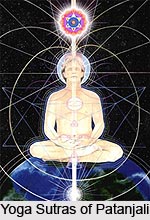
Samadhi Pada , Patanjali Yoga Sutra


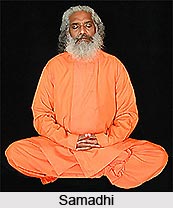
Samadhi Pada , Patanjali Yoga SutraPatanjali Yoga Sutra consists of 196 sutras which are divided into four chapters or padas. Samadhi Pada is the first chapter that defines yoga and the movement of the citta (loosely know as mind) and how to reach samadhi state. It is directed towards those who are already highly evolved to enable them to maintain their advanced state of cultured, mature intelligence and wisdom. The aim of Patanjali Yoga Sutra was to attract those rare souls who were already on the brisk of self-realisation.

"Ishvara is the supreme Purusha, unaffected by any afflictions, actions, fruits of actions or by any inner impressions of desires. In Him is the complete manifestation of the seed of omniscience. Unconditioned by time, He is the teacher of even the most ancient teachers. The word expressive of Ishvara is the mystic sound OM." -- These words are inscribed in the first chapter of Yoga sutra, called the Samadhi pada. Samadhi pada clearly explains the significance of yoga as well as of Samadhi, both meaning deep meditation and supreme devotion. For aspirants gifted with perfect physical health, mental poise, discriminative intelligence and a spiritual bent, Patanjali Yoga Sutras provides guidance in the disciplines of practice and detachment to help them attain the spiritual zenith, the vision of the soul (atma-darsana).

In Samadhi Pada, Patanjali defines the yoga as "Citta Vritti Nirodha", meaning to stop the movement of Citta or the mind. But if the individual is not able to stop fluctuation or movement of citta, since it is imbued by three qualities or the gunas, namely the Sattva, Rajas and Tamas. The soul is pure but mismatch in the qualities of citta that leads to joy and sorrow. In this chapter Patanjali explains that through abhyasa and vairagya, a person can experience Samadhi. Abhyasa means practice and Vairagya means detachment. Patanjali has elucidated that Citta has three components namely the mind (manas), intelligence (buddhi) and ego (ahamkara) which combine into one composite whole. The term 'self', represents a person as an individual entity. Its identity is separate from mind, intelligence and ego, depending upon the development of the individual.

Self also stands for the subject, as contrasted with the object, of experience. The Samadhi Pada states that the eastern thought takes one through the layers of being, outwards from the core, the soul, towards the periphery, the body and inwards from the periphery towards the core. The purpose of this exploration is to discover experience and taste the nectar of the soul. Samadhi Pada further states that the mind permeates and engulfs the entire conscious and unconscious psychological process and the activities of the brain. All vital activities arise in the mind. According to Indian thought, though mind, intelligence and ego are parts of consciousness, mind acts as the outer cover of intelligence and ego and is considered to be the eleventh sense organ.

In Samadhi Pada, Patanjali explains that the brain is a part of the mind. As such, it functions as the mind's instrument of action. The brain is part of organic structure of the central nervous system that is enclosed in the cranium. It makes mental activity possible. The brain controls and co-ordinates, mental and physical activities. When the brain is trained to be consciously quiet, the cognitive faculty comes into its own, making possible, through the intelligence, apprehension of the mind's various facets. Clarity of intelligence lifts the veil of obscurity and encourages quiet receptivity in the ego as well as in the consciousness, diffusing their energies evenly throughout the physical, physiological and spiritual sheaths of the soul.

Samadhi Pada describes God, Paramatman or Purusa Visesan as the Universal soul, the seed of all. The individual soul, jivatman or purusa, is the seed of the individual self. The soul is therefore distinct from the self. Soul is formless, while self assumes a form. The soul is an entity, separate from the body and free from the self. Soul is the very essence part of the core of one's being. Like the mind, the soul has no actual location in the body. It is latent and exists everywhere. The moment the soul is brought to awareness of itself, it is felt anywhere and everywhere. Unlike the self, the soul is free from the influence of nature and is thus universal. As well nurtured seed causes a tree to grow, and to blossom with flowers and fruits, so the soul is the seed of man's evolution. From this source, asmita sprouts as the individual self. From consciousness, springs ego intelligence, mind and the senses of perception and organs of action.Samadhi Pada , Patanjali Yoga Sutra

Before describing the principals of yoga in Samadhi Pada, Patanjali speaks about consciousness and the restraint of its movements. Yoga is defined as citta vrtti nirodhah meaning a perfect and divine one with the soul. Citta is the individual counterpart of mahat, the universal consciousness. It is the seat of the intelligence that sprouts from conscious, antahkarana, the organ of virtue and religious knowledge. If the soul is the seed of conscience, conscience is the source of consciousness, intelligence and mind. The thinking processes of consciousness embody mind, intelligence and ego. The mind has the power to imagine, think, attend to, aim, feel and will. The mind's continual swaying affects its inner sheaths, intelligence, ego, consciousness and the self.

The culture of consciousness entails cultivation, observation and progressive refinement of consciousness by means of yogic disciplines. Explaining the causes of fluctuations in consciousness, Patanjali further shows how to overcome them, by means of practice, abhyasa and detachment or renunciation, vairagya. If abhyasa and vairagya are diligently observed, restraint of the mind becomes possible in much shorter span of time. Then, one may explore what is beyond the mind and taste the nectar of immorality or soul-realization. If practice is slowed down, then search for soul-realization becomes clogged and bound in the wheel of time.

For more, visit the link given below:

Thursday, 1 April 2021

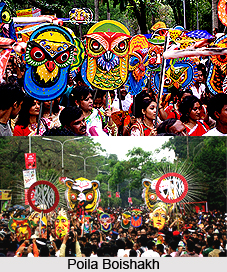
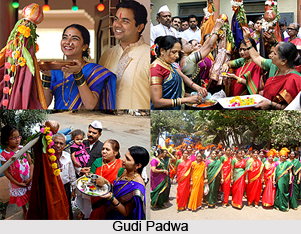
Indian New Year Festivals


Indian New Year Festivals Indian Religious Festivals are being celebrated in commemoration of some saints, gurus and prophets, the gods and goddesses or events celebrating their victories. Religious ceremonies, enthusiasm paralleled with ample fun and celebration marks the Indian festivals.

Festivals of India play a major role in spreading unity in diversity, with emphasis on communal harmony. Some famous religious festivals mark the advent of the seasons and some mark the celebration of cultural events. Famous festivals in India are joyously celebrated all over the country. During any festive season, the whole of India brightens up and there is lot of excitement in the air. If you drop in during any of the festival time, watching or taking part in the festivities, can be an interesting experience.

There is a big list of the religious festivals that are celebrated in India. In a secular country like India people light up their homes with as many lights on Diwali as on Christmas, the fireworks are as loud as on Onam. The colours of Holi are spread across the castes and creeds. On the occasion of Raksha Bandhan an unspoken pledge is exchanged between, a brother and sister cementing their fraternal relationship. Hindus commemorate the birth anniversaries of their deities as Ram NavamiMaha ShivratriJanam Ashtami similarly, the Sikhs remember their gurus on Gurpurab.

Many of the festivals are subject to the lunar calendar. Most of the days of the festivals are not determined by the pre-set dates of a lunar calendar, but according to the waxing and the waning of the moon. The Islamic festivals are celebrated according to the Muslim or the hijri calendar. The month long fasting is completed with Eid-ul-fitr. The Islamic year commences with Awal Muharram.

Indian New Year FestivalsChristian religious festivals in the country have the entire colour that is found in Indian celebrations. This is especially true of the festivals associated with particular shrines, such as Vailankanni in Tamil Nadu. They are colourful events involving thousands of people from all denominations and religions.

The pockets which were under French and Portuguese rule add the distinct features of those European countries. Goa is special where Christian festivals are concerned, and Goan celebrations have a character and spontaneity of their own. Some of the oldest and most beautiful Indian churches are in Goa and, apart from the regular Christian festivals, these churches observe days particular to them with masses, feasts and processions.

Fairs of religious importance have always been a part of India and will stay so forever to add to India's colour and integrity. The various Indian fairs see people near and far participating and celebrating. The party environment raises everyone's spirits. Fairs on the whole mean an occasion and opportunity to make new friendships and renew old ones. Fairs are all about partying, eating, shopping, celebrating, relations and making merry.

The great diversity of Indian religious beliefs is projected through the various festivals that are celebrated in our country. They arise from the innate desire of man to seek diversion from humdrum activities and they help in symbolizing, reflecting and enriching social life in specific cultural setting.

For more, visit the link given below: