Friday, 11 December 2020

Tourism in Madhya Pradesh


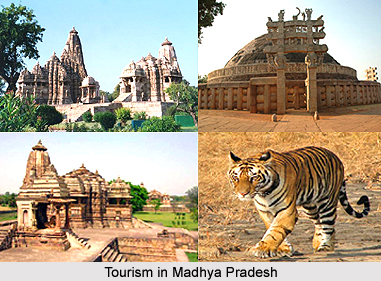
Tourism in Madhya PradeshTourism in Madhya Pradesh has a lot to offer to its tourists. The mystic land of Madhya Pradesh encompasses numerous monuments, delicately carved temples, forts and palaces, which are scattered all over the land. Madhya Pradesh has a number of important pilgrimage centres too. Ujjain and Omkareshwar Temple hold special religious significance.

The medieval cities, wildlife sanctuaries and holy pilgrimage centres of Madhya Pradesh present an unforgettable experience to the tourists. There are several world heritage sites in the state that is also known as the Heart of India. The different cities dotted all over the state are the treasure trove of a lot of tourist attractions that still keep exciting the visitors by the impression of its eternal charm.

Perfectly preserved medieval cities, refreshing and enchanting wildlife sanctuaries and some of the holiest and most revered pilgrim centres offer a fulfilling experience to the tourists. Tranquil beauty of Pachmarhi, glittering splendour of Marble Rocks and roaring sound of Dhuandhar Fall at Bhedaghat, Kanha National Park (Kanha Tiger Reserve), Barasingha and Bandhavgarh National Park, its prehistoric caves and wildlife are some of the major attractions of the state of Madhya Pradesh. GwaliorManduDatia, Chanderi, Jabalpur, the priencely state of Orchha, Raisen, Sanchi, Vidisha District, Udaygiri, BhimbetikaIndoreand Bhopal are the places well known for their historical monuments. Maheshwar, Omkareshwar, Ujjain, Chitrakoot and Amarkantak are major centres of pilgrimages.

The unique Khajuraho Temples are famous all over the world. The temples of Orchha, Bhojpur and Udaypur attract large number of tourists from everywhere. Archaeological treasures are preserved in the museums at Satna District, Sanchi, Vidisha, Gwalior, Indore, Mandsaur district, Ujjain, Rajgarh District, Bhopal, Jabalpur, Rewa District and many other places. The holy shrines of the state; Amarkantak Hills, and Narmada Rivervalley, Satpura mountain ranges and Vindhyachal hills, the diamond land of Panna, have magnificent beauty.

Pilgrimage Tourism in Madhya Pradesh
There are a number of religious centres in the state of Madhya Pradesh. The intricately carved temples and inventively built mosques are some of them, which deserve a mention. These magnificent temples and mosques were built over in the different periods under the rule of different emperors. These are now a much-revered pilgrimage centres for tourist seeking a spiritual enlightenment. Located magnificently in the most natural surroundings, Madhya Pradesh's sacred places have an exclusive appeal. Ujjain and Omkareshwar in Madhya Pradesh are important centres to the Hindu pilgrims. The Gopal Mandir in Ujjain is dedicated to Lord Krishna. It is necessary to see for the pilgrim tourists. The Mahakaleshwar Jyotirlinga temple at Ujjain, dedicated to Lord Shiva, draws thousands of pilgrims every year. The Kumbha Mela is organised in every twelve years in Ujjain. The Jama Masjid is located at Mandu in Madhya Pradesh. It has such ideal acoustics that a murmur from the pulpit is heard clearly in the farthest corner of the enormous patio. The Jain temple of Mandu is flocked by several Muslim pilgrims who come from every nook and corner of the world. Sanchi in Madhya Pradesh is an important centre for Buddhist pilgrims. The Buddhist vihara is of great religious significance to the Buddhist tourists. The Buddhist Temples in Sanchi were built to honour the teachings of the Lord Buddha. The temples make for an exceptional tourist spot visited by a large number of tourists and hence are pretty notable among the holy places in Sanchi.

Nature Tourism in Madhya Pradesh
Madhya Pradesh is a nature lover's paradise. The state is endowed with numerous wild life sanctuaries, parks, gardens and lakes. One of the most captivating sites to visit in Madhya Pradesh is the Van Vihar National Park, a safe home for white tigers. There are jungle safaris, which are arranged for the visitors sometime during the afternoon when these rare creatures come to the edge for evening meal. The zoo also houses tigers, lions, leopards and Himalayan bears. The Madhav National Park is the home to a wide variety of deer, chinkara, blue bull, black buck, barking deer and four-horned antelope. Also seen in the park are wild dog and sloth bear. Peacocks are also seen in large numbers. In the nearby Karera Bird sanctuary is to be found the Great Indian Bustard, an endangered species that has been rescued by sensitive conservation. Ranging from the low hills of Hoshangabad district and rising into the Mahadeo Hills at PachmarhiBetuland Chhindwara, the forests explode into liveliness at Kanha, one of the best wildlife sanctuaries in the world.

For more visit the link given below:

Thursday, 10 December 2020

Cricket Leagues in India


Cricket Leagues in IndiaCricket Leagues in India is considered as a celebration by the population of India as the game has achieved the status of religion in the country. India has a rich history of organizing several domestic level tournaments.

The history of domestic and international based Cricket leagues in India dates back to almost the same time of India's first participation in international Cricket. Most of the domestic Cricket tournaments in India have been named after the pioneers of Indian Cricket, who have made the largest contributions to the well being and development of Cricket in India.

Cricket Leagues in India are mainly organised at different levels like district level, state level, or national level and various Indian Cricket Associations are in charge of organising these tournaments. The Board of Control for Cricket in India (BCCI) supervises most of the domestic level cricket leagues organised in India.Cricket Leagues in India

Indian Premier League
Indian Premier League is the newest and successful professional Twenty20 cricket league in India contested during April and May of every year by franchise teams representing Indian cities. The league was founded by the Board of Control for Cricket in India (BCCI) in 2007. The title sponsor of the IPL in 2016 was Vivo Electronics, thus the league is officially known as the Vivo Indian Premier League.

Indian Cricket League
Indian Cricket League was a private cricket league funded by Zee Entertainment Enterprises that operated between 2007 and 2009. Its two seasons included tournaments between four international teams and nine domestic teams notionally located in major Indian cities like KolkataMumbaiBengaluruChennaiDelhiHyderabadSecundrabad as well as the champions Lahore Badshahs who were based in Lahore, Pakistan and Dhaka Warriors based in Dhaka, Bangladesh. The matches were played in the Twenty20 format. There was also a planned domestic 50-over tournament, but this did not eventuate. While its establishment pre-dated the Indian Premier League, the ICL folded in 2009. Aside from commercial factors, the ICL lacked the support of the Board of Control for Cricket in India and International Cricket Council (ICC).Cricket Leagues in India

Karnataka Premier League
Karnataka Premier League is an Indian Twenty20 cricket league established by the Karnataka State Cricket Association (KSCA). It was introduced in August, 2009. The domestic cricket competition is modeled along the lines of the popular Indian Premier League (IPL). KPL is sponsored by Karbonn Smart, is a tribute to the late president of KSCA Srikantadatta Narasimharaja Wodeyar thus the league is officially known as the Karbonn Smart Karnataka Premier League.

Maharashtra Premier League
Maharashtra Premier League is another domestic and regional Indian Twenty20 cricket league established by the Maharashtra Cricket Association (MCA). The domestic cricket competition is modeled along the lines of the popular Indian Premier League (IPL). Just like the Indian Premier League, whose title sponsor is Sakaal Media Group.

For more visit the link below:

Wednesday, 9 December 2020

Zodiacs, Astrology


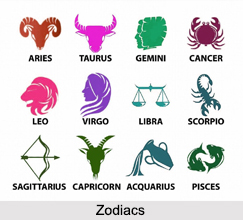
Zodiacs, AstrologyZodiacs are the twelve signs listed in a horoscope which is closely tied to the Earth’s movement through the heavens. The Sun travels around the Earth once each year. Within the space of that year the Sun moves through all twelve signs of the zodiac, spending approximately one month in each sign. The sign that the Sun was travelling through at the time of an individual’s birth is his or her ‘Zodiac’ or ‘Sun Sign’. The position of the Sun in the birth chart governs ones individuality.

The signs are derived from the constellations that mark out the path on which the sun appears to travel over the course of a year. The zodiac belt is the band of stars that surrounds the earth like a ring with the 12 main constellations that forms a great ring around mankind. Amongst the millions of stars in the sky, the 7 planets and two invisible planets (in Vedic Astrology) are in constant motion. Each Zodiac is named after patterns, or configuration of animals and features that can be visualised by looking at them in the starry nights. The figures got linked with the symbolic trait endowed by that zodiac to the earth’s inhabitants. Astrology is guided entirely by zodiac signs.

Twelve Zodiacs in Horoscope
There are twelve zodiac signs in Horoscope, and each sign has its own strengths and weaknesses, its own specific traits, desires and attitude towards life and people. The zodiac sign of a person is identified by analyzing the projection of the position of planets, and the Sun and the Moon on the Ecliptic at the moment of birth.

Elements in Zodiac Signs
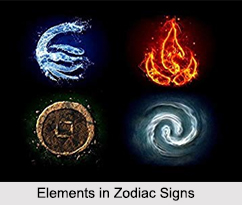
Twelve Zodiacs in Horoscope are categorized by the very element that represents them namely Water, Earth, Fire and Air. They are as follows:

Zodiacs, Astrology
  • Fire Signs: Fire signs are AriesLeo and Sagittarius. People born under these signs posses a fiery drive and liveliness in their behaviour. The constant urge to accomplish things is very evident in those lustrous sign holders. Fire also gives a great deal of pride and warmth to the people.
  • Water Signs: Water signs are CancerScorpio and Pisces. The signs ruled by water are very intuitive. Water can take the shape of the vessel in which it is held. This shows the adaptability of the element and people born in it.
  • Air Signs: Air signs are GeminiLibra and Aquarius. People born in these zodiacs have a fast and at times multidirectional quick thinking. The movement of air is uncontrollable and changeable and so is the basic thought process of these people.
  • Earth Signs: Earth signs are TaurusVirgo and Capricorn. Once formed across the period of time, earth takes the definite shape, and refuses to let it go. The same is true for the characteristics of these signs. People born under it seem grounded and down to earth.
  • Compatibility in Zodiac Signs
    Human relations and compatibility can also be judged on the basis of the relationship of these elements. All the signs are compatible with the other signs born under the same element. There are some elements that are not compatible with the other elements. 

    For more visit the link below:

    Tuesday, 8 December 2020

    Indian Temple Sculptures


    Indian Temple SculpturesIndian temple sculpture can be divided into two types: the Nagara (North India) and the Dravidian (South India). The primary difference between the two is the way in which the shikharas of the temples are carved out. As far as the architectural elements are concerned these include the garbhagrihas, vimanas, mandapas, miniature towers, lathe turned pillars and others. These are common to almost all the Hindu temple sculpture. Another interesting facet of the Indian temple sculptures is the Indian cave temples.

    The sculptures of the 2nd and 3rd century BC depict the episodes from the life of Lord Buddha, in the architectural setting of the Vedic period. The Hindu Temples are unique temples among the India's prehistoric monuments. The symbolic meaning can be viewed in the architecture of the temple with its three elements, namely, the base, the walls and the spire, which correspond to Earth, Space and Heaven.

    The best specimen of the Mauryan stone sculpture had a rare feeling for monumental form and royal power. The sculpture has an exquisite finish and a brilliant polish. The monolithic pillars of Ashoka on which are inscribed his famous edicts are the great monuments of the Mauryan age. The most striking feature of these pillars is the finely carved capital with magnificent animal figures.

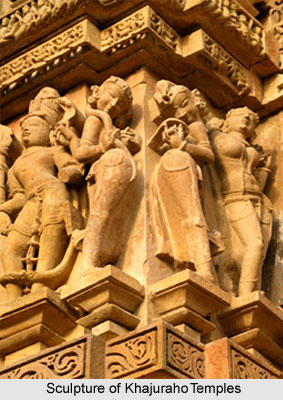
    In east India in the state of Orissa the finest examples of exquisite sculpture are the Lingaraja temple and the Konarak temple. Each wheel of the chariot in the Konark temple has rich carvings. The human and animal figures are carved out in black stone. The poses of dancing apsaras depicted look lively. The theme of several of these sculptures is passionate. The Chandella rulers of central India built temples of Khajuraho that is adorned with sculptures. The style of the shikhara varies from that of the others. The Jain temples at Mount Abu are the finest monuments of the Solanki kings of Gujarat who were great patrons of art. The Abu temples are very attractive because of the delicate and intricate carvings in white marble.

    For more visit the link below:

    Monday, 7 December 2020

    Aromatherapy, Naturopathy

     Aromatherapy is the alternative branch of medicine, which, in literal sense, means "Treatment through Fragrance". Aromatherapy is the modern name for a very ancient knowledge of healing and improving overall well being, using fragrant natural plant extracts. These plant extracts are called "Aromatherapy Oils" and can be extracted from the herbsplantsflowersfruits, bark, roots or the resin of some trees. These magical extracts from plants can amazingly affect the physical, mental, emotional and even the spiritual being. The Essential Properties of Aromatherapy Oils provide relaxation to the body and mind soothes and heals the same from various diseases.


    History of Aromatherapy
    Aromatherapy has also been used for many centuries in India. Ayurveda, the traditional medical system of India, uses dried and fresh herbs, as well as aromatic massage as important aspects of treatment. The use of therapeutic oils was spread throughout Asia and North Africa in ancient times, with India giving us a rich tradition of strongly perfumed oil such as sandalwood and patchouli.

    Aromatherapy Industry in India
    Aromatherapy, NaturopathyFrom the late 20th century onwards into the 21st century, there is a growing resurgence to utilize more natural products including essential oils for therapeutic, cosmetic and aromatic benefit. The use of essential oils never ceased, but the scientific revolution minimized the popularity and use of essential oils in one’s everyday life. Today’s heightened awareness regarding the use of synthetics coupled with the increased availability of aromatherapy information has refuelled the use of essential oils for therapeutic, cosmetic, fragrant and spiritual use.

    But throughout recent history, there have been recorded instances of therapeutic healing oils being used to treat many complaints successfully, and today, aromatherapy has become an international industry. The modern multi-billion dollar aromatherapy industry has spawned a wealth of aromatherapy products, such as essential oils, creams, candles, soaps, air fresheners, and fragrance infused papers, textiles and novelties.

    For more visit the link given below:
    Friday, 4 December 2020

    Indian Tribal Art


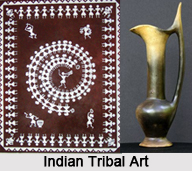
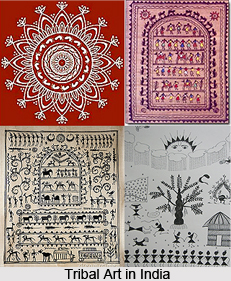
    Indian Tribal ArtIndian Tribal Art gives a glimpse into India’s rich heritage. It is a unique collection of diverse styles and representation. It has become an intrinsic part of the country’s cultural identity. The Indian tribal art is rich in expression and is a living form very much with the times. Traditional Indian tribal Art tries to wholly recreate the immortal charisma of Indian tribal life. One can easily come across exquisite pieces of Indian tribal art in different parts of India.

    Themes in Indian Tribal Art
    Indian Tribal Art is always delineated upon positive themes and ideas like birth, life, harvest, journey, jubilation or marriage. The Indian tribes pay due veneration and reverence to Mother Earth and its crucial elements. It is a tribal art form where life and ingenuity are fused. Tribes have made their own place in the contemporary world of art. The symbols portray the imaginations of men and these imaginations are the representative emotions of the people of a particular period and society.

    Types of Indian Tribal Art
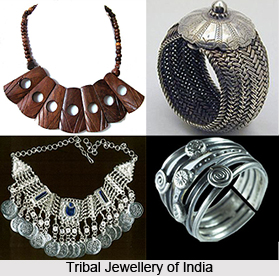
    Indian Tribal Art is one of the most fascinating parts of the tribal culture in India. The treasure of tribal arts is immense and has an astounding range, diversity and beauty. Indian Tribal Art takes on different manifestations through varied medium such as potterypainting, metalwork, Dhokra art, paper-artweaving and designing of objects such as jewellery and toys. Indian tribal paintings and sculptures are of exceedingly high quality and are documents of their cultural heritage.

    For more visit the link below:

    Wednesday, 2 December 2020

    Indian Tribal Crafts


    Indian Tribal CraftsIndian tribal craft is an astounding section in modern Indian times, which slowly has taken in a cosmopolitan appearance. The final get-up that such tribal crafts receive to adorn and deck sophisticated Indian city homes, can perhaps only be described after a thorough admiration. Indian tribal crafts are available in every area of decoration and embellishment, with numerous irresistible choices, heightening one's urge to buy tribal goods. Crafted to perfection, such tribals crafts leaves one spoilt for choice. The amount of pressure and physical exertion that goes to make an item look dazzling, is manifest through the daily lives of tribal aborigines. Some of the numerous tribal crafts manufactured in India include: Antiques, Art, Baskets, Papier Mache, Ceramics, Clock Making, Embroidery, Block Printing, Decorative Painting, Glass Work, Fabric, Furniture, Gifts, Home Décor, Jewellery, Leather Crafts, Metal Crafts, Paper Crafts, Pottery, Puppets, Stone and Wood Works.

    Indian tribal crafts verily mirror the lives of their users, their food and its source, their observances to pacify indefinite forces, which incorporate their arts and crafts, music and dance. Majority of Indian tribals inhabited in far-off forests, and had kept distance from the nearby agricultural villages. The confrontations and combats that ensued in the following years, made the tribals recede to other hinterlands and resort to other professions, like fishing, hunting and cattle-grazing.

    Religion plays a thrusting role in tribal day-to-day life. It is wholly expressed through art and reflects its use in their crafts. Indian tribal craft is generally ritualistic, rubbing off a distinct line between the artist and the art lover. It is encased within the consciousness of the tribe and transforms according to developments in the tribe. Tribal crafts are dependent on the local plant ecosystem. For instance, the use of bamboo for making bows, arrows, vessels and habitations doubtlessly lent to the conservation of bamboo grass. Implements, like the digging stick and bow and arrow, canoes and boats, dwelling houses, each an essential craft item, were dependent on plants and trees.

    Indian Tribal CraftsThe other popular raw material used by Indian tribals in their craft-making is mud. Mud is in fact utilised in umpteen artefacts, like, pottery, storage jars, figures of deities, votive offerings, decorations and burial urns and other objects. One of the bare essentials, tribal habitations are constructed mud. Fascinatingly, clay images are moulded not of the deity but as offerings to the deity. Terracotta is yet another material that can be seen in regular usage in tribal crafts in India. The figures are a central part of a total ritualistic portrayal of the rites of passage.

    What tells apart Indian tribal craft is the quality of usefulness which is integral to its creation. Whether it is a pot to carry water, a storage jar, a bow and arrow, a basket to carry goods or a votive offering, the object always has a role to play, a purpose intrinsic to its creation and existence. The shapes and forms of tribal crafts are, fascinatingly, deduced from basketry, as are the ornamentations on pottery. Basketry is the most popular and available of tribal crafts, being highly diverse, with its origins impossible to outline.

    For more visit the link below:

    Monday, 30 November 2020

    Archery in India

     Archery in India is one among the prime ancient sports. Conventionally, the game has been associated with warrior-ship and kingship and it was an important requirement expected in the battle field. Though, it was mainly used in hunting and combat in the ancient times, archery has become a precision sport in the modern times. Young potential archery talents like Tarundeep Rai, Jayant Talukdar and Rahul Banerjee have made India proud at the big stage. With international and national awards and recognition pouring thick and fast, India is slowly coming up as a powerhouse in archery.


    In the present scenario the game has found new takers and is gaining popularity among people of India. With the introduction of new, improved and sophisticated equipments under the strict supervision of Archery Association of India (AAI), the game has reached wider section of the masses.

    History of Archery in India
    The history of Archery in India dates back to the Vedic Period. During this time, bows and arrows were used for the purposes of hunting and gathering food. It was of immense importance in ancient India and this is testified to by the fact that the Mahabharata and the Ramayana, two massive sagas of royal lineages, are filled with passages that describe the techniques of archery, and the attitudes and customs surrounding its practice.

    In the medieval period also, Archery was played quite extensively in India. Archery continued to be practised in the Indian palaces up through the end of the nineteenth century. In modern times, Archery has already made its way to the Olympic Games, as well.

    Archery in IndiaBoth steel and brass bows were used by members of royal families in competition during the eighteenth and nineteenth centuries. Steel bows have a long history in India, as very early texts make mention of steel bows. By the time of the Mughal period (beginning mid-1500s), steel bows that were highly decorated, sometimes with gold and silver inlay, were fixtures in royal households.

    Technique of Archery
    Archery is a sport played with the two basic instruments of the bow and arrow. In this sport, the players use the bow to shoot arrows and hit targets. The target is made of a special grass species. The measurement of the target is approximately 8-10 inches in height and 3 inches in diameter and it remains attached to a thin bamboo pole at a height of 3 1/2 ft above ground level. An indentation is also created at the bottom of the pole. If the arrow of any player in an Archery game hits the target below this mark created, the player does not get any points. While playing, the players take aim at the target from a distance of 30 meters. The person who plays and practices the game of archery is called as an Archer.

    For more visit the link below: