Tuesday, 3 December 2019

Vinita Dasgupta, Indian Painter

download (2).jpg
Vinita Dasgupta is an upcoming contemporary Indian Painter, whose name stands at par with that of the other talented artists of India. She is considered as one of the most expensive and an important woman painters of India. She is sometimes known as ‘The Story Teller’.

Vinita_dasgupta_12.jpgVinita Dasgupta was a recipient of the Art for Social Change Award by the UN Population Fund, New Delhi in 2008.

1.pngEarly Life of Vinita Dasgupta
Vinita Dasgupta was born on 30 April, 1983 to a Bengali family. In 1998 her family moved to New Delhi for higher studies, where she began learning painting and fashion designing professionally.

swef.png
Specialization of Vinita Dasgupta
Vinita Dasgupta weaves layers, colours, shapes and textures into her artworks, to softly bring out balance and harmony. The metaphors of her arts are mostly inspired by the natural world, traditional culture as well as pop art and the layers of life.

Solo Exhibitions by Vinita Dasgupta
Some of her Solo Exhibitions are as follows:vinita.jpg
  • ‘Story Teller: Stories Told and Retold - V’ at New York Art Expo, New York. (2016)
  • ‘Story Teller: Stories Told and Retold - II’ at Art Lounge Gallery, Lisbon. (2015)
  • ‘BOLLYWOOD REVERIE: Rustic reveries of Bollywood’ - at Gallery Art Konsult, New Delhi, and Mumbai Art Fair presented by Gallery Art Konsult. (2011)
  • Fashion and Attitude/ Womanhood under Scanner - at Open Palm Court, Habitat Centre, New Delhi. (2009)
Exhibitions by Vinita Dasgupta
Some of the recent exhibitions she has participated in are as follows:
vinta.png
    2
  • ‘India Art Fair’ represented by Gallery Art Lounge Portugal and  New Delhi (2015), (2014)
  • A group show ‘VAMA’ organised by Sahitya Kala Parishad, New Delhi (2015)
  • A group show organized by Gallery Beyond, New Delhi (2015)
  • An auction "Save Tigers" organized by Aircel and Gallery Art Eterne, New Delhi (2013)
  • "Colours" show organized by Gallery Artland (2013)
  • An auction organized by Art Bull India, New Delhi (2013)
Achievements of Vinita Dasgupta
Some of the prestigious awards received by Vinita Dasgupta are as follows:
  • "Art for Social Change Award’’ from United Nations Population Fund-India, New Delhi 2008.
  • National Scholarship in Painting by Ministry of Culture from 2009-2011, New Delhi.
  • Her work ‘Trinity’ won the best prize for Graphics in national level organised by Lease Plan Fleet management group, New Delhi 2004.
  • Modi Arc Award for the painting on Ratha Yatra Festival in 2002.
vinita-1-1.png

Vinita Dasgupta remains an inspiration to many young contemporary Indian artists. She has also become the inspiration behind promoting ancient miniature and folk art silently through her art mediums and practices.

Read in detail here : Vinita Dasgupta, Indian Painter

Monday, 2 December 2019

Temples in Sabarimala, Kerela Temples


images (1)Temples in Sabarimala are considered to be an epitome of religious harmony.  Kerela itself is referred as God's Own Country. Within this state Sabarimala is one of the most interesting pilgrimage sites around.

The temple of Lord Ayyappa or Dharma Sastha on the Sabari hills on Western Ghats attracts numerous devotees.

 According to Puranas, Lord Vishnu once appeared as Mohini and Shiva succumbed to her beauty. Since Ayyappa was born of their union, He is known as Harihara Putra. His other name is Manikantan as he had a golden bell round his neck when he was found by the King of Pandalam on the banks of Pampa. This divine boy is said to have vanquished demon Mahishi on the Sabari hills.
2_Temples_in_Sabarimala
Moreover Parasurama had installed five Devi deities along the seashore and five Sastha images along the hilly tracts. Sastha is depicted in different stages of life in these five temples. At Kulathupuzha, He is represented as a child, at Ariyankavu as a Brahmachari, at Achancoil as a Grihastha with His consorts Poorna and Pushkala, at Sabarimala as Vanaprastha and at Ponnambalamedu or Kantamalai, as yogi.

The main pilgrimage takes place during Vishu (April), Mandala Puja (December) and Makara Sankranti (January). Pilgrims trekking long distances reach the shrine after negotiating Karimala and Neelimala. Vehicles can go up to the banks of Pampa River. From here it is a 5 km trek to reach the hill shrine.

The presiding deity has been consecrated in a neat little sanctum on a raised ground. Only those who carry the 'Irumudi' are allowed to climb the18 sacred steps sanctum. Others follow a side entrance.

pandalam20131127123135_51_2On the evening of Makar Sankranti pilgrims witness a magnificent flash of a light known as Makara Vilakku or Jyoti on the eastern side, called Ponnambalamedu. The shrine is kept open during the first 10 days of every Malayalam month.

Pandalam Sastha Temple is 15 km from Pathanamthitta district. The Thiruvabharanam of the Lord is kept here and is ceremonially taken to the hill shrine for Makara Sankranti festival.

Vaikom: It is located 40 kilometers away from Sabarimala. This well-known Shiva shrine, situated near the Vembanad Lake, is dedicated to Sri Vaikathappan, the benign form of the lord. Legends have it that Khara, an asura, had installed Lingams at Vaikom, Ettumanoor and Kaduthuruthi. It is customary to worship at all the 3 Shiva shrines on the same day.

As Vyagrapada worshipped the Lingam at Vaikom it was earlier known as Vyagrapadapuram. Sage Parasurama is said to have consecrated the Lingam and established puja rites for the shrine.

To know more , here is a site that you should checkout : "Sabarimala"ayyappa Swamiy temple

Wednesday, 13 November 2019

Ayurvedic Raitas

Ayurvedic raitas help in digesting the meal. Ayurvedic raitas can be of varied types depending on the vegetable used as main ingredient.

Mix-Veg-Raita.jpgAyurvedic raitas are made of yogurt and Ayurveda never suggests eating a lot of raita and therefore it should be taken in small quantities.
Ayurvedic Raitas.jpg
The Ayurvedic raitas can be of varied types depending on the vegetable used as the main ingredient.
Beet Raita:
Beet raita is good for blood purification and also works as a tonic. The spices and the other ingredients used in beet raita help yogurt to make it more easily digestible.

Carrot Raita.jpgbeet-raita.jpgCarrot Raita: Ayurvedic carrot raita is very healthy and nutritious as carrot is rich source of fibre, sugar and Vitamin A. It is also helpful for the people who are trying to reduce weight. But pregnant woman should not take it.

Cucumber Raita: Cucumber raita is nutritious and is easily digestible. It works as an appetizer. It is good for people who are suffering from excessive sweating and diabetes patients who complain of dryness of mouth.
Cucumber Raita.jpgSpinach Raita: Spinach is known as 'Palankya' in Ayurveda. The Spinach Raita.jpg
Ayurvedic Spinach raita   prepared using this nutritious vegetable ensures various benefits.

tomato-raita.jpgTomato Raita: 
Tomato raita helps in digestion and also adds taste to the food. It helps in eliminating toxins and keeps the stomach cool during summer.

To know in detail visit here : Ayurvedic Raitas

Tuesday, 12 November 2019

Draupadi


draupaddi

Draupadi was the daughter of King Drupada in the epic Mahabharata. She was also known as Panchali, as Drupada was the ruler of the kingdom of Panchala.

Drupada had prayed for a son, but Draupadi emerged as well. Draupadi grew to be a young woman she was considered very beautiful, mainly for her glowing dark skin, large dark eyes and graceful figure. Due to her dark skin, she was also called by the name 'Krishna'. She seemed to have been blessed with powers from Goddess Kali for the purpose of destruction of Kauravas of Mahabharata.

main-qimg-6d9e3ef886b603f3dcbccb1857c10c52.jpg
Draupadi's devotion to Lord Krishna
Draupadi is regarded as Shakti (Goddess Kali) incarnate who was the sister of Vishnu. This makes Lord Krishna (an avtaar of Lord Vishnu) Draupadi's brother.

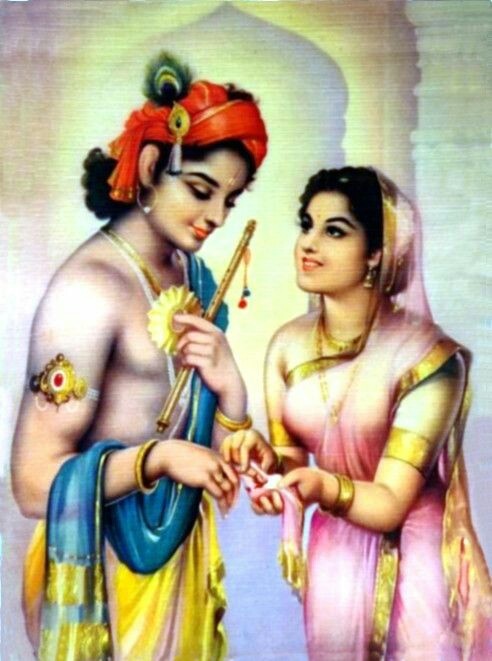
The incident wherein, Krishna cut his finger through his Sudarshan Chakra and Draupadi bound it with her sari was the origin of 'Rakhi' concept

images.jpg
Draupadi's Marriage to Pandavas
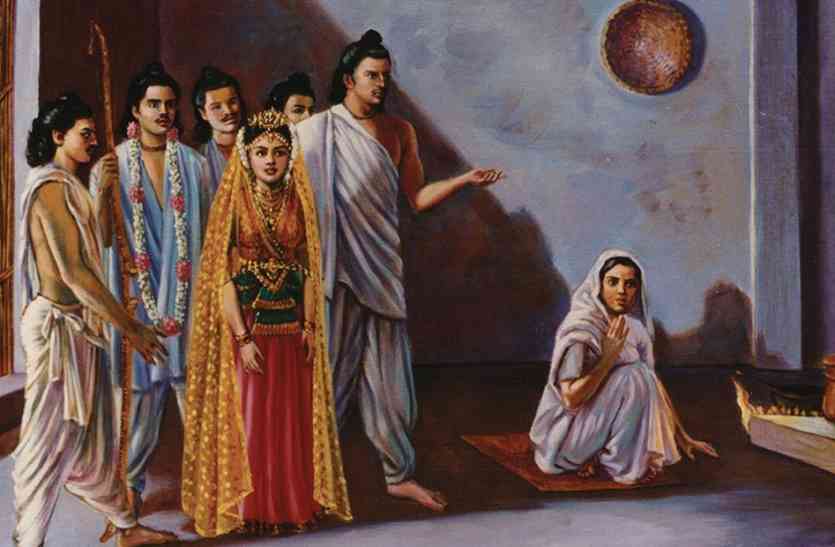
The contest was that there would be a target. The target was a bird which is placed on a revolving disc. It should be struck by an arrow only by looking at its reflection in the water below. A huge bow was kept for that purpose. Most kings failed to even string the bow. Only Arjuna was successful in hitting the target and won Draupadi's hand in marriage.


pandav_2104886_835x547-mDuring the period of exile Kunti had taught the Pandavas to share everything among them. When Arjuna came to Kunti and said that he has won a prize, Kunti without giving it a look told Arjuna to share him among all the brothers. Thus respecting his mother's words, all the brothers accepted Draupadi as their wife.

draupadi_sari-1kdCheer-Haran of Draupadi
Draupadi's Cheer-Haran was one of the central reasons for the Kurukshetra battle. The term literally means stripping one from their clothes.
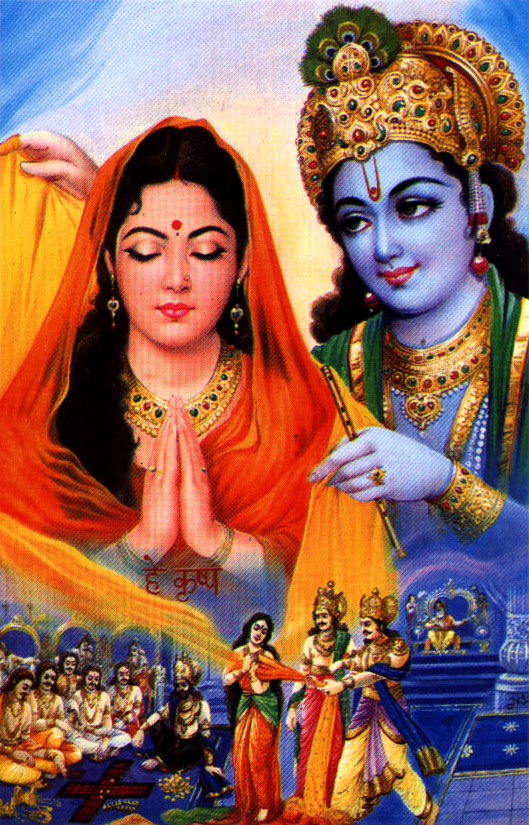
At a time of Cheer Haran of Draupadi.  Draupadi pleaded to everyone present in the courtroom to save her modesty. But no one came forward to help her. Frantically she called out Krishna's name who worked a miracle so that as Dushasana unwraps layers and layers of her sari, her sari keeps getting extended. Tired, Dushasana gave up the idea of stripping Draupadi.

Read more : Draupadi

Saturday, 9 November 2019

Traditional Indian Jewellery

Traditional Indian Jewellery bears the aroma of the Indian tradition and the cultural association of the country`s conventional folk lore with gender specific roles.
1.pngTraditional Indian Jewellery is the long drawn saga of Indian Tradition that is so exquisitely brought out by the maintenance of the on going traditional strain.
The Traditional Jewellery of India is of varied types and numerous forms.

hhhh.jpgMeenakari Jewellery
c4d7903f1f46e7d30f4035ebab37f712
Meenakari Jewellery is the exuberant exemplification of Meenakari Art; an ancient form of art in India that has been praised since its introduction for the superb designs and combination of colours.
ceed829cda0ae707b0a109474e8ade5e.jpgStone Jewellery
Stone Jewellery is another form of jewelry that is studded with different gems and are mostly  worn according to the individual's astrological chart and ruling of planet.

Gold Jewellery
gold-1.jpgGold Jewellery bears the testimony of rich Indian Tradition. Gold is used as the base metal for creating different jewelleries since the ancient times as many evidences are found in Harappa and Mohenjodaro.
Bead Jewellery

Bead Jewellery.jpgBead Jewellery or Bead art in India dates back to a history of five thousand year when Indus Valley Civilization had been the existing Civilization of India.

Terracotta Jewellery
f4e283a20184bd742edf51c74986d389.jpg
Terracotta jewelleries are one of the most available and ancient form of art that has its demand in recent times as well

5917e2d858f81b6829105ad23cd33f65Indian Tribal Jewelleryt.jpg
Bridal Jewellery

It includes attractive necklace set, pendant set, rings, bracelets, bangles, or earrings and more. In fact, it is very true that bridal jewellery happens to be one of the integral parts of Indian wedding.

Temple Jewellery
manubhai.jpgTemple Jewellery bears the testimony of religiosity of the ancient times and the associated jewel tale of the deities.

To know more visit here : Traditional Indian Jewellery

Friday, 8 November 2019

Cities of Uttar Pradesh


map-23.jpeg

Cities of Uttar Pradesh are covering the places, where the cities are mostly enriched with history, religion and archaeology.
A large number of the cities of Uttar Pradesh are consecrated places drawing a large number of Hindus and Muslims.

Cities of Uttar Pradesh are sanctified by the holy waters of the Ganga River and the Yamuna River. These cities are the most populous state of India.

Varanasidest_head_img-451.jpeg
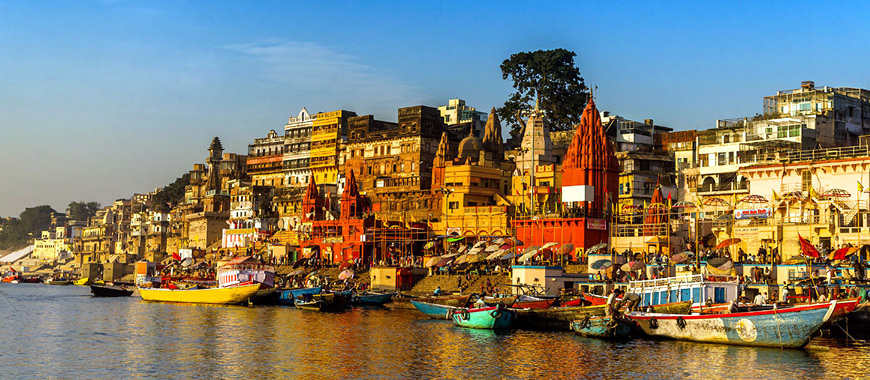
Varanasi is the spiritual capital of India, often referred to as "the holy city of India", "the religious capital of India", "the city of Lord Shiva", and "the city of learning".

Allahabadallahbad.jpeg Allahabad is a city in the north of Uttar Pradesh. It is the administrative headquarters of the Allahabad District.

Meerutdest_head_img-490.jpeg
Meerut is an ancient city with settlements dating back to the Indus Valley Civilization having been found in and around the area.

Aligarhaligarh.jpeg
Aligarh is a city in Uttar Pradesh. It is administrative headquarters of the Aligarh Division and Aligarh Police Range.

Noidanoida-4fcd3fcde44d78692f22ec7b.jpg
Noida is a city in India under the management of the New Okhla Industrial Development Authority. It is part of National Capital Region of India.

MathuraMathura .jpeg Mathura is best known as the abode of Lord Krishna.

FaizabadFaizabad.jpeg
Faizabad is the headquarters of Faizabad District. It is a joint municipal board with Ayodhya in the state of Uttar Pradesh.

JaunpurJaunpur.jpeg
Jaunpur is located to the northwest of the district of Varanasi in the eastern part of the North Indian state of Uttar Pradesh.

Lucknowdest_head_img-470
Lucknow is the capital city of the state of Uttar Pradesh. It is a major metropolitan city of India. It is the 10th most populous city of India and the second largest in North India after Delhi.

Read More :- Cities of Uttar Pradesh

Thursday, 7 November 2019

West Indian Dances, Indian Dances

school-chalao-hudo-dance-gujarat.jpgWest Indian Dances have rich traditions and present magnificent forms, styles and exclusivity.

West Indian Dances are detailed and rich in style and its appearance is set in the traditional pattern. The folk dances of the western region however, have their beginning in the rural village and at present they are equal to the culture of the Indian masses.

Different West Indian Dances
Following are the Different West Indian Dances:sxA.png
Dandiya Dance Dandiya Dance: Among the vibrant West Indian Dances, ‘Dandiya’ is one of the mesmerizing folk dances of Gujarat which has earned recognition from all over the
country as well as abroad for its rhythmic tunes and captivating movements.

Garba Dance: The Garba Dance is immensely popular in Gujarat. It is performed as an honour of Mother Divine, the goddess ‘Kali’ or ‘Durga’ who is sacred in Gujarat as ‘Amba Mata’ or ‘Mataji’.
untitled.png 
Garbi Dance: It is a dance by men only. It is performed around a photo or a statue of the Goddess with a lighted lamp or a small basket containing earth (soil) and developed grains, called a ‘jawara’.
Maharashtra-Lavani-dance.jpgLavani Dance: ‘Lavani’ dance is presented for male audiences. The ‘Lavani’ dance deal with varied topics, like politics, religion, and society.
hqdefault.jpgLezim Dance: ‘Lezim’ dance is presented during the ‘Ganesh Chaturthi’ festival. The activities of ‘Lezim’ dance look like movements of martial art in source. A variety of formations are created in the dance. Sometimes this dance is accompanied by a ‘dhol’ (drum).

Koli-Dance
Koli Dance: ‘Koli’, or ‘Kolyacha Naach’ is general in the coastal regions of Maharashtra and is named for fisherman, as well as the ‘Koli’ community of fisher folk who execute the dance.Koli Dance
c23969789fb56a71b039a8f085845d69.jpg
Fugdi Dance: ‘Fugdi’ is an art form that can be traced to the primeval cultural traditions of Goa.

Read More :- West Indian Dances, Indian Dances