Monday, 19 September 2022

Vaishnavite Dance forms


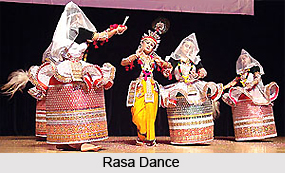
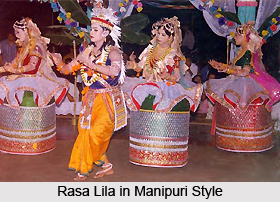
Vaishnavite Dance formsVaishnavite dance forms are popular in India for the religious and spiritual elements present in the songs as well as in performance. These dances have been established with devotional connotations which focus on the relationship between Lord Krishna and his beloved Radha. In terms of pure devotion, India has a long history of Vaishnavite rituals.

History of Vaishnavite Dance Forms
The Vaishnavite movement began during the 15th and 16th centuries in the country. This movement glorified the endearing relationship of Lord Krishna and his beloved Radha to depict the relationship between individual soul and the supreme soul. This movement was initiated by various saints and consisted of the childhood escapades of Krishna and his dalliance with the 108 gopis and especially with Radha.
Vaishnavite Dance formsTheme of Vaishnavite Dance Forms
Vaishnavite culture had grown over the central theme of Lord Krishna. Several saints were engaged in the movement and all of them introduced a metamorphosis of worshiping Lord Krishna. They commenced the Vaishnavite dance forms that emphasise the love and devotion for Lord Krishna. This form of dance produces a state of ecstasy in which the presence of God could be realized. Thus, the dance forms are practised for a long time in India. The lyrical fervour made the dance form popular. At present the whole of country has certain sects performing the dance forms of Vaishnavite tradition.

For more, visit link below:

Friday, 16 September 2022

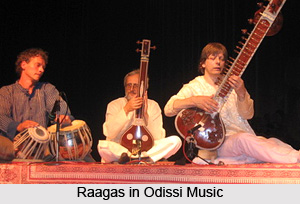
Raagas in Odissi Music


Raagas in Odissi MusicRaagas in Odissi Music can be divided into three major categories. There are some Raagas in Odissi music which are original and unique and are not found in the mainstream classical systems like Hindustani or Carnatic music. There are some other Raagas whose names are not similar but Swaras are similar with those in one or both the mainstream systems. Finally, there are some Raagas whose names are similar with the names of corresponding Raagas in one or both mainstream systems but Swaras are not similar.

Original Odissi Raagas
These Raagas are based on Udra tradition following Grama-Murchana theory but now-a-days these are being composed in Mela Padhati. Among the original Odissi Raagas are Raaga Abhiri, Raaga Karnata Abhirika, Raaga Kaushki, Raaga Nagadhyoni and Raaga Dhanyasika or Dhannasi.

Different Raaga name but same Swara
Raaga Sudha Kaushiki is included in this category. Raaga Malkaunsha of Hindustani music and Raaga Hindol of Carnatic music are very similar to this Odissi Raaga and their Swaras. There is no Sudha Kaushiki Raaga in any of the mainstream traditions. Apart from this, Raaga Kokila used in Odissi music is very similar to Hindustani's Bhupali and Carnatic's Mohana Raagas for its Swaras. However, the Chalana of Swaras and the Bhava of Raaga are very different from each other. There is no such Raaga by the name of' Kokil' in Hindustani music. In Carnatic music, although some forms with some affix like Kokiladhwani, Kokila pancham, Kokila ganclharva etc. are found simply 'Kokila' is not found.

For more, visit the link below:

Thursday, 15 September 2022

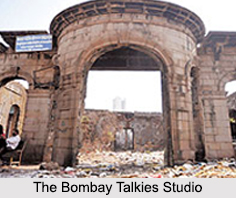
The Bombay Talkies Studio


The Bombay Talkies Studio, Indian Movie Production HouseThe Bombay Talkies Studio was the first Movie Production House of India. Fondly it was known as ‘Bombay Talkies’ which was a public limited company and was recorded as a company under the Indian Companies Act. It played a leading role in establishing Bollywood as an industry. The Bombay Talkies Studio was the stepping stones to the success of superstars such as Devika Rani, Ashok KumarMadhubalaDilip KumarRaj KapoorMehmoodKishore KumarLata Mangeshkar and many others. The Bombay Talkies Studio gradually surfaced as a well ordered, self-sufficient and gainful company. It made public issues, affirmed dividends and bonus, and commanded a good reputation on the Bombay Stock Exchange.

Foundation of The Bombay Talkies Studio
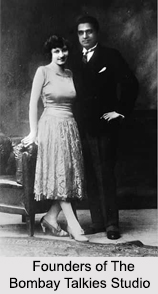
The Bombay Talkies Studio was established in 1934 in Malad, Mumbai in India by Himansu Rai and Devika Rani. Franz Osten and Niranjan Pal were the first full-time filmmakers related to this company. The Bombay Talkies Studio set a towering technological standard for filmmaking in India. It was a highly specialised movie studio (compared to its time), with sound and echo-proof stages, laboratories and editing rooms as well as a preview theatre.

The Bombay Talkies Studio, Indian Movie Production HouseProductions at The Bombay Talkies Studio
The Bombay Talkies Studio imparted a new facet to themes of films, and produced films on contentious topics such as the story of love ‘Achhut Kanya’ (1936) between an Untouchable girl and a high class Hindu Brahmin boy. Other distinguished movies produced by the Bombay Talkies Studio incorporated famed movies of the time like ‘Jawani ki Hawa’ (1935), starring Devika Rani, and ‘Jeevan Naiya’ (1936), a romantic film starring Devika Rani and Ashok Kumar. The 1942 movie ‘Basant’ saw Madhubala for the first time as a child artist.

Decline of The Bombay Talkies Studio
With the subsequent demise of Himansu Rai, the founder and stalwart of the studio, the Bombay Talkies Studio had an abrupt breakdown. His wife Devika Rani, took charge of the company, and was also made the controller of production of the Bombay Talkies Studio. Devika Rani sustained the high tradition of the Bombay Talkies Studio.

The Bombay Talkies Studio, Indian Movie Production HouseAfter Devika Rani left the company, Ashok Kumar with his brother-in- law Sashadhar purchased and tried to restore it, making the hit film ‘Mahal’ in 1949, but ultimately the company closed down. Presently, the Bombay Talkies Studio is in a decrepit state, and has lost the unspoiled glory, which it once commanded.

For more, visit the link below:

Wednesday, 14 September 2022

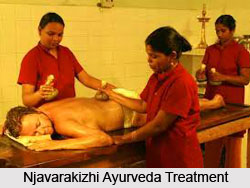
Njavarakizhi, Kerala Ayurveda


Njavarakizhi, Kerala AyurvedaNjavarakizhi treatment is associated with the neuromuscular disorders and degenerative muscle diseases. This treatment will give benefit to the patients who are suffering from spondylosis, osteoarthritis, diabetic neuropathy, inter vertebral disc prolapse, rheumatoid arthritis.

Njavarakizhi treatment is also an exceptional rejuvenating therapy to keep the body young and healthy. Njavarakizhi treatment nourishes the muscles, improves their tone, and imparts longevity.

Derivation of Njavarakizhi
Njavarakizhi treatment is also known as Shashtikashali Pinda Swedam. Njavarakizhi treatment in Malayalam stands for the rice, Shashtika Shali in Sanskrit language that grows in 60 days.

Kizhi (Pinda in Sanskrit) stands for bolus. Njavara is indigenous variety of rice grown in Kerala, having medicinal properties. Njavarakizhi treatment is a unique treatment procedure practiced by physicians of Ayurveda of Kerala.

Process of Njavarakizhi
The person in Njavarakizhi treatment is first preconditioned by applying mild oil on the body and head, and is made to lie down relaxingly. Warm "Njavara" rice, cooked with herbal decoction and milk, is squeezed out through a cotton pouch and massaged on to the whole body of the person. This continues for about 30 to 40 minutes until the whole preparation is evenly spread on the body. As soon as the rice spread looses its warmth, it is completely wiped off and warm oil is applied on the body. The person lies idle for another 30 minutes before he goes for a warm refreshing shower.

In the meantime, the steamed rice and herb mixture infuse their properties into the body tissues and nourish them. This revitalizes the deficient areas of the body, reduces its degeneration, and stops muscle wastage. And as a result of extended treatments of 2 to 3 weeks the body recoups its lost vitality.

The medicines like Lehyam (semi solid) and Kashayam (decoction) to be taken along with the treatment will give much more effective results in Njavarakizhi treatment. Other than the nourishing rice "Njavara", vetiver, ghee, ginger oil, milk, and herbs like sida, deodar and mustard are also used in making the decoction and preparation of Njavarakizhi treatment.

For more, visit the link below:

Tuesday, 13 September 2022

Hill Stations of West Bengal


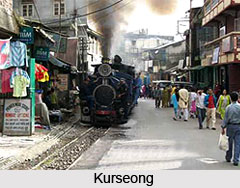
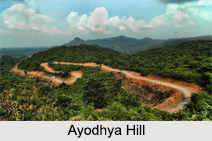
Hill Stations of West BengalHill Stations of West Bengal offers the national and international tourists with the mesmerizing natural beauty. Some of the hill stations in northern part of West Bengal are DarjeelingKalimpongKurseongMirik, Lava, LolegaonRongbull and many other places. While on the contrary, the southern part of West Bengal has the other hill stations like Mukutmanipur, Joychandi Pahar, Ayodhaya HillsSusunia and Garhpanchakot. These vibrant destinations are easily accessible from all the cities of IndiaKolkataSiliguriDurgapurJalpaiguri District and Malda District are the popular cities nearby.

Darjeeling, Darjeeling District
Darjeeling is a colonial hill town in the Indian state of West Bengal. This place is noted for its tea industry and the Darjeeling Himalayan Railway.Hill Stations of West Bengal

Kalimpong, Kalimpong District
Kalimpong is well known for its educational institutions, many of which were established during the rule of British Empire in India.

Kurseong, Darjeeling District
Kurseong has a pleasant climate throughout the year. Kurseong is about 29 miles from Siliguri.

Mirik, Darjeeling District
Mirik has the centre of all attraction- Sumendu Lake. Mirik allures the tourist for the presence of gardens on one side and the pine forests on the other.

Lava, Darjeeling District
Lava is a small rural community situated 34 kms east of the town of Kalimpong via Algarah and it is the entry point to the Neora Valley National Park. Lava has a Buddhist temple, Changey Waterfalls and Lava Jamgyong Kongtrul Monastery, which are the popular destinations nearby.

Joychandi Pahar, Purulia District
Hill Stations of West BengalJoychandi Pahar is a green hill in south Bengal. It is on the Purulia-Barakar Road. It is a popular tourist centre and major attraction for rock climbing. Joychandi Pahar Railway station is on the Asansol-Adra section of South Eastern Railway.

For more, visit the link below:

Monday, 12 September 2022

India`s Memorable Overseas Test-Series Wins


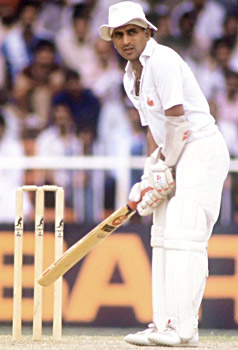
Sunil GavaskarThe performance of the Indian cricket team saw a lot of improvement in the later half of the 1960s and the improvement was evident from India's first ever Test series win in overseas, against New Zealand in 1968.

India Tour to New Zealand and England in 1968
The Indian team went on the tour of New Zealand in 1968, with Tiger Pataudi as the Indian captain and the win broke a 35-year-long plague of India's not winning a series overseas. India won the series by a comprehensive 3-1 and the Indian team literally dominated the New Zealand attack in the series. The players like E.A.S. PrasannaB.S. Bedi and R.G. Nadkarni were the stars for India in the series win and Mansur Ali Khan Pataudi also led the team with distinction.

Once the Indian team broke the jinx of winning a series overseas in 1968, against New Zealand, it became much more confident of repeating the success again and they did so twice within a short period. After the New Zealanders, the Indians beat the mighty West Indies in West Indies and also the England team in England.

India Tour to West Indies in 1971
The Indian cricket team went for a tour to West Indies in 1971 and it became successful to take a great revenge of the humiliation that it faced in its previous tour of West Indies, when West Indies white washed the Indians by 5-0. The Indian team played extremely well in the series to beat the West Indies team by 1-0.

The performance of the Indian cricket team saw a lot of improvement in the later half of the 1960s and the improvement was evident from India's first ever Test series win in overseas, against New Zealand in 1968. The Indian team went on the tour of New Zealand in 1968, with Tiger Pataudi as the Indian captain and the win broke a 35-year-long plague of India's not winning a series overseas. India won the series by a comprehensive 3-1 and the Indian team literally dominated the New Zealand attack in the series. The players like E.A.S. Prasanna, B.S. Bedi and R.G. Nadkarni were the stars for India in the series win and Pataudi also led the team with distinction.

Once the Indian team broke the jinx of winning a series overseas in 1968, against New Zealand, it became much more confident of repeating the success again and they did so twice within a short period. After the New Zealanders, the Indians beat the mighty West Indies in West Indies and also the England team in England. The Indian cricket team, led by Ajit Wadekar, went for a tour to West Indies in 1971. The team became successful to take a great revenge of the humiliation that it faced in its previous tour of West Indies, when West Indies white washed the Indians by 5-0. The Indian team played extremely well in the series to beat the West Indies team by 1-0.

The successful tour against West Indies is always considered as one of the most memorable moments in the history of Indian cricket, as this was the series that boost up the self-confidence of the Indians, a lot. The Indian cricket team fought hard with the mighty and dangerous West Indians in all the five Test matches of the series and became successful to win the second one, which eventually became decisive.

However, the most notable facts of the tour definitely include India's first victory in the Caribbean, the team spirit of the Indians through out the series and also the emergence of a young batsman, named Sunil Gavaskar.

For more, visit the link below:

Thursday, 8 September 2022

Education in Ancient India


Education in Ancient IndiaEducation in ancient India had a deep impact in the upliftment and advancement of the early society and over all development. India is pregnant with a rich tradition of knowledge and learning from the earliest days of Indian civilization. There are several literary sources, such as the Vedas and other Hindu texts and scriptures, which offer references about education system of the ancient societies. The Mahabharata, some Dharma sutras, particularly those of Gautama Buddha and Apastamba and the Manu Smriti, are the principal works dealing with the system of education in ancient India.

History of Education in Ancient India
From the Vedic to the Brahman period, literature and additional literature sustained to be created. Even in the Brahman period, education continued to be looked upon as the means to knowledge. It has the same objectives that Vedic education had. However, with the passage of time and a change in the needs of society, the importance attached to them underwent a change. In this period, the following objectives were ascribed to education.

1. Self-control
2. Development of character
3. Generation of sociability or social awareness
4. Integral development of personality
5. Propagation of purity
6. Preservation of knowledge and culture.

Education in this age was unrelenting to carry on the foundations offered to it during the Vedic period, but a certain firmness and narrowness now marked its implementation. Education now aimed at equipping the student for the struggle for existence. After the "Upanayana" or introduction ceremony, teachers imparted education to their students according to the latter's interests, tendencies and nature. Celibacy was rigidly observed by the students. Teachers paid full attention to the psychological make-up of their students while teaching. Corporal or physical punishment was regarded as the last resort of administration and discipline. It has been stated in the Manu Smriti and Yajyavalka.

Gurukul System
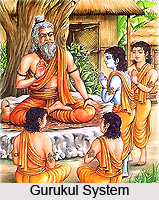
Education in Ancient India originated with the Gurukul system. This type of ancient Hindu school in India was residential in nature with the Shishyas or students and the Guru or teacher living in proximity within the same house. The students resided together irrespective of their social standing. However, several temples and community centers regularly took the role of schools. In addition to that ancient Indian education achieved a noticeable position in the early Vedic period, beginning in the 1200 B.C. In the Vedic days, the teaching of the four Vedas, the hymns and ritual practices were seen. Education in Ancient IndiaThe Vedas included the Sanskrit language which in turn became the language of classical learning. Besides the pronunciation of the Vedas and their implication, phonology, metrics, elementary grammar, and etymology were also taught. Though, the Vedic education was not transmitted to people of low strata, yet the Vedic system inspired the modern day education system. The school in the ancient education system lasted for 7 to 8 hours a day. In fair weather; classes were held under the shelter of the tree. In the rainy season schools ran under thatched roof. Temple colleges of the past had been of great renown for having spacious buildings for classrooms and the residential complexes of the students and the "Gurus". Gurukuls and Ashrams were generally situated on the river banks or on the lake to attain the knowledge.

For more, visit the link below:

Wednesday, 7 September 2022

Beverages of Kashmir


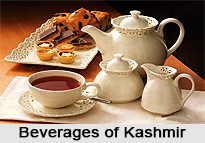
Beverages of Kashmir, Kashmiri CuisineKashmiris are heavy tea drinkers. Kashmiri Cuisine cannot be complete without having beverages. "Kahwah" and "Sheer Chai" are the favourite beverages of the Kashmiri Cuisine. Tourists come to Kashmir not only for its natural beauty but also to have the refreshing beverages of the state. Being a cold region much of the beverages served here are served warm.

Over the past 100 years, the cuisine of Jammu and Kashmir has evolved to a great extent and this has been mainly due to the influence of Kashmiri Pandits that hail from the Hindu Community and the Kashmiri Buddhists from the valley. The cuisines of North India Plains, Persia and Central Asia have also marked their strong influence on the cuisine of this state. A few refreshing and notable beverages of Jammu and Kashmir have gained prominence amongst the tourists.

Kahwah
Kahwah is one popular drink that is served at religious places, and during special festivals and marriage fests. This is a warm kind of tea that is usually served after meals to wash the food down. Though every one of us is familiar with ginger tea that is prepared in our homes, yet the special Kashmiri tea which is a fragrant one blended with cardamom is must have. It is one of the delightful thirst quenching drink which the tourists ask for. Infact, the natives that prefer drinking Kahwah to settle their stomach upset. It is also believed to be good for digestion.

This drink hails its origin from an Arab coffee which was popular in 14th century. This drink has astonishing 20 varieties which are prepared in diverse households. Also called "Maugal Chai" by the Kashmiri Pandits, some people at times also add milk to alter its taste.

Ingredients:
  • Green tea leaves - 1 tsp
  • Green cardamoms - 2
  • Cloves - 2
  • Cinnamon - 2 inch stick
  • Almonds - 4 to 5
  • Sugar - 3 tsp
  • Saffron - 2 to 3 strands
  • Beverages of Kashmir, Kashmiri Cuisine

    Method:
  • Grind the cardamoms, cloves and cinnamon to powder.
  • Crush almonds and keep aside.
  • In a pan pour 3 cups of water, crushed green tea leaves, sugar, cardamom-cloves-cinnamon powder and saffron.
  • Leave to infuse over a very low flame for 10 minutes till the tea turns light golden. Strain into tea cups.
  • Sprinkle the finely ground almonds on top of each cup and serve hot.


  • Sheer Chai or Noon Chai
    Sheer Chai or Noon Chai is a common breakfast tea in Kashmiri households and is taken with breads like ‘Bakarkhani’. This tea is best served in large samovars. The word "noon" in Kashmiri language means Salt.

    This popular drink is a pinkish coloured salted tea which is made with green tea, milk, salt and sodium bicarbonate. The particular colour of the tea is a result of its unique method of preparation and the addition of soda. The Kashmiri Pandits more commonly refer to this Chai as "Sheer Chai".

    For more, visit the link below: