Friday, 7 May 2021

Traditional Sports in India


Traditional Sports in IndiaTraditional Sports in India, amidst immense popularity of international sports, has survived, over the years. Traditional games also show the different cultural and traditional backdrops in different Indian States. It also depicts the tribal culture and folk culture.

History of Traditional Sports in India
Ancient history depicts the Indo Aryan literature and Veda where references of traditional games are present. Vedic Period had a rich tradition of games, though mainly played for maintaining physical fitness. Ramayana and Mahabharata gave the prime importance in physical fitness and strategy gaming (Chaturanga). It was given especially by the rulers and the warriors. Wrestling seems to have been a popular sport among warrior kings, as there are numerous occasions in different forms of literature, which has an element involving wrestling. Lord Hanuman is said to be an archaic wrestler in Indian mythology with immense physical strength, that he is considered even today, as a symbol of strength and courage. Harappa and Mohenjodaro also confirm that during the Indus Valley Civilization the weapons that were involved in battles and hunting, were part of the games.Traditional Sports in India

Early Traditional Sports and Indian Women
Women also excelled in sport and the art of self-defense, and were active participants in games. Buddhism in India preached non-violence, but it never compromised on physical fitness. In fact, Gautama Buddha himself is said to have been an ace at archery, chariot racing, equitation and hammer throwing.

Traditional Sports in Medieval Era
Mughal Emperors were patrons of hunting and wrestling. The Agra Fort and the Red Fort were the popular venues of many wrestling bouts in the times of Emperor Shah Jahan. Later, the Maratha Emperor, Chhatrapati Shivaji's guru, Samarth Ramdas, built several Hanuman temples all over Maharashtra, for the promotion of physical culture and cultural asanas among the youth. Wrestlers from medieval era achieved popularity till British came.

Traditional Games in Modern India
A large number of regional games have been played right from many centuries. Thoda, Khong Kangjei, Dhopkhel, Silambam, Vallamkali, Camel Race, Kite Flying, Asol Aap and Asol - Tale Aap, Cheibi Gad-Ga, Hiyang Tannaba, Inbuan, Insuknawr, Kirip, Saldu, Ke Nang Haun and Kho-Kho are the popular traditional sports of modern India which still exists.

For more, visit the link below:

Thursday, 6 May 2021

Twelve Houses in Horoscope


Twelve Houses in HoroscopeTwelve Houses in Horoscope describes an individual’s life. The twelve houses bear their individual ruling planet, their meaning and their related zodiac sign. The entire life aspects and qualities of the person are recorded in the Twelve Houses of a horoscope. In Vedic Astrology, the houses are also known as ‘Sthanas’ or ‘Bhavas’. From the point of view of the birth of the individual, i.e. the exact location of the birth, and the exact time when the sky or zodiac belt was perceived, is drawn out in the form of Twelve Houses in Horoscope. Each zodiac occupies a specific house of the birth-chart.

Twelve Houses in Horoscope
Twelve Houses in Horoscope are as follows:
  • First House or Lagnasthan
  • Second House or Dhanasthan
  • Third House or Bhatrusthan
  • Fourth House or Matrusthan
  • Fifth House or Vidyasthan
  • Sixth House or Ripusthan
  • Seventh House or Bharyasthan
  • Eighth House or Mrityusthan
  • Ninth House or Bhagyasthan
  • Tenth House or Karmasthan
  • Eleventh House or Labhasthan
  • Twelfth House or Vyayasthan
  • First House or Lagnasthan: This house is also known as the rising sign or the ‘House of Self’. This house happens to be the most important placement in the chart as it symbolizes ones mannerisms, style, disposition and temperament. Looking at the house, one can figure out the physical appearance of the person, his basic instincts, health, longevity, nature, and the basic vitality with which the person will live his life. In short, it defines the significant constituents of body and mind. In a human body, the house governs Head and face. The zodiac sign of this house is Aries and its planetary ruler is Mars planet.

    Second House or Dhanasthan: This house is also known as the ‘House of Wealth’. The financial state of a person can be well analyzed by studying this house. Family and relations within the family are also controlled by this portion. Early stages of life, servants and domestic comforts are also ruled by it. Physically, the house influences an individual’s throat and eyesight. Speech is also one of the gifts of this house. The zodiac sign of the second house is Taurus and the planetary ruler is Venus planet.

    Third House or Bhatrusthan: It is also known as the ‘House of Courage’ or ‘House of Communication’. Whether a man will stick to the mediocre routine life, or he or she will explore new avenues of life and success, can be well deduced from this house. This house rules courage, self-esteem, stamina, intelligence and also younger siblings. This house governs the way one thinks, speaks and writes. It also depicts aspects of clothes and jewellery, along with prospects of short journeys. Physically, this house governs right ear, arms and shoulder. Gemini is the zodiac sign of this house and its planetary ruler is Mercury planet.

    Twelve Houses in HoroscopeFourth House or Matrusthan: This is the ‘House of Home’. It tells about one’s mother and the concerned person’s relationship with her. This house in general denotes prosperity, domestic surroundings and happiness. It indicates the kind of home one had in childhood, their relationship with parents. A person’s old age, private and public affairs and inheritance can also be determined from this house. Physically, this house governs an individual’s breasts, chests, lungs and stomach. The zodiac sign of this house in horoscope is Cancer and the planetary ruler is Moon planet.

    Fifth House or Vidyasthan: This house is known as the ‘House of Education’. It defines an individual’s prospects in education and children. Other than that, this house also governs a person’s intellect and luck. The Fifth House also relates to entertainment, holidays, amusements and arts. It is also the house of spirituality and pleasures of the world. In the human body, this house takes care of the liver, heart and spleen. The zodiac sign associated with this house is known as Leo and the Sun planet is the planetary ruler.

    Sixth House or Ripusthan: This house is regarded as the ‘House of Challenges’ and the ‘House of Health’. This house tells the stories of a person’s enemies, health and service life. This house rules ones relationship with their co-workers, sub-ordinates or employers. The connections of an individual with uncles and aunts are also defined by it. Debts, mental worries, accidents or thefts are also the speciality of this house. Physically, the house influences kidney, uterus, intestine and anus. The sixth house in horoscope is having Virgo as its zodiac sign and the planetary ruler of this house is Mercury.

    For more, visit the link below:

    Wednesday, 5 May 2021

    Crafts of Indian States


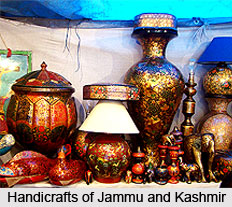
    Crafts of Indian StatesCrafts of Indian states are innumerable and which have attained commercial proportions not only in India but also abroad. They make excellent souvenirs for tourists and are sold through various handicrafts emporium. Craft making is an ancient tradition in India, which has withstood the test of time, and this tradition has passed on from generation to generation. The Indian craftsmen are adept in manufacturing diverse crafts, which have attracted the attention of connoisseurs of craft all over the world.

    Crafts of North Indian States
    The Northern Indian states like Jammu and Kashmir, Himachal Pradesh, Punjab, Haryana, Uttaranchal and Uttar Pradesh are renowned for their exquisite crafts which involve embroidery, pottery -making, carpets -weaving, metal crafts, furniture making and wood carving. Punjab's durry-weaving and phulkari crafts, shawls of Chamba, Himachal Pradesh, wood crafts of Saharanpur, Uttar Pradesh are some of the different crafts of these portions of India. The crafts of Haryana have never been widely acclaimed and more than artistic showpieces they are utilitarian in nature. The crafts of Himachal Pradesh have a relatively good demand in the market and some of the major crafts of the region include textiles, woodcarvings, carpet making and pottery.
    Crafts of Indian States
    Crafts of North-Eastern Indian States
    Assam, Mizoram, Tripura, Arunachal Pradesh, Nagaland and Meghalaya are the Indian states which specialise in creating numerous beautiful crafts. One will come across bell metal crafts, sholapitha crafts, brass metalware, 'sitalpith' crafts, wood crafts, fibre crafts and pottery work in Assam. Assam's weaving industry is famous, particularly for weaving mulberry silk sarees. Manipur is well-known for its production of jewelleries, bamboo and cane crafts, metal bowls and dolls of clay. Manipur is a storehouse of crafts and the people here are known to take a lot of interest in make new innovation in the craft. Pineapple fibre artefacts, especially purses, bags and nets made in Meghalaya are quite popular. Tripura's silver ornaments, 'sitalpati', tablemats, etc are important crafts of this region. The various crafts of Nagaland are woodcarvings, bamboo work, and pottery, which have a commercial demand in the local and international market.

    Crafts of South Indian States
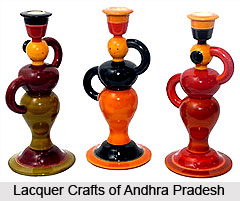
    Crafts of Indian StatesThe crafts of Karnataka bear testimony to the dexterity, and decorative abilities of the craftsperson. The crafts of the state include woodcarving, ivory carving, 'kasuti embroidery', durries, Pottery and 'Cheennapatna' toys. Papier mache, stone craft, pottery, woodcraft, embroidery, durries and metal ware are the various crafts of Tamil Nadu. The craftsmen of Andhra Pradesh are engaged in making bidri crafts, embroidery crafts known as 'banjara needle craft', 'Budhithi brassware', lacquer crafts and others. Kerala produces reputable products of metal crafts, wood crafts, bamboo crafts and ivory crafts.

    Crafts of Eastern Indian States
    West Bengal, Orissa, Bihar and Jharkhand are the states of Eastern India which manufacture unique crafts. Terracotta crafts, clay crafts, jute crafts, leather crafts, conch shell crafts and 'kantha-stitch' crafts are amongst the reputable crafts of West Bengal. Bihar produces marvellous glassworks, carpet weaving crafts, lacquer crafts and stone crafts. Applique work, 'Patachitra', wood carvings and metal crafts of Orissa are in high demand. Craftsmen of Jharkhand manufacture spectacular items like toys and bamboo baskets.

    For more, visit the link below:
    Tuesday, 4 May 2021

    Cuisine of Sikkim


    Cuisine of SikkimSikkim has a blend of cultures and traditions of Nepal, India, Bhutan and Tibet. Cuisine of Sikkim is a mixture of the food of various cultures. The bizarre combination of various cuisines has resulted into one specific cuisine, which is now called cuisine of Sikkim. Today, Sikkim boasts of its own dietary culture that comprises of different food habits and some special recipes. These recipes and habits have emerged with the traditional wisdom and experiments of generations. The traditional food of Sikkim, is gaining popularity among the masses. In the present day, Sikkimese cuisine has entered the kitchens of the world. A typical diet of a working Sikkimese consists of dal bhat i.e. lentils and rice with meat for breakfast; a light lunch of momos and an early dinner consisting of noodles.

    Features of Sikkimese Cuisine
    In Sikkim, Himalaya’s traditional foods form an essential part of dietary culture. Rice is the chief food of the Sikkimese. Depending on availability, meat and dairy products are consumed as well. Apart from these foods, a range of traditional fermented foods and beverages make the basic diet for centuries. The pattern of food production also reveals the gastronomy of Sikkim. With high altitudinal variation, crops like finger millet, wheat, buckwheat, barley, vegetable, potato, soyabeans etc. are grown.

    The cuisine is also incorporated with Dals (lentils), fresh vegetables, bamboo shoots, wild flowers, mushrooms and nettle leaves. Talking about non-vegetarian food, beef, pork and fish are relishing items. The main thing about the cuisine of Sikkim is that it has been materialized under the changing needs, geographical compulsions and cultural contact of the adjoining countries. Sikkim cuisine demonstrates the good sense of the residents, who took only those styles and methods from other cultures, which helped their mode of life, maintaining their own distinctive cuisine.

    Cuisine of SikkimSpices of Sikkimese Cuisine
    Sikkim horticulture department commonly cultivates spices like Chilli, Large Cardamom, Turmeric and Ginger. Sikkimese put pepper and chilli mostly in their dishes to cope up with the cold climate. Other than those ginger, garlic, cloves, cinnamon etc. are used to put exotic flavor and taste to the cuisine.

    Various Delicacies of Sikkimese Cuisine
    Momo (steamed dumpling), Tomato Achar (Pickle), Thukpa /Gya-Thuk (Noodle soup), Kinema curry (Fermented soybean), Gundruk and Sinki Soup (Fermented vegetable soup), Gundruk ko Achar (Pickle), Chhurpi Soup (Traditional cottage cheese), Chhurpi ka Achar (Pickle), Chhurpi-Ningro Curry (Chhurpi with wild fern), Sel Roti (Fermented rice product), Shimi ka Achar (String bean pickle), Pakku (Mutton curry), Bamboo Shoots, Sisnu(stinging needle), Phing ( Glass noodles), Shya Phaley( meat stuffing), Sikkimese Tea( salty), Gyari( Steak), Gya Kho (chimney soup) and Mesu Pickle (Fermented bamboo shoot) are some of the local dishes that are enjoyed by all the communities in Sikkim.

    For more, visit the link below:

    Monday, 3 May 2021

    Treatment in Ayurveda


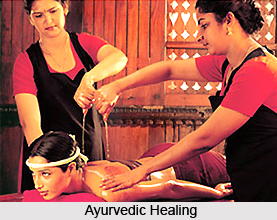
    Treatment in AyurvedaThere are several types of treatment in Ayurveda. The procedure of treatment varies according to the patient’s mental and physical capability or strength. The kind of disease is the integral factor to choose the types of treatment in Ayurveda.

  • Dwividh Chikitsa suggests 2 types of treatment in Ayurveda. In the first category of treatment, the patient has to undergo either ‘Sheet Upchaar’ (cold treatment) or ‘Ushan Upchaar’ (hot treatment).


  • Triwidh Chikitsa suggests 3 types of treatment in Ayurvedic form of medicine. The first category of Triwidh Chikitsa includes the procedures of ‘Devvyaprashay Chikitsa’, ‘Yuktivyaprashaya Chikitsa’ and ‘Satvavajya Chikitsa’. In the second category of Triwidh Chikitsa, forms of treatment are Antah-Parimarjan, Bahir-Parimarjan and Shastra-Parimarjan. The third category of Triwidh Chikitsa includes Langhan, Langhan Pachan and Doshavesechan (sanshodhan).


  • Chaturwidh Chikitsa suggests 4 types of treatment in Ayurvedic medicine. The 4 paths of treatment in Chaturwidh Chikitsa include Sanshodhan Chikitsa, Snashma, Chikitsa, Ahar Chikitsa and Aachar Chikitsa.


  • Panchwidh Chikitsa suggests 5 types of treatment in Ayurvedic medicine. The methods of treatment include, Vamana, Virechana , Nasya, Niruh Basti and Anuvasan Basti.


  • Shadwidh Chikitsa suggests 6 types of treatment in the Ayurvedic practice. The six methods of Shadwidh Chikitsa are Langhan Chikitsa, Brihan Chikitsa, Rukshan Chikitsa, Snehan Chikitsa, Swedan Chikitsa and Stanbhan Chikitsa.


  • Saptwidh Chikitsa refers to the 7 types of treatment in Indian Ayurveda. The methods of Saptwidh Chikitsa include Pachan, Deepan, Shudha (hunger), Trisha (thirsty), Vyayam (excercise), Dhupsewan and Vayusewan
  • .Treatment in Ayurveda

  • Daswidh Chikitsa refers to the 10 types of treatment in Indian Ayurveda. The ten methods of treatment within the sphere of Daswidh Chikitsa include Vaman, Virechan, Niruh vasti, Nasya, Pachan, Upwas, Pipasa, Vyayam, Dhupsewan and Vayusewan.

  • For more, visit the link below: