Monday, 22 March 2021

Cultural Asanas, Yoga


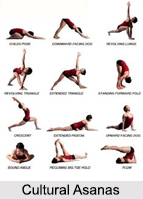
Cultural Asanas, YogaCultural Asanas may be termed as daily physical exercise postures. The names of different cultural asana postures with their values have been mentioned in Classical Yoga Texts like ‘Gheranda Samhita’, ‘Hatha Yoga Pradipika’ and in a number of the ‘Yoga Upanishad’. These Yoga Asanas are named as ‘Cultural Asanas’ because of their central role in forming a comprehensive physical culture of exercise and general well being.

Types of Cultural Asanas
Cultural Asanas are sub-divided into physical asanas and relaxative asanas. Physical Asanas greatly assist in rendering the body healthy, while Relaxative Asanas work on the Chitta (the understated aspect of consciousness) level, eliminating every physical and mental tension.

According to the postures, the Physical Cultural Asanas can be divided in 7 groups which are as follows -

  • Dynamic Sequences, such as the ‘Surya Namaskar
  • Backward Bending Postures, such as the cobralocust or bow poses stretch the abdominal muscles, tone and strengthen the muscles that control the spine.
  • Inverted Postures, such as the Sirsasana and Sarvangasana brings about better blood supply to the brain and ensure its health and the health of the cranial nerves serving the different organs of senses as well.
  • Sideward Bending Postures, such as the triangle pose
  • Forward Bending Postures, such as the Paschimottanasana loosen up the back, thus maintaining good health and increase vitality. During a forward bending asana, each of the vertebrae is stretched, the nerves are stirred, blood circulation around the spine is increased and the spinal cord is nourished.
  • Twisting Postures, such as the half spinal twist which nourishes the organs such as the pancreas, stomach, kidneys, small intestines, liver and gall bladder, and relieve the disorders associated with these organs.
  • Standing Postures including balancing poses, such as the tree pose improve the function of cerebellum, the brain centre that controls bodily movements.
  • Cultural Asanas, Yoga

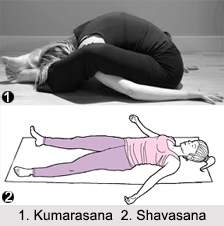
    Relaxative Cultural Asanas are practiced in a supine positionShavasana and Makarasana are the two foremost Relaxative asanas.

    Phases of Cultural Asanas
    There are three important phases while practicing cultural asanas: the phases include getting into the position, holding the position and getting out of the position. Each of the phases requires a considerable amount of time and should never be done in a hurry that may result in negative effects.

    Effects of Cultural Asanas
    The cultural asanas are primarily meant for culturing the body and mind. They are mainly aimed at fashioning a comprehensive physical culture and thus maintain the health of the body. The organs of human body are made up of tissues and the health of the body depends on the health of the tissues. The circulatory system can be kept in the best condition through cultural postures, which guarantee a steady supply of proper nourishment and of the internal secretions of the endocrine glands and elements necessary for nourishment of tissues.

    For more visit the link below:

    Friday, 19 March 2021

    Kannada Cinema


    Bedara KannappaMohan Bhavanami, the Chief Producer of the Film Division of the Government of India, made the first Kannada silent film, Mricchakatika, in 1929. In 1932 came two talkies, Bhaktha Dhruva and Sati Sulochana. At first the theatre provided the inspiration and artistic resources for the filmmakers, but cinema evolved somewhat sporadically until the 1950s. There were several reasons for this: the absence of sponsorship, lack of adequate technical facilities and the contentment of the audiences with seeing Hindi, Tamil and Telugu films. However, by the 1960s, the State Government decided to introduce subsidies for film production and to recognize good filmmaking by instituting an award system.

    The Navya literary tradition of the Kannada languagehad a tremendous influence on cinema - opposition to Brahmanical control and rituals was the major aspect of this movement. It originated with Gopalakrishna Adiga's volumes of poetry - Nadedu Banda Dari (1952) and Bhumigita (1959) and acknowledged its debt to Kafka, Freud, Camus and Sartre. By placing the protagonist within the existing culture and mass impact, Navya distanced itself from romanticism of any kind. Ananthamurthy's stories represent the pinnacle of this tradition. The three films directly associated with it are Samskara (1970), Pallavi (1976), and Ghattashraddha (1977). Director duo Girish Kasaravelli and G. V. Iyer Kasaravalli have always made films that have been concerned with the stifling Brahminical orthodoxy that cloaks itself in 'puritanical ritual' and explores this theme in Ghattashraddha. Iyer's Adi Shankaracharya (1983), which won him the Golden Lotus, was the first feature film to be made in Sanskrit and is a tribute to the eighth century sage Shankara who, expounded the Advaita (non dualist) philosophy.

    In the year 1934, Bhakta Dhruva was directed by P.Y. Altekar, the film starred Master Muthu, T. Dwarkanath, H.S. Krishnamurthy Iyengar and G. Ganesh. In honour of A.V. Varadachar - of Ratnavali Theatre Company - the film had his grandson in the title role and other company artistes as well. The story is from the Puranas - of Dhruva who ultimately becomes a star in the skies. This was the first Kannada film but was released after Sati Sulochana. Sati Sulochana was directed by Y.V. Rao, the film starred R. Nagendra Rao, M.V. Subbaiah Naidu, Lakshmibai, and Y.V. Rao. The defeat of Ravana by Lord Rama, and the killing of Inderjit (Ravana's son) is viewed through the eyes of Sulochana, Inderjit's wife.The war scenes were filmed with 2 cameras!

    In 1936 came Samsara Nauka, directed by H. L. Simha, the film starred B.R. Panthulu, M.V. Rajamma, Dikki Madhava Rao, S.K. Padmadevi, and M.S. Madhava Rao. The hero marries against his grandfather's wishes and is cast out. His troubles do not end here - he finds no favour with his in-laws, loses his job, and finds himself accused of murdering the bride his grandfather had chosen for him. The film was adapted from a play by the Chadrakala Natak Mandali, and remained true to the original reformist ideal.
    Girish Karnad
    Bedara Kannappa was directed by H.I.N. Simha, the film starred Rajkumar, G.V. Iyer, Pandharibai, and Narasimhraju. Based on folklore, the film is about a god and goddess exiled to Earth. They are reincarnated as the children of hunters, and the god-human has to endure a host of tribulations.This was the first film of Kannada superstar Rajkumar. The theme itself is originally of the ragales (couplets) of the thirteenth century poet-saint Harihara.

    In 1954 C.V. Raju, directed by, the film Natashekhara which starred Kalyana Kumar, Sandhya, Vidya, and H.R. Sastry - A story about a young man running away from home to be a film star. This was the debut film of Kalyana Kumar who, too, had run from home with stars in his eyes. - A very successful film. In 1968 came Hannele Chiguridaga directed by M.R. Vittal, the film starred R. Nagendra Rao, Raj Kumar, Kalpana, Arun Kumar, and B.V. Radha. The social issues of widow remarriage and a suitable bride were tackled but the film was careful to not weaken patriarchal authority. The patriarch as played by R. Nagendra Rao remains a memorable character and is widely regarded as among the actor's best performances.

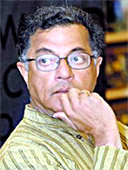
    Gejje Pooje came in the year 1970 directed by S.R. Puttana Kanagal, the film starred Kalpana, Gangadhar, Leelavathi, Arathi, and Pandharibai. A woman brought up by a brothel owner leaves for another city to protect her daughter. The past catches up when the mother's former paramour reappears - the daughter's engagement is called off, compelling a return to the mother's past profession. The director made a strong statement about the tragic turn a woman's life often takes. The camerawork differed for the depiction of the two worlds - the shallow respectability of the middle-classes and the exploitative spirit of brothels. In the same year came Samskara: directed by Pattabhi Rama Reddy, the film starred Girish Karnad, Snehlata Reddy, P. Lankesh, B.R. Jayaram, Dasharathi Dixit, and Laxmi Krishnamurthy. A renegade Brahmin, his low-caste mistress - and the other Brahmins who refuse to cremate him. His mistress appeals to a scholar who is initially at a loss for the solution. After a sexual encounter with her, he is forced into introspection. A talk with an ordinary villager helps him realize the unifying reality of all beings and his affinity with the dead man: he performs the last rites. Ananthamurthy's story formed the basis for Girish Karnad's screenplay of the triumph of humanitarian values over dogmatism.

    For more visit the link below:
    Thursday, 18 March 2021

    Ancient Indian Sculpture


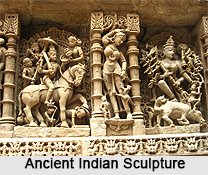
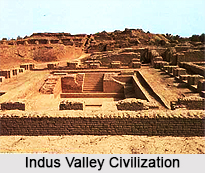
    Ancient Indian SculptureAncient Indian Sculpture is an integral part of Indian art and culture. Ancient Indian sculptures were relatively simple and date back to the days of the Indus Valley Civilization of the 2nd and 3rd millennium BC. The rich intricate sculptures of this civilization mainly emphasised on the works of stone, terra cotta and bronze. Starting from Indus Valley Civilization to the various rulers who ruled India, different sculptures portray different history of their own.

    Design of Ancient Indian Sculpture
    Ancient Indian sculpture features various elegant designs and themes taken from lifestyle. A characteristic of Indian sculpture is that it is primarily realistic in nature and the human forms appear in it more closely related with the surrounding. Flora and fauna have also found its presence in sculptures of India along with the innumerable respected deities.

    Sculpture found in excavated cities consists of small pieces, terra-cotta objects, soapstone, or steatite, seals carved with animals, and a few statuettes of stone and bronze. The terracotta figurines are modelled and provided with elaborate jewellery. It was made separately and applied to the surface of the piece. The work is easy excepting for a small group of human heads with horns which have been made very skilfully. Animal figures are common like bulls. A unicorn is another animal, but it has been stylized frequently. Seals are carved with bisons, elephantsrhinoceroses and tigers. There are also images of religious significance.Ancient Indian Sculpture

    The terra-cotta sculpture and the seals show two clear and distinct stylistic trends. The sculptures are sensuous and the seals are linear and abstract. Full and refined modelling is a fragmentary torso from Harappa. A jaunty bronze dancing girl with head tilted upward is also from Mohenjo-daro. There is also a headless figure of a male dancer from Harappa whose shoulders twisted in a circular movement. The bearded figure from Mohenjo-daro wearing a robe decorated with a pattern made of trefoil motifs is another well known sculpture.


    For more check the link below:

    Wednesday, 17 March 2021

    Rudraksha, Astrology


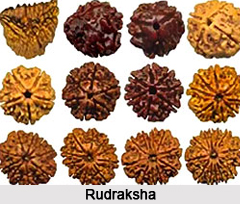
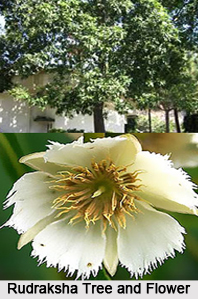
    Rudraksha, AstrologyRudraksha is one of the miraculous creations of nature, where the seed is shaped by number of clefts on its surface. These clefts are known as ‘Mukhis’, or faces. There are about 1 to 38 Mukhi rudraksha present. In most cases, 1 to 14 Mukhi rudraksha are used for astrological purpose. A particular Mukhi rudraksha is believed to encounter the malefic effects of a specific planet. This unique bead has got many splendid properties influential enough to control human behaviour and destiny. The secret lies in the wonderful electro-magnetic properties the bead invokes, when in interaction with Human aura.

    Etymology of Rudraksha
    Rudraksha is termed by joining the 2 words - "Rudra" and "Aksha". ‘Rudra’ is one of the avatars of Lord Shiva and ‘Aksha’ means tears. The legend goes that the Shiva had to counteract powerful Demons in the ongoing war against gods.Rudraksha, Astrology When the entire destruction was settled down, Shiva opened his eyes and shed tears. The legendary tree of Rudraksha was born on the very place those tears fell. That is how Rudraksha, known as a divine bead came into existence. Technically Rudraksha are beads from the tree "Elaeocarpus Ganitrus" found mainly in South, South East Asia, Asia pacific and China.

    Power of Rudraksha
    Rudraksha carries within itself unique electro-magnetic properties, which in turn empowers the possessor when in touch with human body, or, even when it is safely kept in the house. Rudraksha enhances the effects of a weak planet, and streamlines the effects of a malefic one into a positive energy. Rudraksha is also known to produce heat, and can turn out to be allergic to skin in very rare cases. In such cases, a touch with the skin is not advised. Other than that, a rudraksha bead is completely harmless. Although it is advised that a competent astrologer should select a rudraksha after carefully going through ones horoscope, any selection of rudraksha bead do not harm the wearer in any case.

    A rudraksha gives profound effects in the physical, mental and emotional enrichment of a person. It also empowers all to enhance their destinies and attain fulfilment in their lives. A rudraksha does not give its full effect till it has been purified and energized through rituals and puja. Any misuse of rudraksha can also cause loss of its powers. A strict precaution regime also has to be followed while wearing it. A proper Prana Pratishtha activates a rudraksha to give its immense blessings to the one wearing it.

    For more check the link below:

    Monday, 15 March 2021

    Unani Medicine in India


    Unani Medicine in IndiaThe Unani or Greek system of medicine is believed to have been introduced by Hippocrates which was later extensively developed by Arab doctors. The main theory of the Unani medicine is based on the concept that perfect balance between the elements (arkhan), humours (akhlat) and temperament (mizaj) is necessary for good health. Every individual has inherent powers of self-preservation, called quwat-e-modabira. The four humours present in the human body are dum (blood and other red body fluids), balgham (phlegm and other colourless fluids), safra (yellow fluids like bile) and saoda (black bile and other black fluids). The excessiveness of these humours determines an individual's temperament or mizaj which again could be of four kinds: damvi (sanguine or plethoric), safravi (choleric or bilious), balghami (cold or phlegmatic) and saodavi (melancholic).

    Unani medicine in India originated with the coming of Arabs. Historical evidences speak that this medicine was used by the Delhi Sultan, the Khiljis, the Tughlaqs and the Mughal Emperors. During the 13th and 17th Century Unani Medication was practised profusely in India which was used to treat smallpox and measles. Unani medicine mainly diagnoses the pulse (nabz) besides an examination of the urine (bowel) and stool (baraz). While examining the pulse, numerous aspects are looked for, like volume, tension, blood volume, pattern of movement, rest, rhythm, irregularity and so on. Treatment is done for simple diseases and it is mainly through diet in the initial stages, followed by the administration of a single drug, failing which compound preparations may be administered. Each drug is placed under four categories, based on potency and efficacy.

    There are four treatment therapies employed in Unani medicine in India including regimental therapy venasection, diuresis, Turkish bath, massage, purging, exercise and so on; pharmaco-therapy, use of herbal, animal and mineral drugs; surgery; and diet therapy which speaks about quantity and quality of food. Whereas for diabetes, several bitter and astringent items such as stones of the jamoon fruit, phalsa fruit, bitter gourd juice, tender neem shoots, bilva leaves and cottonseed kernels are prescribed by the Unani medicine in India.

    For more visit the link given below:

    Friday, 12 March 2021

    Beaches of Maharashtra


    Beaches of MaharashtraBeaches of Maharashtra are bordered by Arabian Sea and the coastline areas are mostly urban. Maharashtra, another coastal state of India, has several beaches, which are a major attraction among tourists and locals alike. The water here is comparatively safe and this makes the beaches a perfect holiday destination for families. These beaches are also excellent for both tourists as well as adventure lovers. Numerous activities can also be enjoyed in these beaches which include water sports, exploration of nearby forts, sea surfing and discovering the remote villages.

    Alibag Beach, Raigad District
    Alibag is one of the beautiful beaches of the country having black and hard sand. The place is also famous for housing a magnetic observatory. Alibag fort situated nearby is another attraction of this place.

    Kelwa Beach, Thane District
    This 8 kilometer long beach serves as an excellent tourist and weekend destination. It also hosts three forts among which the one situated at the southern tip gets submerged during high tides.

    Juhu Beach, Mumbai
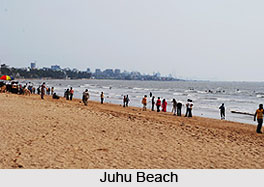
    Juhu beach is one of the most posh beaches of Maharashtra. Situated on the shores of Arabian Sea the place also serves as an excellent site for film shootings. This beautiful beach also offers a number of recreational activities including horse rides, acrobats and cricket matches.

    Marine Drive, Mumbai
    Marine Drive offers a refreshing time to the visitors along the serene sea shore. Constructed between 1920s and 1930s the beach is situated at the heart of the city and is often called as Queen's Necklace owing to the streetlamps that are lined up in an orderly manner on the edge of the beach.

    Madh Island Beach, Mumbai
    Madh Island beach is a popular picnic spot dotted with beautiful bungalows with urban aura. The beach is the venue for lavish parties held outside Mumbai.

    Marve- Manori- Gorai beach, Mumbai
    Marve- Manori- Gorai beach lies in the north of Mumbai. It is a perfect holiday destination. While Marve is a fishing village and the quietest of the three, Gorai and Manori are well known for their parties at night.

    Ganapatipule Beach, Ratnagiri District
    Ganapatipule Beach on the western coast of Maharashtra is one of the "Ashta Ganapati" pilgrimage sites of India.

    Murud - Janjira Beach, Raigad District
    Murud - Janjira beach is an enchanting beach fringed with swaying palm trees.

    Beaches of MaharashtraDahanu- Bordi Beach, Thane District
    Dahanu- Bordi beach is located in Thane district which stretches for nearly17 kilometers. The beach is the ground for cultivating Chickoo fruit. Orchids also blossom here covering a large area.

    Harnai Beach, Dapoli
    Harnai beach in Dapoli is a secluded and reclusive beach situated at a distance of 200 kilometers from Mumbai. It is popular among tourists and locals of Mumbai and Pune alike.

    Kihim and Mandwa Beach, Alibag
    Kihim and Mandwa beach is situated at a distance of 20 kilometers from Alibag. With its untainted serenity, Mandwa and Kihim beach has a lovely ambience.

    Vijaydurg- Sindhudurg Beach, Sindhudurg District
    Vijaydurg- Sindhudurg beach is a historical site as it was the naval bases of Great Chattrapati Shivaji.

    For more visit the link below:

    Thursday, 11 March 2021

    Sattriya, Indian Classical Dance


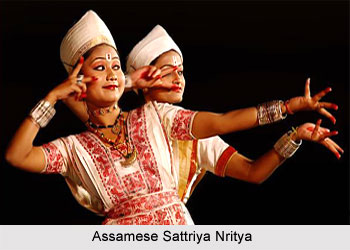
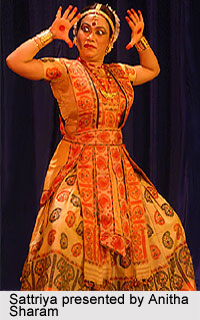
    Sattriya, Indian Classical DanceSattriya or Sattriya Nritya, as it is also known as, happens to be one among eight main Indian classical dance traditions. Sattriya, since its creation in 15th century Assam by Vaishnav saint Srimanta Sankardeva, has remained a living tradition. The creation of Sattriya Nritya by Sankardeva was an accompaniment to the Ankiya Naat (a form of Assamese one-act plays devised by him), which were usually performed in the sattras, as Assam's monasteries are called.

    With time as the convention grew and developed with the sattras, the dance form came to be called Sattriya Nritya.

    History of Sattriya
    Sattriya Nritya emerged from the sanctum in the second half of 19th century. This form of dance originated in monasteries and then moved to the metropolitan stage. There were tough austerities and discipline that were maintained by the Sattras within their limitations, until the first half of 19th century. This dance is performed with highly dedicated and ritualistic manner by male dancers alone. There are lot of factors (lack of research, rigid laws) that can be contributed to the delayed acceptance and recognition of Sattriya Nritya. One of the main advantages of adhering to the principles of the sattras has been its ability to maintain its pure form, and distinct style. As Sattriya has made its journey to the demotic spaces of the world's stages from the sanctified interiors of Assam's sattras, it is time for an improvement of Sattriya Nritya's aesthetic and artistic qualities.

    This dance form received huge fame and name after Sangeet Natak Akademi recognized Sattriya as one of the classical dance forms of India.

    Dance Style of Sattriya
    Sattriya, Indian Classical DanceThe main theme of Sattriya has had mythological connotation. This is an artistic and meticulous way of presenting teachings to the people in an immediate, accessible and enjoyable manner. Conventionally, this dance form was performed only by male monks (also known as Bhokots) in monasteries as part of their daily rituals or to mark special festivals. In the modern days, Sattriya is performed on stage by women and men, who are not members of sattras, on themes not merely mythological.

    Sattriya Nritya is divided into many genres: Apsara Nritya, Behar Nritya, Chali Nritya, Dasavatara Nritya, Manchok Nritya, Natua Nritya, Rasa Nritya, Rajaghariya Chali Nritya, Gosai Prabesh, Bar Prabesh, Gopi Prabesh, Jhumura, Nadu Bhangi, and Sutradhara, among others. Sattriya Nritya, just like seven other schools of Indian classical dance, incorporates the doctrine required of a classical dance form: the treatises of dance and dramaturgy, like Natya Shastra, Abhinaya Darpana, and Sangit Ratnakara; a distinctive repertoire (marg) and the aspects of nritta (pure dance), nritya (expressive dance), and natya (abhinaya).

    Sattriya Nritya is performed with musical composition called borgeets (composed by Sankardeva among others) which are usually based on classical ragas. For tradition performance, the instruments that are used are khole (drums), taals (cymbals) and the flute. Some of the recent additions are the violin and the harmonium. The dress is typical of Assam as the silk that are worn are produced in Assam, woven with meticulous designs.

    For more visit the link given below:

    Wednesday, 10 March 2021

    Odia Cinema, Indian Regional Movies

     Odia Cinema, Indian Regional MoviesOdia Cinema did not emerge in the era of silent movies. In 1974, the Government of Odisha declared film making and construction of cinema theatres as an industry in the state and 2 years later in 1976, it established the Odisha Film Development Corporation in Cuttack. Also known as Ollywood, the name is a portmanteau of the words Olly and Hollywood.

    History of Odia Cinema
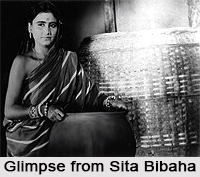
    The history of Odia cinema is of a glorious past. The first Odia film ‘Sita Bibaha’ was released in the year 1936 and was an important part of the struggle for a manifestation of Odia cultural identity in celluloid form and it is a movable history. The film was a mythological drama by Mohan Sunder Deb Goswami, who not only directed but also produced and acted in this film.

    The pace of Odia film production in the initial years was very slow. After Sita Bibaha, only two films were produced until 1951. A joint consortium of landlords and businessmen who collected funds after 1948 produced those two movies. The 1951 production of Roles to Eight was the first Odia film with an English name. It was released 15 years after the first Odia film, Sita Bibaha. It was the fourth Odia film produced by Ratikant Padhi.

    Almost after 15 years of the release of Sita Bibaha another Odia film in the serious stream was released in 1966, Matira Manisha. It bagged the National Award, this film was directed by Mrinal Sen. His example was an encouragement enough for other film directors to follow suit. Awareness for serious filmmakers also received a boost. Social melodramas and mythological films were made in the meantime for the regional audiences. Since then several talented Odia actors and actresses have served the film industry. It is due to their contributions and the efforts on the part of the Odia directors that the Odia films received recognition.

    Odia Cinema, Indian Regional MoviesSome of the Odia films are Lalita (1949), Saptasaiya (1950), Amari Gaan Jhua (1953), Kedar Gouri (1954), Mahalakshmi Pooja (1959), Nua Bou (1962), Sadhana (1964), Manikajodi (1964), Amada Bata (1964), Malajanha (1965), Kaa (1966), Adina Megha (1970), Mana Akasha (1974), Abhimaan (1977), Punar Milan (1977), Jalal Adeni (1977), Agni Pareeksha (1980), Akshi Tritiya (1981), ), Jwain Pua (1982), Babula (1985), Bagula Baguli (1986), Jorjar Mulak Tar (1987), Ashok Sharma (1988), Kanyadaan (1988), Andha Diganta (1989), Akasar Akhi (1989), Asuchi Mo kalia Sune (1989), Dora (1993), Jibana Dhara (1995), Jhilli (1996) and many more in the modern era of Odia Cinema.

    Odia Cinema of Modern Age
    One of the most sensitive films made in the 1900s was Malajanha (1965). It was directed by Nitai Palit. This Odia film is a sensitive melodrama about an unmarried couple in which the woman ends up committing suicide because of the persecution of the people of her village. Another musical drama, Arundhati (1967) also made an impact with the audiences. It was directed by Prafulla Sengupta.

    For more visit the link below:
    https://www.indianetzone.com/31/oriya_movies_indian_movies.htm